Khanom Buang History: From Royal Courts to Thai Street Food
From royal-court recipes to a familiar street-food favourite, Thailand’s crispy pancakes have a history rooted in literature, tradition and changing tastes. BANGKOK – Known in English as Thai crêpes or crispy pancakes, khanom buang is a traditional Thai snack believed to date back centuries. References to the delicacy appear in Thai literature and historical accounts, […]
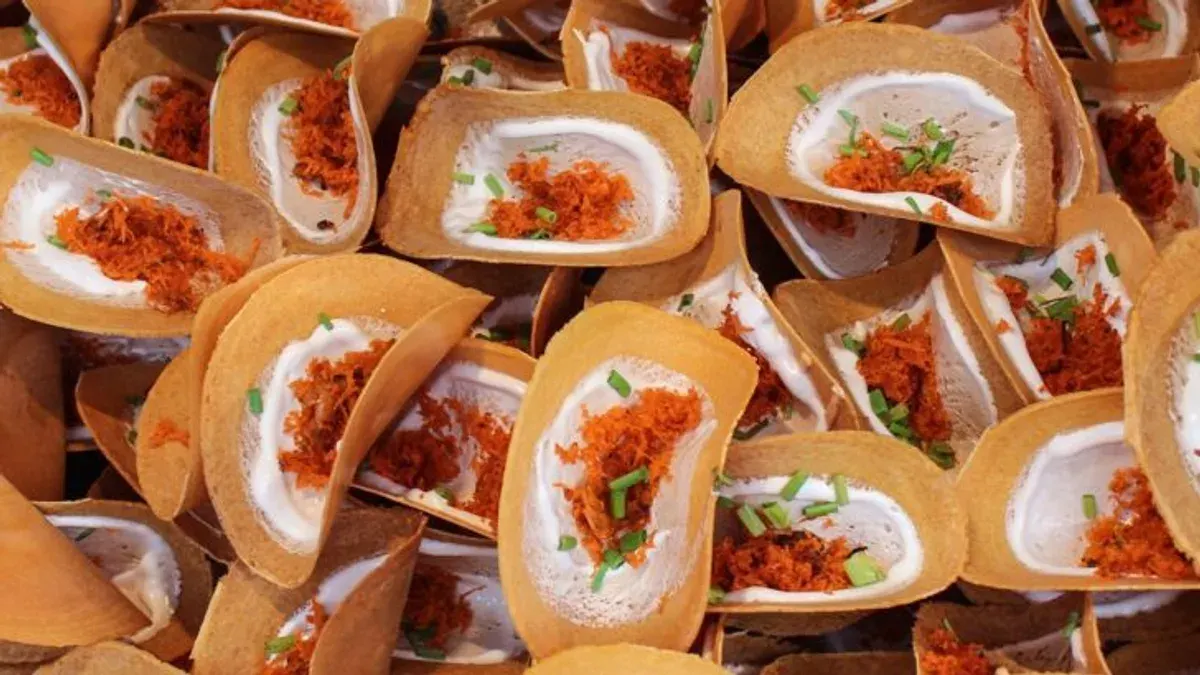
From royal-court recipes to a familiar street-food favorite, Thailand's crispy pancakes have a history rooted in literature, tradition, and changing tastes.
BANGKOK — Known in English as Thai crepes or crispy pancakes, khanom buang is a traditional Thai snack believed to date back centuries. References to the delicacy appear in Thai literature and historical accounts, while different versions reflect how recipes have evolved over time.
Its origins are often traced to the Sukhothai period, based on evidence in temple paintings in the ancient city. The snack continued into the Ayutthaya period, appearing in Khun Chang Khun Phaen, one of Thailand's best-known literary works, and was associated with royal ceremonies held throughout the year.
Another reference appears in Kham Hai Kan Khun Luang Ha Wat, or the Testimony of King Uthumphon, which mentions cooking equipment used for traditional snacks, including khanom buang.
Today, the snack is best known for its thin, crisp shell topped with white cream and golden foi thong, or strands of egg yolk. But older recipes and royal-court varieties offered a wider range of flavors.
From traditional recipes to modern toppings
Khanom buang is made by spreading batter into a thin, round shape on a hot cooking surface. Common ingredients for the shell include rice flour, egg yolk, limewater, and palm sugar.
The familiar modern version combines a crisp base with white cream and foi thong, creating a contrast in texture and color.
Traditional recipes, however, were not necessarily the same as those sold today. One older version reportedly used rice flour and coconut milk, seasoned only with salt. According to the historical account, this recipe is no longer made.
Royal-court-style khanom buang traditionally came in two main varieties: savory shrimp and sweet.
The shrimp topping was made with finely chopped large river prawns, mixed with pounded pepper, coriander, and prawn fat. The mixture was stir-fried with sugar and fish sauce or salt until fragrant. The modern version often uses coconut colored red instead.
The sweet variety traditionally combined candied winter melon, foi thong, and dried persimmon. Today, the topping is more commonly reduced to white cream and foi thong.
Another reported variation from the Suan Sunandha Palace tradition featured pork. Minced pork was mixed with pounded garlic, pepper, and coriander roots, with bird's-eye chili added before the mixture was cooked.
These varieties show that khanom buang, now widely associated with sweet street food, once encompassed a broader range of flavors and preparations.
An origin story linked to ancient India
One theory suggests that khanom buang developed from a type of pancake made in ancient India during the time of the Buddha. According to this account, the food was cooked on terracotta tiles and was brought to Siam by Indian Brahmins who traveled to the region to spread religious teachings.
The theory is linked to the book