Luang Por Kring: Revered Monk Behind Sacred Rahu Amulets
Luang Pu Kring, a renowned monk from Wat Pho Liao in Kanchanaburi, became famous for his Rahu amulets and sacred cloth talismans learned directly from his master. He passed away in 1992 at age 75, leaving behind a legacy of powerful protect
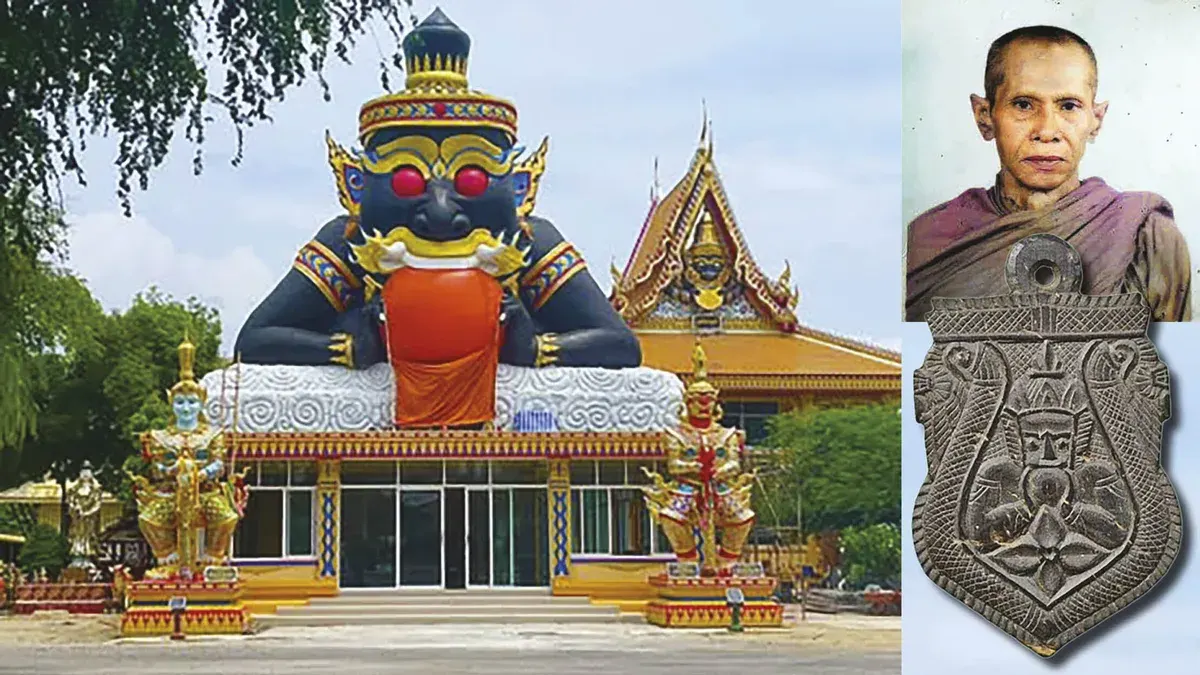
Luang Por Kring Pannyapalo, officially titled Phra Khru Withaan Kanchanakij, was a highly respected monk at Wat Bodhi Liam in Tha Mueang District, Kanchanaburi Province. He was the principal disciple of the legendary Luang Por Noi Kandhajocho of Wat Sirsothon in Nakhon Pathom, the master of the renowned Rahu-Moon Consuming and Celestial Archery traditions. As a devoted student, Kring inherited knowledge of numerous sacred amulets related to Rahu. Born March 30, 1917, in Ban Thuan as Kring Jindakul to parents Nai Nak and Nang Thiap Jindakul, he was ordained on April 24, 1940, at Wat Tha Ruea. He spent his monastic training at Wat Wang Sala before relocating to Wat Sirsothon to study Buddhist scripture and esoteric sciences under Luang Por Noi. Among his teacher's two main disciples, Kring alone showed deep interest in mystical knowledge. Luang Por Noi consecrated betel leaves and areca nuts for him to chew daily before teaching him archery and Rahu magic, making Kring the only disciple to receive complete Rahu instruction. He later settled at Wat Hua Phong, returning to Wat Sirsothon in 1944 at the community's invitation. During World War II, Japanese soldiers camped near Wat Bodhi Liam. According to local legend, when Kring passed through their camp one evening, a Japanese soldier mistaking him for an enemy drew a samurai sword and slashed his back, tearing his robes yet leaving his skin untouched. Awed by this miraculous event, the soldiers greatly revered him, providing jeep rides to Wat Sirsothon and later gifting vehicles and generators to the temple. Wat Bodhi Liam thus became one of Kanchanaburi's first temples with automobiles and electricity. In 1976, Kring received ecclesiastical promotion to Phra Khru Withaan Kanchanakij. He was devoted to monastic discipline, remaining at the temple during hot seasons when others took leave, maintaining buildings and supporting Buddhist education. Despite his commitment to Wat Bodhi Liam, he maintained deep ties to Wat Sirsothon, generously supporting it throughout his life. He passed away peacefully on July 14, 1992, at 4:30 p.m., having lived 75 years with 52 years in monastic robes. His most celebrated sacred objects are the Rahu talismans called 'Rahu Kala Kaew,' created from 1947 onward. These amulets feature either droplet or pillar shapes, differing from Luang Por Noi's style, and are crafted from single-eyed shells and old lead from Si Sawat District, with Rahu imagery carved on the front.