Mahamakut, Kasetsart Universities Sign Mindfulness Research MOU
The article is about an MOU signing between Mahamakut Buddhist University (MBU) and Kasetsart University (KU) on October 19, 2026, at Wat Ratchabophit in Bangkok. The key points: cooperation on mindfulness, meditation, and neuroscience rese
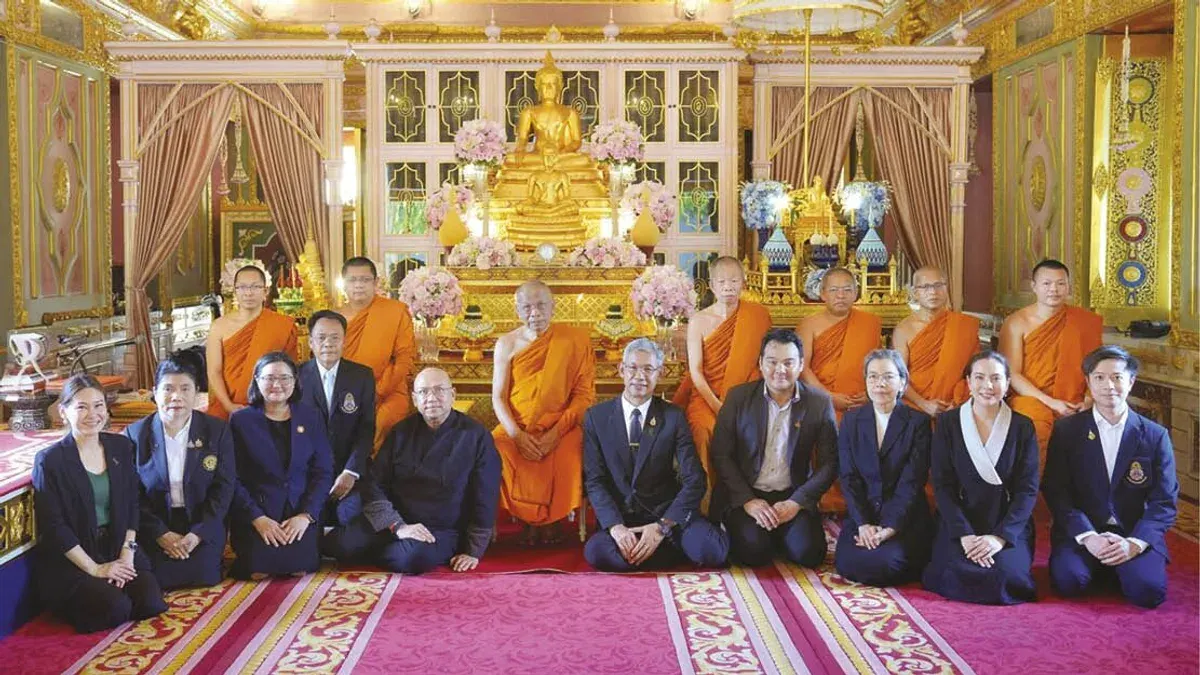
On Monday, October 19, 2026, Somdet Phra Maha Veerawong (Suchin Akkachino), a member of the Supreme Sangha Council and assistant abbot of Wat Ratchabophit Sathit Maha Simaram, in his capacity as Vice President of the Mahamakut Buddhist University Council, presided over the signing of a memorandum of understanding (MOU) on academic cooperation in mindfulness, meditation, and neuroscience for lifelong well-being between Mahamakut Buddhist University (MBU) and Kasetsart University (KU). He also delivered a sermon and served as a witness. Executives, faculty, and representatives from both universities attended the ceremony at the ordination hall of Wat Ratchabophit Sathit Maha Simaram in Bangkok's Phra Nakhon district.
On this occasion, Phra Promwachiramethaphorn (Somkid Chintamayo), Rector of Mahamakut Buddhist University, presented a report on the background and objectives of the cooperation. He emphasized integrating Buddhist knowledge of mindfulness and meditation with modern scientific knowledge to holistically enhance people's quality of life — physically, mentally, intellectually, and ethically. He also affirmed MBU's readiness to serve as a key hub for meditation knowledge, personnel development, training, and connecting networks of scholars and practitioners to drive tangible cooperation outcomes.
Associate Professor Dr. Kongsak Thiengtham, Rector of Kasetsart University, outlined the approach of leveraging research and scientific capabilities to support the study and development of mindfulness and meditation knowledge through integrated research processes, exchange of researchers, faculty, and staff, as well as joint seminars, training, and curriculum development. The aim is to create applicable knowledge and practices for educational institutions, organizations, and communities, with attention to suitability for people of all ages, especially educators, working-age adults, and the elderly.
The two rectors then signed the MOU, marking a significant step linking "the science of mind development according to Buddhist principles" with "the science of brain education and well-being through scientific processes" under a comprehensive framework covering six key areas: research and development of mindfulness and meditation programs; education in neuroscience and psychophysiology; clinical and behavioral health research; health promotion and healthy aging; well-being development in organizations and communities; and creation of innovations and services for well-being promotion based on research.
This cooperation aims not only to create academic knowledge but also to link knowledge to practice and daily life application, so that mindfulness and meditation are studied systematically with scientific evidence and can be developed into appropriate well-being promotion approaches for all age groups.
This represents another important step for both universities in integrating their academic strengths to elevate education, research, and academic services to society, leading to the development of human resources complete in both body and mind, and jointly building a society of wisdom, virtue, and sustainable well-being for the future.