Michelin Guide Thailand Marks 10th Anniversary With Record 507 Restaurants
The 2027 Michelin Guide Thailand, celebrating its 10th anniversary, listed a record 507 restaurants including 53 starred venues. Phuket's Pru became the first two-star restaurant outside Bangkok, while Chiang Mai's Belon by Paolo Airaudo earned the city's inaugural Michelin star, underscoring the nationwide growth of Thailand's culinary reputation.
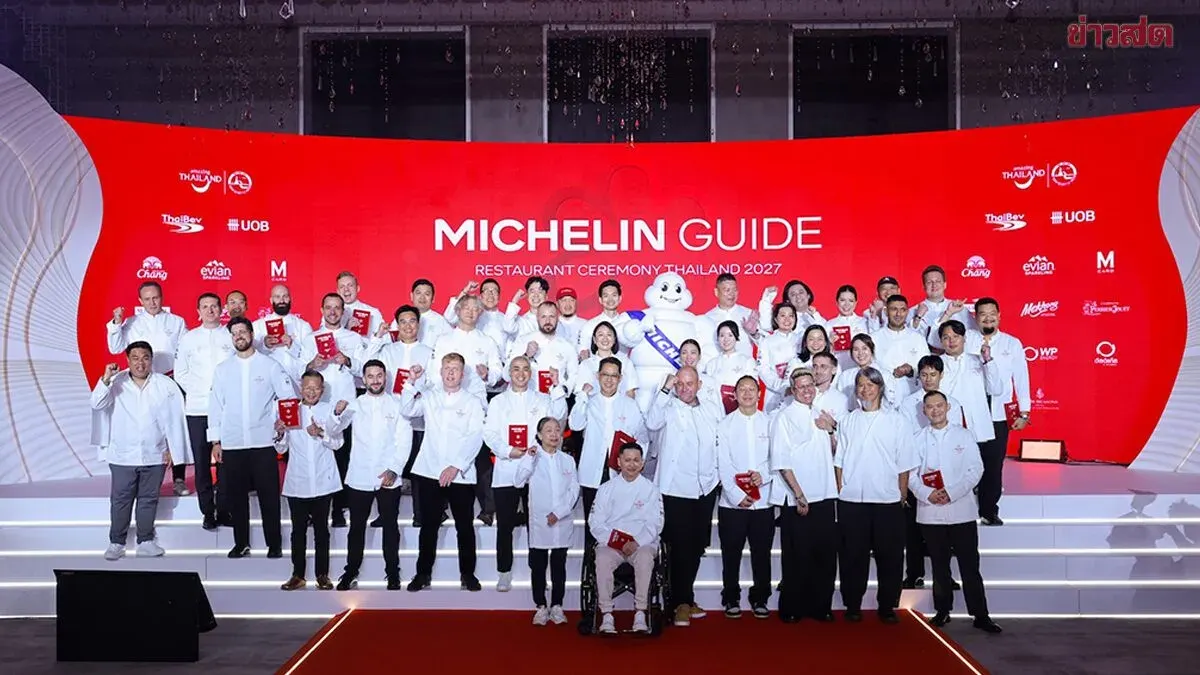
The Michelin Guide Thailand 2027 edition, marking the guide's 10th anniversary in the country and the 100th anniversary of the Michelin star system, unveiled a record 507 listed restaurants — the first time the guide has surpassed 500 entries. The selection includes 53 starred restaurants: two three-star venues (Sorn and Sühring, both retaining their status), 10 two-star restaurants (up three from last year), and 41 one-star restaurants. The two-star promotions went to Blue by Alain Ducasse and Mia in Bangkok, and Pru in Phuket.
Pru made history as Phuket's first two-star restaurant and the first two-star establishment outside the Bangkok metropolitan area, recognized for its contemporary Thai cuisine emphasizing local ingredients, fermentation, preservation, and environmental consciousness.
At the one-star level, 10 new restaurants joined the ranks, including five debut entries and five promoted from the Michelin Selected category. A key highlight was Belon by Paolo Airaudo, elevated from Michelin Selected to one star, becoming Chiang Mai's first Michelin-starred restaurant.
Michelin Guide International Director Gwendal Poullennec noted that the steady increase in listed restaurants and the surpassing of 50 starred venues reflect the Thai culinary scene's development driven by dedication, creativity, and adaptability. He highlighted that excellence has expanded beyond Bangkok into the regions, with Thai chefs increasingly confident in expressing their identity through cultural roots and local produce, while international chefs invest long-term in Thailand, blending foreign concepts with local ingredients. Techniques like fermentation, curing, and natural umami extraction have become key flavor tools, alongside a growing focus on resource efficiency and waste reduction.