MP Questions Why Election Panel Split Charges Instead of Investigating Alleged Rigging Scheme
An MP questioned why Thailand's Election Commission split charges into seven separate counts instead of investigating the alleged 2024 Senate election rigging scheme as a coordinated whole, suggesting they don't actually believe a systemati
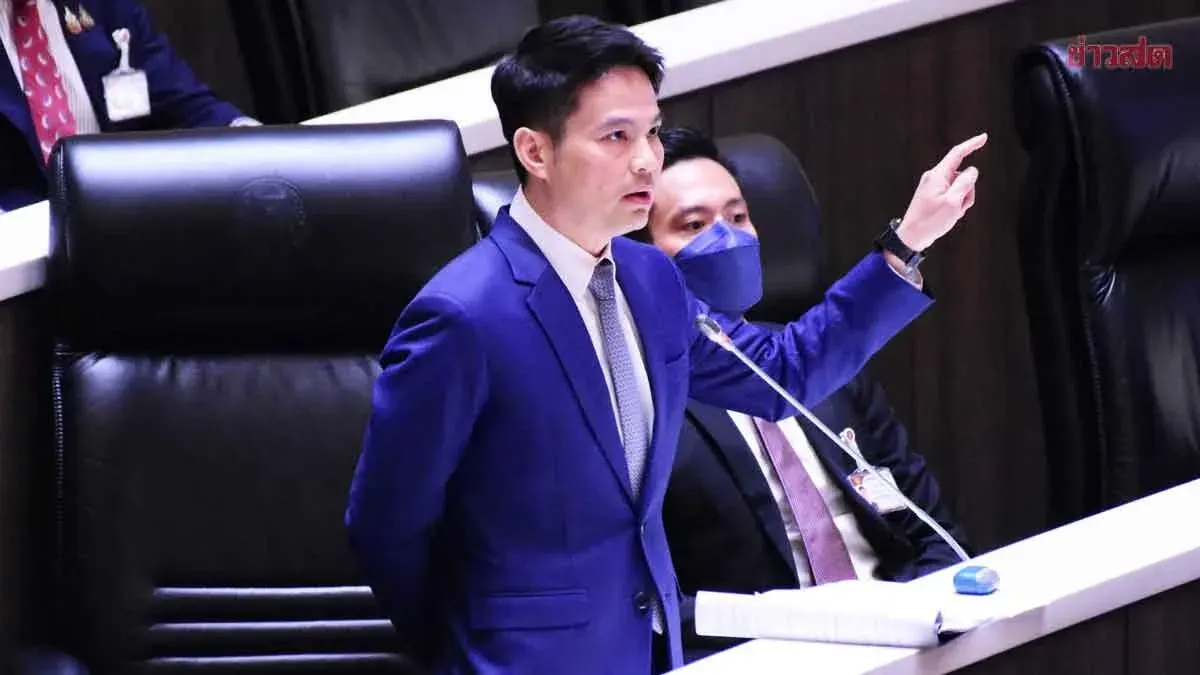
On September 16 at Parliament, during a House of Representatives session on the Election Commission's performance report for fiscal years 2567 and 2568, MP Praradorn Prishnanannakul of Bhumjaithai raised critical questions about the Commission's handling of allegations related to the 2024 Senate election.
Praradorn argued that some parties only became aware of the issue two months ago, whereas his party members have faced accusations for two years. He characterized the 2024 Senate election as Thailand's largest rigging scheme, with all party executive board members allegedly involved. He questioned why, if the Election Commission believed such a systematic process existed, they voted on individual charges rather than investigating the alleged coordinated scheme as a whole.
According to Praradorn, the Commission's decision to split the charges into seven separate counts suggests they did not actually believe in the existence of a rigging process. He noted that the Commission neither investigated itself nor voted on whether a rigging scheme occurred, instead pursuing individual prosecutions. This, he argued, contradicts their claim to have identified a systematic manipulation.
Praradorn then outlined a timeline of events in 2568, stating that on February 3, the DSI (Department of Special Investigation) informed the Election Commission about the case. When the Commission rejected it as falling outside their jurisdiction, the DSI convened a special committee on March 6 to reclassify it as a money laundering and illicit enrichment case. He questioned the DSI's authority to proceed given their initial acknowledgment that this was an election matter beyond their mandate.
On March 18, the Election Commission accepted the case after the DSI had established it as a special case. The Commission then formed Investigation Committee 26, which notably included three DSI officers—the same officials whose submission the Commission had previously rejected. Praradorn criticized this decision, arguing it appeared designed to legitimize the DSI's controversial involvement and create the appearance of a coordinated scheme.
He further alleged that one of 16 witnesses recanted testimony after being threatened by a DSI officer who suggested the witness faced charges and would be prosecuted unless cooperating with the Commission or DSI. Praradorn contended this pressure was intended to manufacture false testimony implicating party executives and making the party appear complicit in the alleged rigging.