Myanmar Soldiers Threaten Thai Officials Testing Polluted Border River
Thailand's Pollution Control Department is racing to test water quality in the Kra Buri River and 62 village water systems in Ranong province after residents detected rodenticide levels 2.5 times above safety standards. During an opposition party fact-finding visit, Myanmar soldiers armed with AK-47s and RPGs appeared on the opposite bank and pointed weapons at the Thai delegation. Test results from samples collected November 17 are expected by December 2.
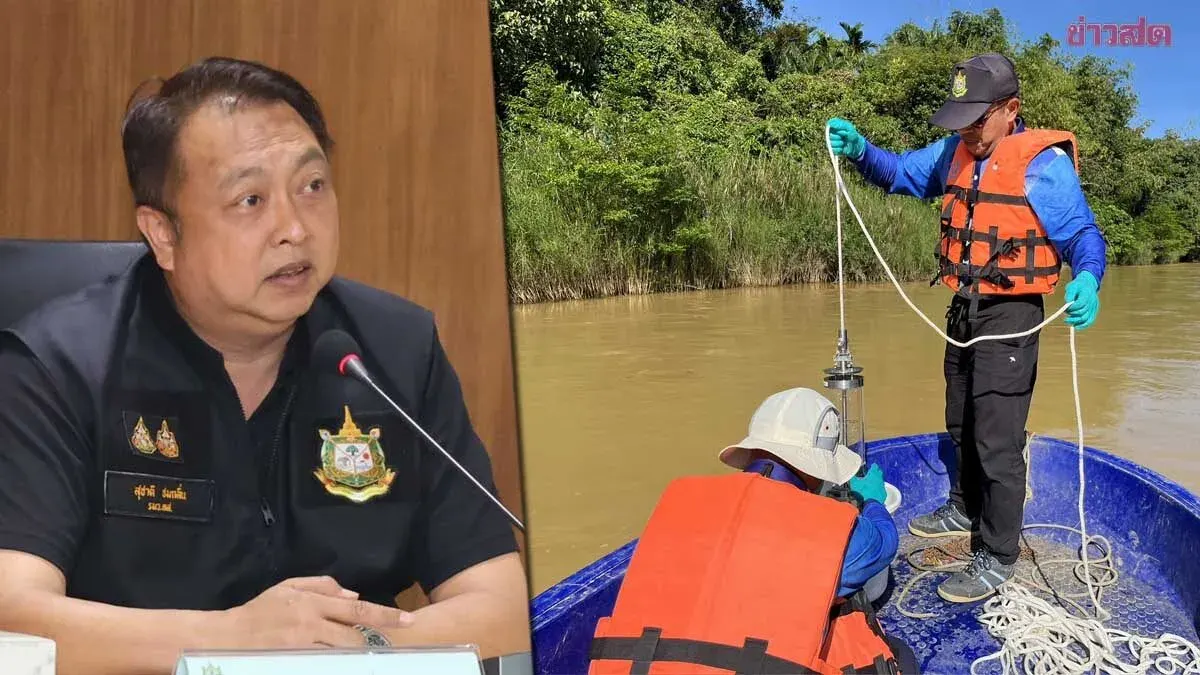
On November 28, 2026, Natural Resources and Environment Minister Suchart Chomklin ordered the Pollution Control Department to prioritize comprehensive monitoring and inspection of water sources potentially affected by cross-border pollution, particularly those used for public consumption. The department was directed to accelerate scientific fact-finding to assess the situation and restore public confidence.
Pollution Control Department Director-General Dr. Surinth Warakijthamrong revealed that following public concerns over water quality in the Kra Buri River in Kra Buri district, Ranong province, the Environmental Office 15 has been continuously monitoring the situation. The latest water samples were collected on November 17, 2026, and are currently undergoing laboratory analysis, with results expected between December 1-2, 2026.
The department has instructed Environmental Office 15 to increase surveillance intensity, with plans to collect additional water samples from the Kra Buri River for re-analysis, along with surveying and sampling from over 62 village water supply systems across Ranong province to verify the quality of water used in daily life, covering both natural sources and village water systems.
Dr. Surinth added that this operation is part of enhanced water quality surveillance addressing cross-border pollution. The department is prioritizing every potentially affected water source, not limited to any single river, to ensure accurate, comprehensive, and current scientific data for situation assessment and appropriate prevention and remediation measures. Analysis results will be disclosed transparently to build public trust and reduce concerns, with continuous situation monitoring.
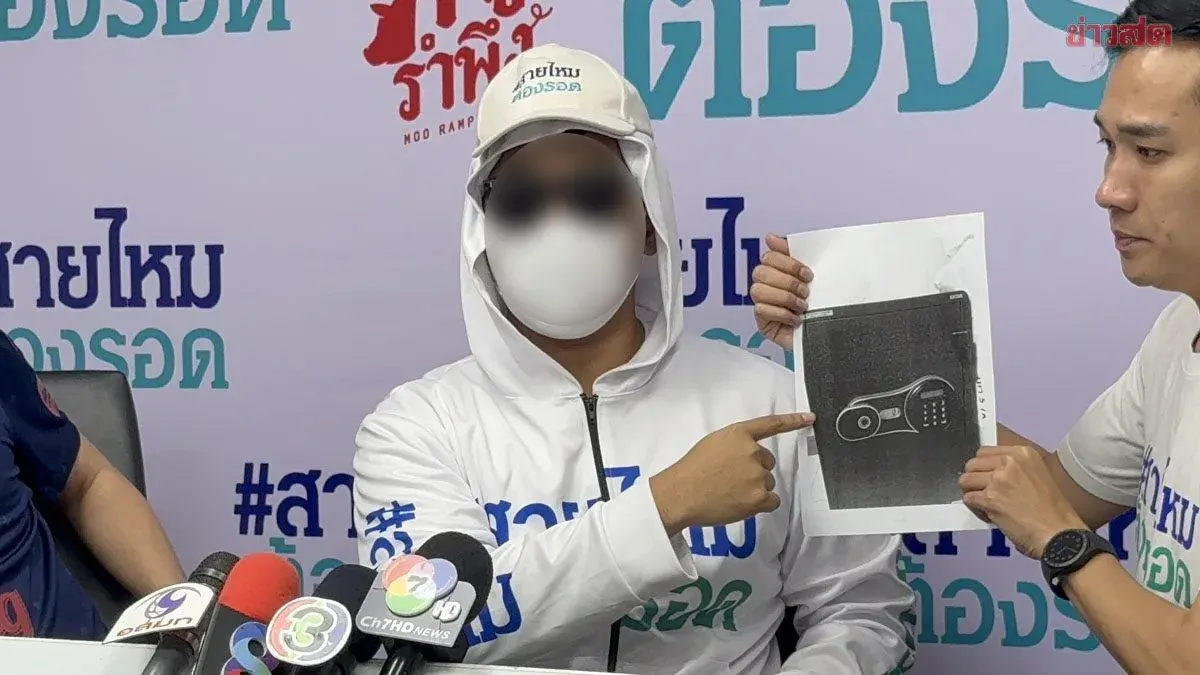
On November 28, 2026, Satit Wongnongtoey and Chaichana Dechdecho, deputy party leaders, accompanied by party spokesperson Phongsakorn Khwanmuang and deputy spokesperson Duangruthai Buakaew, visited Ban Had Tun in Pak Chan subdistrict, Kra Buri district, Ranong province, to hear about environmental pollution in the Kra Buri River.
Village representatives demonstrated preliminary rodenticide test kits, trained by Chiang Mai University academics, to measure water quality from the Kra Buri River. Results showed rodenticide levels exceeding the standard (0.01 mg/L) by 2.5 times, meaning the water cannot be used for consumption.
However, while at the canal bank bordering Myanmar, a startling incident occurred when Myanmar soldiers armed with heavy weapons — including AK-47 assault rifles and RPG launchers — appeared at the bridge on the opposite side, brandishing weapons and staring toward the Thai delegation.
Satit and Chaichana encountered Myanmar troops aiming AK-47s and RPGs after the toxic Kra Buri River findings.