Nan Prepares for New Rain Band on August 23
Nan province braces for fresh rainfall on August 23 after water levels stabilize, with four districts under close watch as forecasted 50-70mm of rain could trigger faster water runoff through moisture-saturated soil.
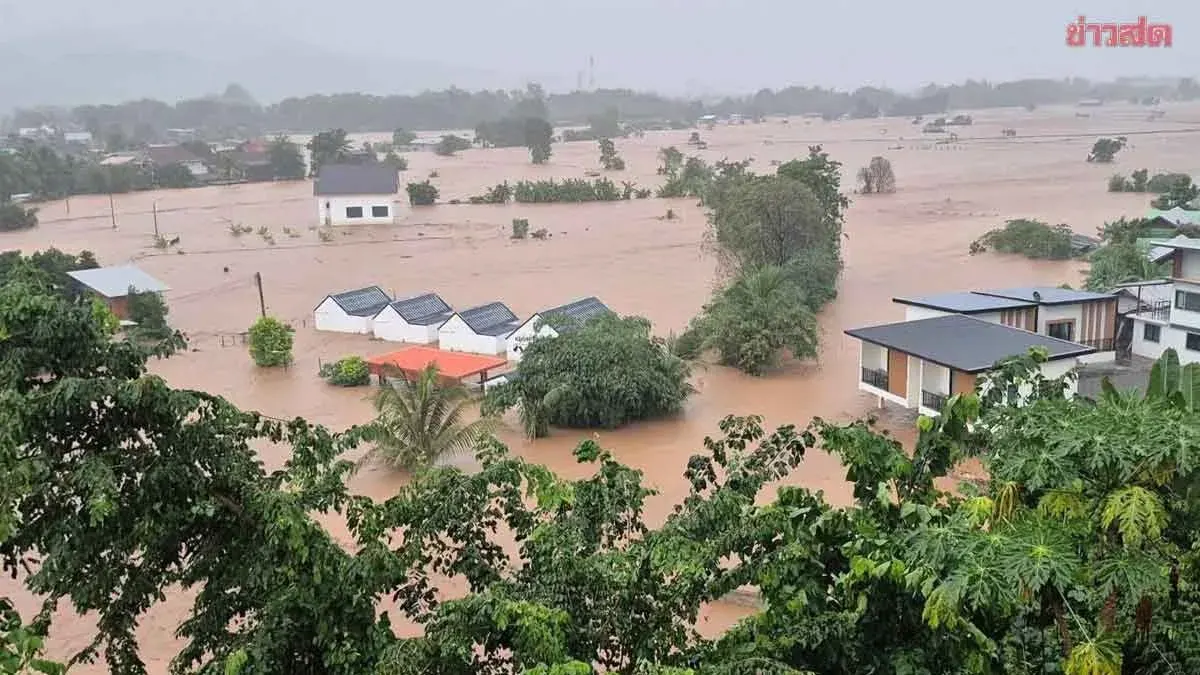
The government continues to monitor the Nan River Basin as water levels begin to stabilize and recede. Meanwhile, preparations are underway for fresh rainfall expected to return to the upper Nan River basin on August 23, with four districts designated for close observation and alert coordination. On August 22, Deputy Government Spokesman Lalida Perischvivat revealed that the government remains in continuous contact with the flood situation in Nan province. The government is preparing to manage incoming rain forecast for the upper Nan River basin on August 23, emphasizing close monitoring of rainfall data, water mass, and local conditions to enable timely warnings and public assistance. According to the National Water Resources Office assessment, the upper Nan River basin areas requiring close watch on August 23 include the districts of Pua, Song Khwae, Chiang Klang, and Thung Chang, which may experience accumulated rainfall of approximately 50–70 millimeters over 24 hours. While the forecasted rainfall does not match the intensity of the previous heavy downpour, soil in some areas still retains moisture from prior rainfall, prompting relevant agencies to maintain close observation. The deputy spokesman emphasized that although the rainfall is expected to be lighter than before, saturated soil reduces water absorption capacity and may cause water to flow into rivers more quickly. The government is prioritizing advance preparations, particularly for hillside areas, waterway passages, and low-lying zones, to ensure the public receives rapid information and warnings if conditions change. The government has urged the public to proceed with normal activities while staying informed through official channels, especially those in hillside areas, near waterways, and low-lying zones, as well as residents in Ta Wang Pha, Mueang Nan, Phu Phiang, and Wiang Sa districts, who must continue monitoring water flow from upstream areas. Relevant agencies have readied information systems, alert protocols, personnel, and equipment to manage the situation.