New Amulet Honors Luang Por Rung of Wat Nong Si Nuan
A new amulet release honors Luang Por Rung Kangkasuwanno, the revered founder and first abbot of Wat Nong Si Nuan in Nakhon Sawan Province. The article details his life from ordination in 1891 through his leadership in relocating a village, establishing the temple, and his royal audience with King Vajiravudh after disciples discovered a sacred Buddha image. He passed away in 1946 at age 77, leaving a lasting legacy of Buddhist practice and community development.
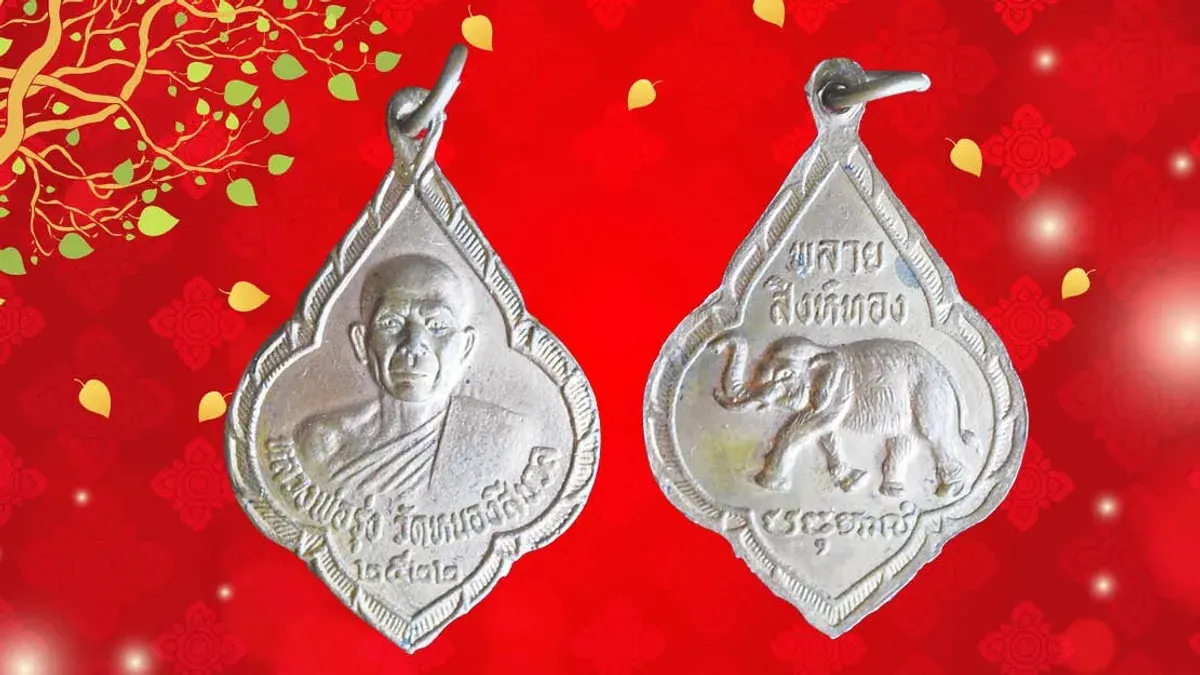
Luang Por Rung Kangkasuwanno, the first abbot of Wat Nong Si Nuan in Takli District, Nakhon Sawan Province, was a renowned meditation master closely associated with Luang Por Doem of Wat Nong Pho. They were maternal relatives, with Luang Por Rung being the younger in monastic seniority. He was also the uncle of Phra Khru Nisai Charoenkhun (Luang Por Ot) of Wat Chan Sen.
Born into the Paen To family on September 15, 1869, at Ban Hua Wai in Takli District, Nakhon Sawan, he was the second of five children in a farming family.
In 1891, at age 22, disillusioned with worldly life, he ordained at the ordination hall of Wat Phra Prang Luang in Tha Na Oi Subdistrict, Phayuha Khiri District, Nakhon Sawan. Phra Khru Phayuha Nusit (Luang Por Ngoen) of Wat Phra Prang Luang served as his preceptor, Luang Por Pan of Wat Hat Thamong as his kammavaca teacher, and Luang Por Thes of Wat Sa Thale as his anusavana teacher. He received the monastic name "Kangkasuwanno."
He observed his first rains retreat at Wat Phra Prang Luang, studying meditation directly under Luang Por Doem and Luang Por Ngoen. After Luang Por Ngoen passed away, he moved to Wat Hat Thamong to study Buddhist scriptures and Vipassana meditation with Luang Por Pan. He then went on a wandering pilgrimage seeking seclusion.
Later, he was invited to become abbot of Wat Hua Wai. At that time, a railway was being built through Ban Hua Wai by a foreign contractor who prevented villagers from using their only water pond. Seeing the villagers' distress, he vowed to find them a new settlement. He searched many areas until finding Nong Tan Nuan, a suitable location, and led the Ban Hua Wai villagers there, simultaneously establishing a temple.
In 1910, he led villagers and two disciples to Khao Chon Deua at midnight. While he meditated, the two disciples climbed the peak to cut palm leaves and discovered a "Phra Sang Ram" Buddha image, which they presented to him. Luang Por Rung then offered this image to King Vajiravudh (Rama VI). The King graciously bestowed a royal fan with the Garuda emblem and monetary gifts to the two disciples as a reward.
In 1932, after the temple and community were well established, he oversaw construction of an ordination hall with assistance from Luang Por Doem of Wat Nong Pho and Luang Por In of Wat Hang Nam Nong Khaem, who contributed materials and brought monks to help build it. Later, the government changed the temple's name from Wat Nong Tan Nuan to "Wat Nong Si Nuan," which remains today.
After completing the ordination hall, Luang Por Rung also built a large plaster Buddha image (6 sok wide, 5 sok tall), a residence, and bathrooms. He also created cement statues of air force soldiers surrounding the ordination hall; later, the government built Air Force Base Wing 4 on the land of Ban Nong Si Nuan.
He created sacred amulets on auspicious occasions for disciples to worship as personal blessings, while proceeds funded temple construction. He was widely regarded as a "noble person" of Buddhists due to his rare calm and composed demeanor, earning deep respect from the public and the Sangha alike.
Throughout his life, he dedicated himself to maintaining and promoting Buddhism extensively and continuously developed temple facilities. Due to the impermanence of all compounded things, he passed away peacefully on the afternoon of May 17, 1946, at age 77, with 55 years of monastic seniority.
In 1979, Phra Khru Niyom Thamma Koson (Luang Por Chalong Thawiwongso) became the abbot.