OCSB Proposes 7 Billion Baht to Cut Burnt Cane
The user wants a short summary of the article about OCSB proposing 7 billion baht to cut burnt cane. I need to write 1-2 sentences, 120-220 characters, max 240. Output only the summary text, no quotes, no labels, no markdown. English only.
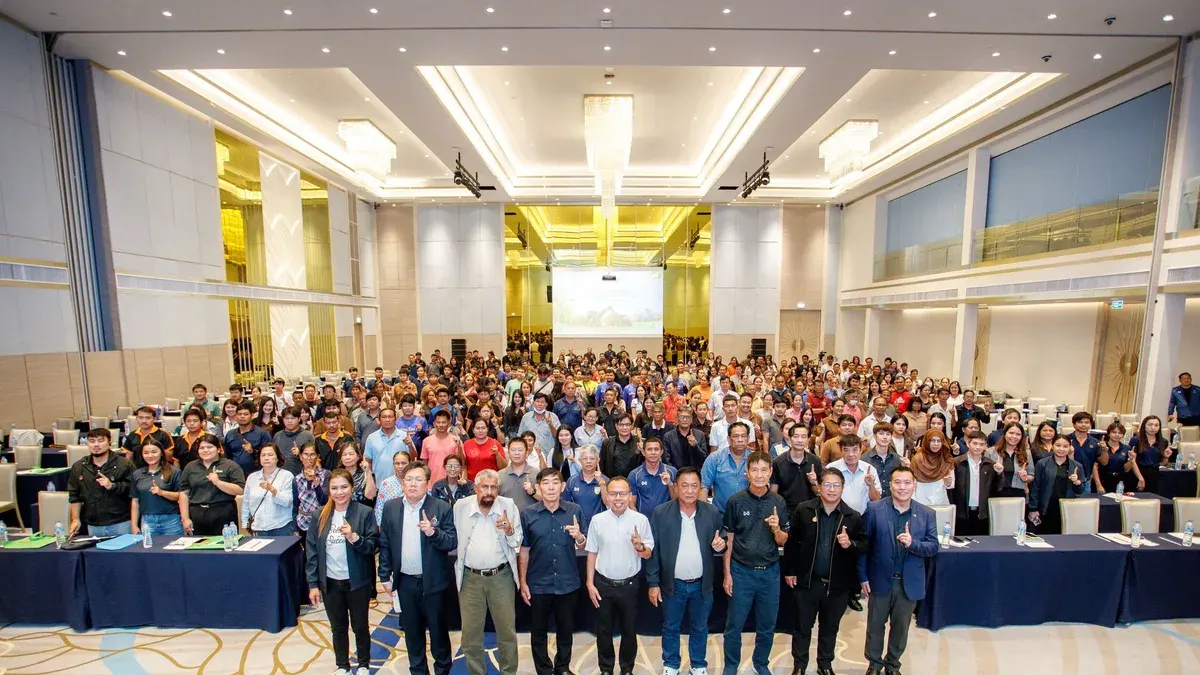
OCSB Secretary-General Bai Noi Suwannachatri led the first field outreach in Nakhon Sawan to prepare farmers and mills for the 2026/27 production season. He revealed the board is preparing to propose a 7,081 million baht government budget to subsidize fresh cane cutting for the 2025/26 season at an expected 69 baht per ton. An additional 51 baht per ton will be submitted to the Cane and Sugar Board for consideration of funding sources and implementation.
Highlighting the reduction of burnt cane to 3.8% in the past season through cooperation among farmers, mills, and agencies, the OCSB will propose lowering the daily burnt cane acceptance quota at mills from 20% to 15% for the 2026/27 season, with a season-long target of no more than 5% nationwide. The board also plans to use the Cane and Sugar Fund to support long-term burning reduction.
"Not burning cane is not only about reducing PM2.5 dust but also the future of Thai sugar exports, as foreign markets increasingly prioritize the environment. If Thailand cannot adapt, it may affect long-term competitiveness," Bai Noi said.
The OCSB is also revising regulations on production efficiency and cane quality to upgrade raw material standards and increase sugar yields. For 2026/27, the board allocated an estimated 97.02 million tons of cane intake, down from the previous season, though preliminary cane prices are expected to be higher due to yield and global demand factors. Official prices must still follow Cane and Sugar Board criteria.
Thailand's sugar industry covers about 10 million rai, generating over 200 billion baht annually. The 2025/26 season saw 105.86 million tons of cane producing over 12 million tons of sugar, with 80% exported, linking industry revenue to global sugar prices and exchange rates.
Regarding EU environmental rules, Saroch Si-sai, European Union Delegation to Thailand project manager, noted three key measures affecting international trade: CBAM (carbon border adjustment), EUDR (deforestation-free products), and CSDDD (corporate sustainability due diligence). While cane and sugar are not directly covered by CBAM and EUDR, operators should prepare for indirect impacts on energy costs, supply chain traceability, and environmental and labor standards. Adaptation follows a "3 S" approach: Statistics, Cleanliness, and Synergy — systematic resource data collection, reducing burning, eco-friendly processes, and building networks for green technology and financing.