Thailand Cuts Refinery Oil Pricing Costs, Reduces Biofuel Taxes
The user wants a short summary (1-2 sentences, 120-220 characters, max 240) for a news deck. The article is about Thailand cutting refinery oil pricing costs and reducing biofuel taxes. Key points: Energy Minister ordered restructuring on O
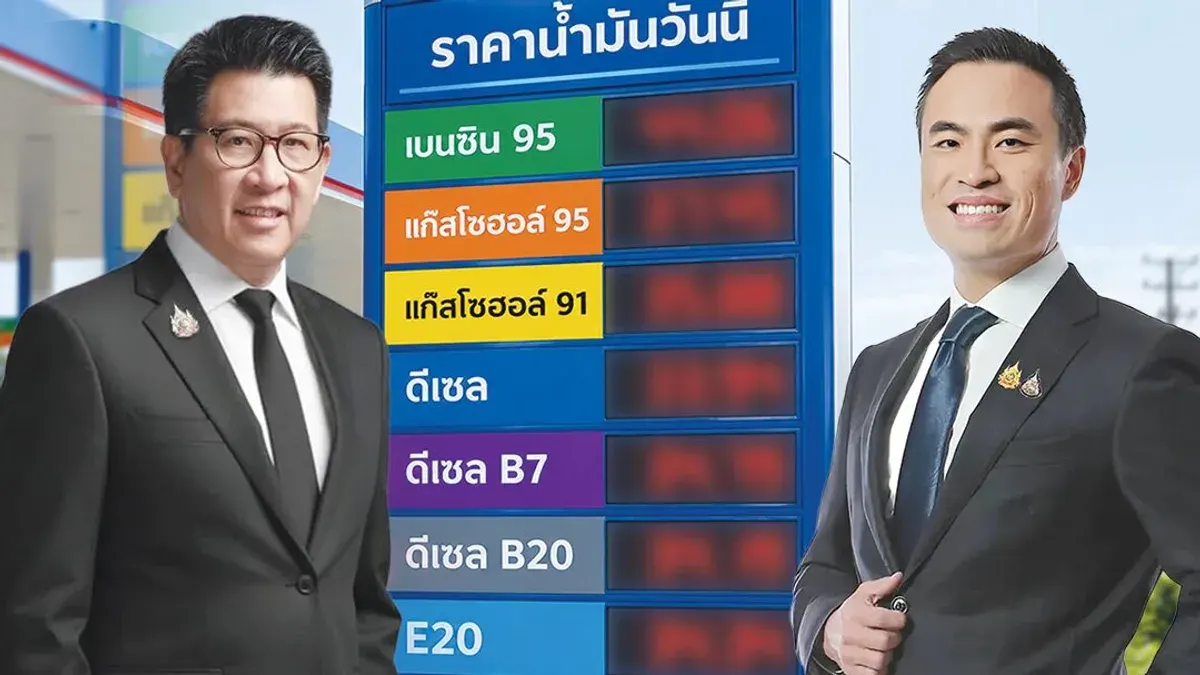
The case has generated significant buzz, drawing attention from motorists and the general public alike. On October 28, 2025, Energy Minister Ekkanat Promphan ordered a restructuring of oil pricing and a revision of the refinery gate price calculation formula. The Energy Policy Administration Committee (EPPO) resolved to adjust the refinery gate price guidelines by eliminating three phantom cost items — marine freight, insurance, and transit loss from Singapore — which had been embedded in Thailand's oil pricing formula for over 22 years. It also ordered a reduction of the oil reserve premium to two-thirds of its original rate to align with actual reserve levels. The changes took effect on October 29, 2025, and are estimated to lower refinery gate prices by 0.0875–0.3548 baht per liter across fuel types, a total daily value of 29.7 million baht, and an expected annual cost reduction of 10.839 billion baht.
Following the refinery gate price restructuring, the Oil Fuel Fund Committee convened and resolved to adjust the fund's compensation rates. Diesel B7 compensation was cut by 0.38 baht per liter to 2.93 baht per liter, resulting in a retail price drop of 1 baht per liter to 42.54 baht per liter. Gasohol E10-95 compensation fell by 0.16 baht per liter to 1.61 baht per liter, with retail prices down 0.50 baht per liter to 41.54 baht per liter. Gasohol E10-91 compensation also dropped 0.16 baht per liter to 1.61 baht per liter, bringing retail prices down 0.50 baht per liter to 41.17 baht per liter. These changes took effect from October 29, 2025.
The compensation cut provides immediate benefits to the large group of motorists, while the transport and logistics sectors gain relief from lower costs. This may help ease cost-of-living pressures if reduced transport costs filter through to consumer goods prices. However, in the longer term, it remains to be seen whether pump prices will fall in line with refinery gate costs, since retail prices also include excise tax, Oil Fuel Fund levies, and marketing margins. It cannot yet be concluded that pump prices will drop by the full amount the government estimates. If pump prices do not adjust further, motorists may not receive the full benefit, and the extent to which savings reach motorists, transport operators, and consumers must be monitored.
Separately, on October 27, 2025, the Cabinet resolved to cut excise tax on E20 and B20 fuels for three months from October 28, 2025 to January 27, 2026, based on a proposal by Deputy Prime Minister and Finance Minister Pichai Chunhavajira. The move aims to reduce energy cost burdens and encourage a shift toward biofuels to boost domestic agricultural feedstock use, thereby increasing farmer incomes. It also seeks to create a price differential for domestically produced diesel versus imported diesel, incentivizing domestic fuel use and reducing reliance on volatile imported fossil fuels amid the ongoing Middle East conflict. The outcome of this policy must also be watched.
A preliminary analysis shows the two tax cuts will ease pressure on the Oil Fuel Fund's compensation payouts. As of October 25, 2025, the fund carried a total negative balance of 105.452 billion baht. Following the Cabinet's tax cut decision, the Oil Fuel Fund Committee met immediately and approved a reduction in the compensation rate for B20 diesel, ordering a cut in the subsidy payout.