Energy Minister Cuts Hidden Refinery Costs, Saves Consumers 10.8 Billion Baht
The user wants a short summary of the article, 1-2 sentences, 120-220 characters, max 240. Output only the summary text, no quotes, no labels, no markdown. English only. Key points: Energy Minister Ekkanat Promphan signed order restructurin
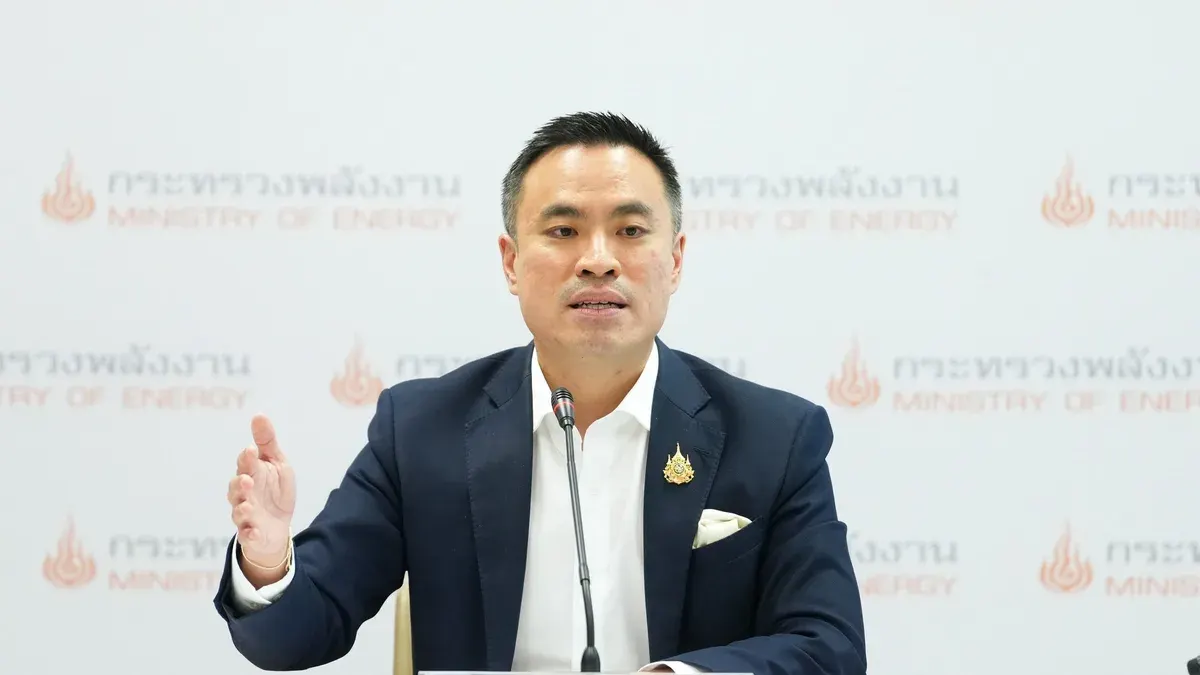
Energy Minister Ekkanat Promphan signed a historic order restructuring oil refinery gate prices at the Ministry of Energy, announcing that from October 29, 2026, all refinery gate prices will be calculated under new criteria that remove hypothetical costs not actually incurred. These costs have been embedded in the formula since 2004 when the Energy Policy and Planning Office (EPPO) established the pricing structure — a total of 22 years. This adjustment will reduce the public burden by 10.839 billion baht per year.
Previously, Thailand's refinery gate prices referenced Singapore finished-product market prices, then added hypothetical costs as if the fuel were shipped by tanker from Singapore, even though most fuel is refined domestically. The new criteria, per the Energy Policy Administration Committee (EPAC), eliminate the assumed freight, insurance, and loss (FIL) charges from the Singapore route, and reduce the stockpiling reserve cost to two-thirds of its previous level to match actual reserves.
The result: all refinery gate prices drop by 0.0875–0.3548 baht per liter, worth 29.7 million baht per day or 10.839 billion baht per year. Diesel B7, the highest-volume fuel, benefits most with a 0.3548 baht per liter reduction, saving 6.795 billion baht annually, followed by Gasohol 95 at 0.3203 baht per liter, saving 2.115 billion baht annually.
"Relying solely on world market prices may suit normal conditions, but in a crisis this formula generates unfair excess profits at the public's expense."
Since April 2026, EPAC has invoked the Fuel Shortage Prevention Act eight times to cut high-speed diesel refinery gate prices, recovering 31.786 billion baht in excess refinery profits covering 11.058 billion liters of diesel. Combined with 64.355 billion baht from the Oil Fund used for price stabilization, the government has spent 96.141 billion baht total on fuel price relief.
"Clawback of refinery excess profits is a crisis-specific fix; removing phantom costs this time addresses the structural root. Even after the crisis ends, these billions per year will no longer return to Thai fuel bills."
This measure aligns with the earlier removal of 18 billion baht in public service electricity charges from household power bills. Both steps review hidden costs embedded in energy pricing structures to ensure the public does not pay for what they do not actually use, and to make energy prices fair for all Thais.