Lanta & News
No. 01 · ENDLESS
National

Officials Refer 5,925 Cases to Five Agencies for Criminal Investigation

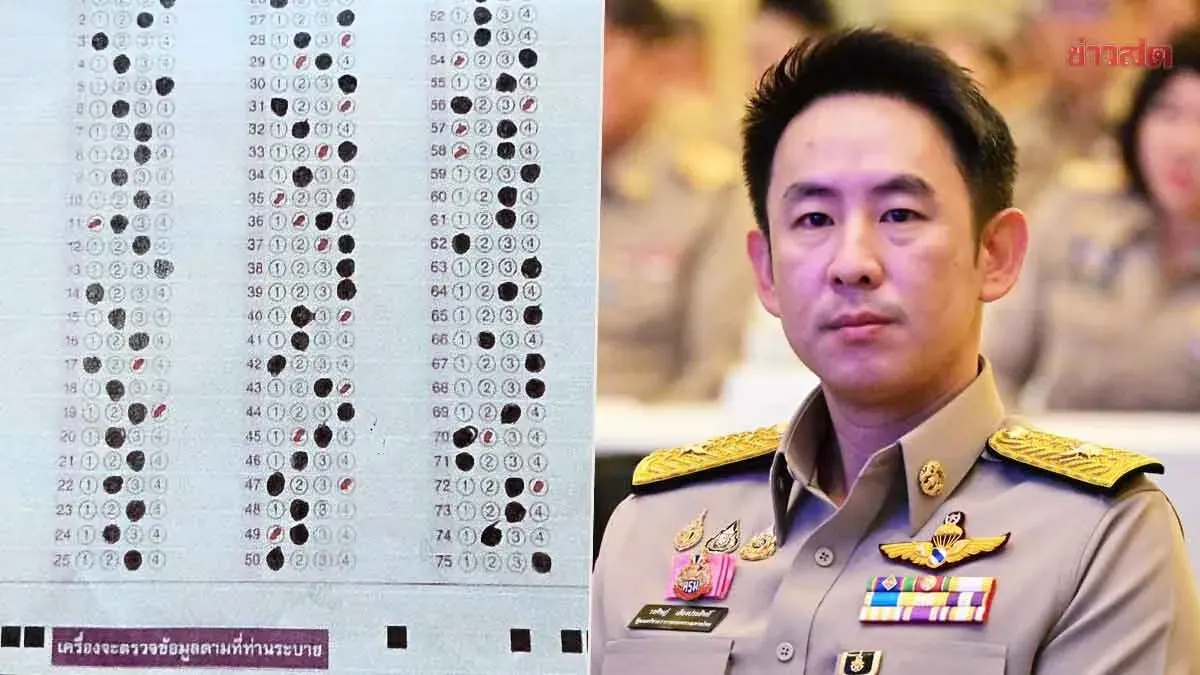
Officials referred 5,925 people accused of inflating exam scores to five agencies including the National Anti-Corruption Commission and the Department of Special Investigation for criminal prosecution. The move aims to pursue fraud charges
Officials Refer 5,925 Cases to Five Agencies for Criminal Investigation
4d ago Khaosod

The Department of Local Administration has advanced its anti-corruption measures by submitting the names and information of 5,925 people found to have inflated scores to five cooperating agencies for further investigation and prosecution. These agencies include the National Anti-Corruption Commission, the Office of the Ombudsman, the National Police, the Special Cases Investigation Division, and the Department of Special Investigation. Each will examine the data within their jurisdiction, investigating fraud, criminal offenses, and financial trails according to their authority and procedures. Deputy Interior Minister Vorasit Liangprasithi stated that this action represents a critical step beyond score correction, requiring the Interior Ministry to ensure all corruption-related facts enter the legal review process of competent authorities. He stressed that restoring fairness to honest test-takers must go hand-in-hand with investigating those who damaged the examination system. The 5,925 cases have now been submitted to all five agencies, whose investigations and prosecutions will proceed according to their respective mandates and processes. Vorasit added that the data submission follows an inter-agency cooperation framework to ensure thorough and just investigation, with the Interior Ministry providing full support to the responsible agencies. He concluded that the matter must be clear: honest people deserve justice, while corruption must be investigated by law. The solution is not confined to score adjustment but requires pursuing the facts and enabling lawful authorities to proceed fully.
No. 01 of Read at source → Next
Tourism

Chinese Tourists Shun Thailand Over Safety Concerns

Chinese tourists are increasingly avoiding Thailand due to safety concerns and negative social media coverage of scams and crime, causing Thai travel agents to slash their 2026 visitor forecasts from 9 million to 7 million.

4d ago The Thaiger Travel

Thailand is losing its appeal among Chinese touristsLegacyChinese travellers will take fewer overseas trips in the second half of 2026 than forecasters expected. A weak economy at home has made them far choosier about which trips are worth taking. China Trading Desk, a travel data firm, now expects about 179 million outbound trips this year. It puts spending at destinations at around 258 billion US dollars. Both figures are almost 3% below its June estimate. Those numbers would still be a record and both sit above pre-pandemic levels. The recovery has not stopped. It has slowed. Subramania Bhatt, who heads China Trading Desk, said the appetite to travel has not disappeared. Travellers are simply more selective about when they go and whether a trip is worth it. The detail that matters for destinations is where the weakness sits. Those who do travel are keeping their trip budgets roughly intact. The shortfall is in the number of trips and not the spend on each one. China’s drawn out property crisis remains the main drag. Conflict in the Middle East has also disrupted long haul routes, pushing some travellers towards destinations closer to home. Geopolitics and safety worries are redrawing the map as well. Japan, long a favourite, has been hit by a diplomatic row over Taiwan. Chinese airlines have cut flights and arrivals from China are expected to more than halve this year to 4.1 million. Thailand is losing its pull for a different reason. Heavy coverage of scam networks and safety incidents has damaged confidence among Chinese travellers. That pressure was already visible before this forecast. In June the Association of Thai Travel Agents cut its own 2026 target for Chinese arrivals from 9 million to 7 million. ATTA blamed safety concerns above all, including reported ransom cases, disappearances and scam linked crime. It also pointed to higher travel costs and damaging coverage on Chinese social media. South Korea is the clear winner from the reshuffle. It picks up shoppers who spend heavily along with travellers who have switched away from Japan. Korea expects about 7 million Chinese visitors this year, worth close to 13 billion dollars or roughly 1,815 dollars a head. Uncertainty is also pushing people closer to home, and Hong Kong and Macau now account for nearly 40% of the entire Chinese outbound market. Big visitor numbers do not always mean big money. Hong Kong expects around 41 million trips from the mainland this year but average spending is only about 310 dollars a head. France shows the opposite pattern, expecting just 2.2 million Chinese trips while pulling in 7,622 dollars per visitor. That gap is the useful lesson for Thailand. Arrival counts and tourism revenue are not the same target and a destination can win one while losing the other. Across the whole market outbound trips are still on track to rise 7% on 2025, with average spending at 1,437 dollars a trip. Related news

Thailand lost a third of its Chinese tourists. It has not got them back. Thailand tourism arrivals fall 3.19% as Vietnam gains ground Japanese tourists eye Thailand as yen rebounds from 40-year low

Sources: Bloomberg, China Trading Desk,  The story Thailand is losing its appeal among Chinese tourists as seen on Thaiger News.

No. 02 of Read at source → Next
National

Bank of Thailand Tackles Four Financial Crises Amid Slowing Growth

Bank of Thailand's governor outlined four financial priorities to combat slowing economic growth, including tackling household debt, expanding financial access for small businesses, and preventing exploitation through non-bank lenders.

Bank of Thailand Tackles Four Financial Crises Amid Slowing Growth
4d ago Khaosod

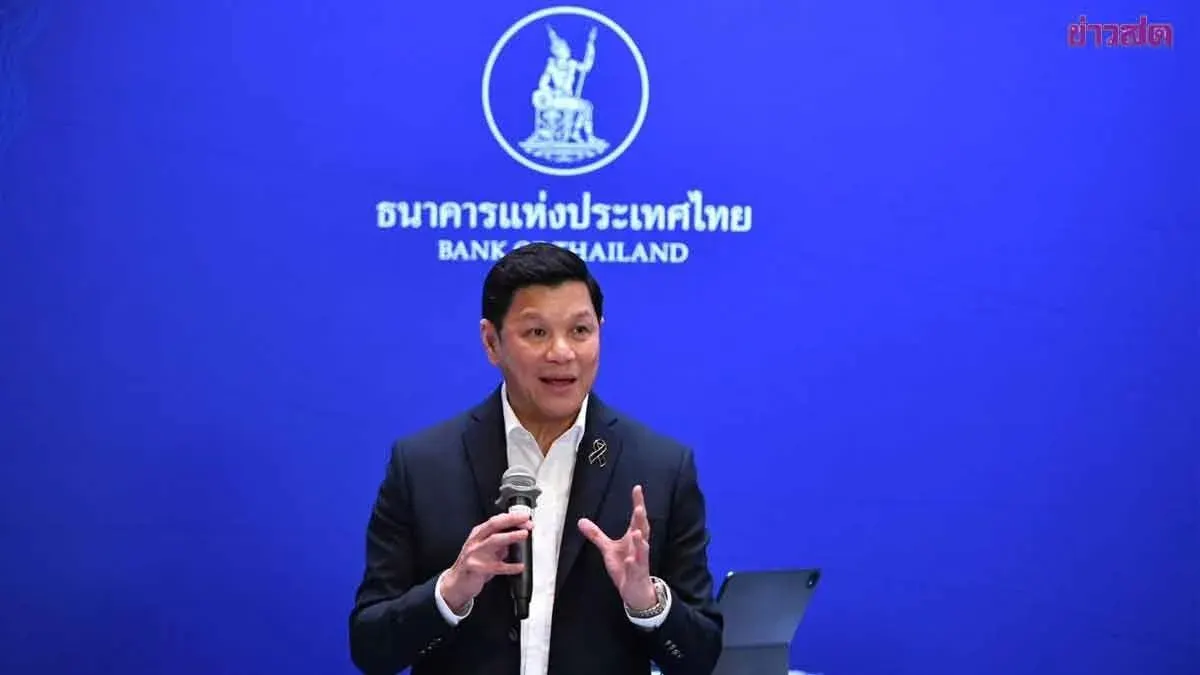
Bank of Thailand Governor Veerathai Santiprabhob outlined the central bank's approach to addressing four financial challenges threatening Thailand's economic growth and stability. The Bank of Thailand's primary mission of maintaining macroeconomic stability remains unchanged, Veerathai said, and while inflation and financial system risks have diminished significantly, Thailand's real problem now lies in slowing economic growth and declining growth potential due to structural issues. He warned that without decisive action, prolonged slow growth will reduce business and household incomes, eventually leading to rising non-performing loans that will undermine macroeconomic stability.

Veerathai questioned the value of achieving financial stability if the economy continues to deteriorate, businesses close, and poverty increases. To address this, the Bank of Thailand will focus on four financial matters within its mandate: resolving household debt, improving financial inclusion for SMEs and small borrowers, ensuring fair-priced financial services for low-income earners and SMEs, and preventing financial channels from facilitating corruption and illicit transactions. The central bank will also increase oversight of non-bank lenders and payment systems, as risks of consumer exploitation and irregular transactions through these channels have grown.

"When risks change, the Bank of Thailand must adapt," Veerathai said. "If we don't evolve, we can't fulfill our duties fully. While staying in the past might be easier and more comfortable, the Bank of Thailand is fortunate to have talented, energetic people with good values who refuse to be stuck in old ways. I want to invite everyone to work together and help our country improve."

No. 03 of Read at source → Next
National

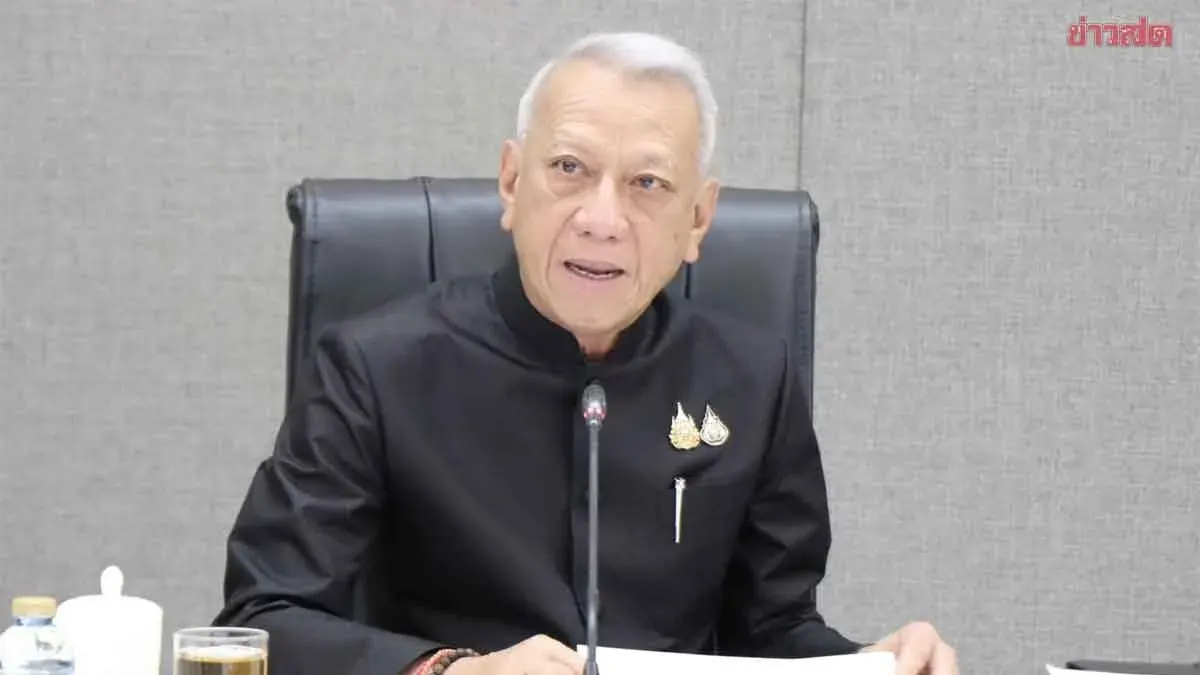
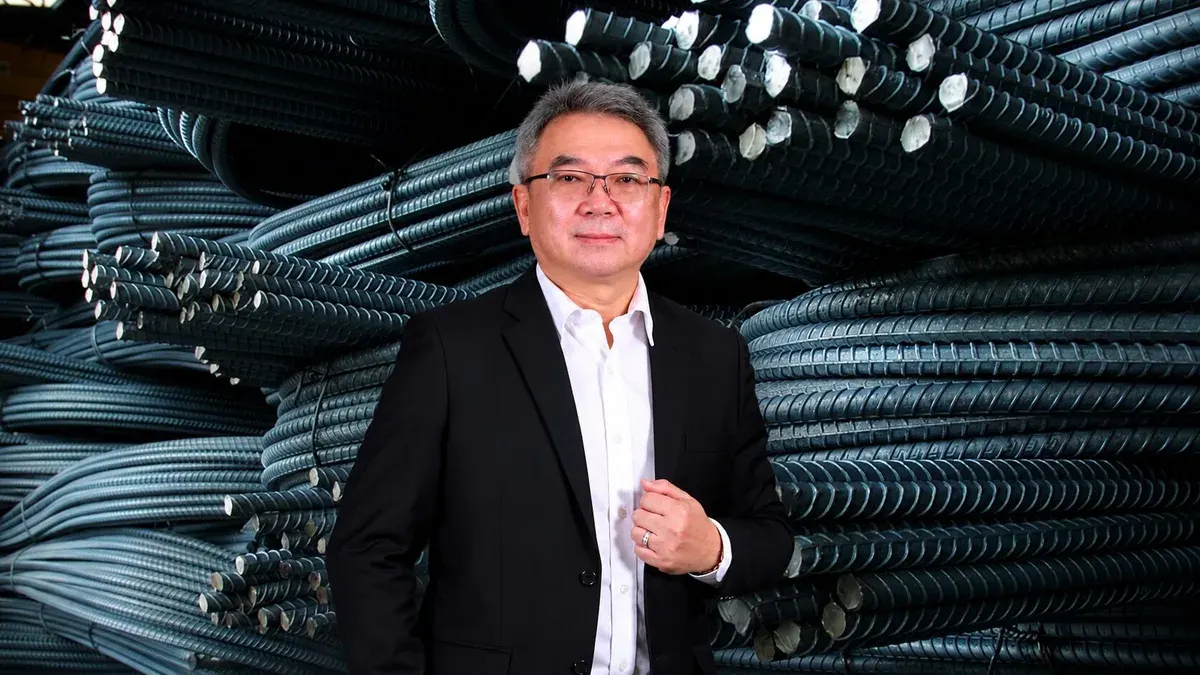
Thai Steel Industry Urged to Upgrade Standards, Not Compromise Safety

Thailand's steel industry must upgrade manufacturing standards rather than compromise on safety, industry leaders argue ahead of public hearings on new quality benchmarks opening August 17.

Thai Steel Industry Urged to Upgrade Standards, Not Compromise Safety
4d ago Khaosod

The Standard Long Steel Association has emphasized that Thailand's steel industry must learn from the 1997 Asian financial crisis, which severely impacted the sector through currency weakness, foreign debt, and reduced steel demand. Since steel manufacturing requires high capital investment in factories, machinery, quality control systems, and environmental management, many producers faced financial hardship and took decades to recover. This lesson underscores the need for major transformation across efficiency, quality, safety, and environmental performance. Pravit Horungrem, board member of the Standard Long Steel Association, stressed that upgrading industrial standards should not be viewed as anti-competitive but as setting uniform benchmarks to enhance the nation's long-term competitiveness.

Regarding the expansion of induction furnace technology, Pravit argued that the critical factor should not be the technology's origin but the production results—quality control capability, product consistency, and safety, especially for steel used in building and infrastructure where public safety is at stake. Public hearings on the new steel standards draft will open August 17. Pravit called for constructive dialogue with a shared goal: raising Thai steel standards to ensure effective quality and safety management.

"History teaches us—we must not repeat the IMF crisis. Thailand's steel industry must upgrade its IF standards," Pravit said. He noted that steel sector competition affects not just factory operators but also workers, families, contractors, transporters, scrap dealers, and the entire supply chain, so standard-setting must consider the industry holistically rather than individual operator costs.

TIS criteria should apply equally to all operators regardless of nationality. Any technology meeting stricter standards can compete fairly; those facing limitations should upgrade their production processes and technology to ensure reliable quality control across every output, not just sample testing. Pravit added: "Thailand needs foreign investment, including from China, but it should bring capital, technology, knowledge, and higher standards—not competition through downgrading to support lower-cost technology. Factories can be improved, machinery replaced, technology upgraded, but public safety standards must never be downgraded."

Pravit reiterated that Thai steel industry growth should be strong and sustainable, covering efficiency, quality, social responsibility, and the green industrial transition. Future competitiveness will not be measured by cost alone but by quality, safety, energy efficiency, and environmental impact.

No. 04 of Read at source → Next
National

Road Safety Fund Launches Lucky Plate Auction Campaign

The Road Safety Fund launched a campaign promoting vanity license plate auctions, with proceeds supporting road accident victims and safety initiatives. Auctions occur twice monthly and allow buyers to select plates based on numerological p

Road Safety Fund Launches Lucky Plate Auction Campaign
4d ago Khaosod

The Road Safety Fund has launched a major awareness campaign called "Lucky Plates You Can Choose," featuring renowned numerologist Thosaphorn Sritula, to educate the public about the auction process for vanity license plates in Bangkok and special character categories. The campaign emphasizes that plate auctions are not just about owning custom numbers but serve as a charitable bridge, with all auction revenue directed toward supporting road accident victims and promoting sustainable road safety. Auctions will be held twice monthly on the second and fourth weeks, allowing interested bidders to select their preferred lucky plates based on numerological principles that align with success, smooth journeys, and safety. More details and schedules are available on the Road Safety Fund Facebook page and at Tabienrod.com.

No. 05 of Read at source → Next
Tourism

TAT Promotes Thailand Surf Therapy to International Media

Thailand's Tourism Authority is promoting a new surf therapy wellness program to international media and creators, positioning it as a structured experience combining surfing, mindfulness and nature to support physical and mental wellbeing

4d ago TAT Newsroom

Bangkok, 14 August 2026 – The Tourism Authority of Thailand (TAT) concluded a series of international creator and media journeys in Phuket and Phang-nga: the Amazing Thailand Surf & Wellness Journey and the Amazing Thailand x Insta360 creator itinerary. Both initiatives brought international media representatives and creators from key markets to experience Thailand’s surf, wellness, nature, community and cultural offerings while reinforcing “Healing Is the New Luxury”, TAT’s international communication direction for meaningful travel that supports physical, emotional and mental wellbeing.

This international engagement builds on the development of Thailand Surf Therapy under Thailand Health Excellence 2026, through which TAT and partners are applying international surf therapy knowledge and science-based wellness principles to Thailand’s tourism context. Designed as a structured wellness experience rather than a medical treatment, the concept combines surfing, nature, physical movement, mindfulness and positive social connection, drawing on knowledge shared by South Africa-based Waves for Change.

The Amazing Thailand Surf & Wellness Journey, held from 8–13 August, brought eight international media representatives and KOLs from the United Kingdom, Australia and Japan together with Thai tourism and wellness partners. The group comprised Tom Dickinson of lifewithtommm and Lauren Mackenzie of wheres.loz from Australia; Andiana and Mike of wander.licious and Chess Sayer of chess_sayer from the United Kingdom; and ri_asiajapan of runbkk.net, Ame Ayumi of amemi8 and Ken Yashiro from Japan.

In Khao Lak, Phang-nga, one of Thailand’s most established surf destinations, participants experienced guided Thailand Surf Therapy at Memories Surf House, with sessions covering water safety, movement and progressive surf skills. The wider itinerary connected surfing with wellness at Devasom Khao Lak and La Vita Sana, forest bathing at Khao Lak–Lam Ru National Park, kayaking at the Little Amazon in Takua Pa, cultural experiences in Takua Pa Old Town and Phuket Old Town, farm-to-table activities and dining at Michelin Guide-listed restaurants.

Content produced by the participants during and following the journey, including Instagram Stories, carousel posts, Reels and TikTok videos, will extend international visibility of Thailand’s surf and wellness experiences while strengthening the Amazing Thailand brand and the ‘Healing Is the New Luxury’ message.

Running alongside the journey, the Amazing Thailand x Insta360 collaboration brought 18 creators from the Philippines, Indonesia, Malaysia, Hong Kong, Japan, Taiwan, Vietnam and Thailand on a dedicated itinerary across Phuket and Phang-nga from 8–12 August. Participants took part in activities woven into the same “Healing Is the New Luxury” narrative, including guided Thailand Surf Therapy sessions, nature- and community-based wellness experiences and local cultural engagements. Their content captured these experiences for global audiences.

The two groups converged on 9 August at “The Wave of Healing” Networking Dinner at La Solaya in Khao Lak, supported by TAT’s Tourism Products Department and the TAT Phang-nga Office. The industry-focused evening connected international participants with TAT executives, tourism operators, wellness partners, community representatives and project stakeholders to exchange perspectives on Thailand Surf Therapy and future tourism product development.

Ms. Eurblarp Sriphiromya, Executive Director of TAT’s Tourism Products Department, said, “Healing Is the New Luxury reflects a shift in what travellers increasingly value: meaningful experiences that reconnect them with nature, support their wellbeing and create lasting value. Thailand Surf Therapy brings this to life by combining international knowledge with Thailand’s coastal assets, wellness expertise and hospitality. Through this journey, TAT is connecting international storytellers with Thai operators and communities while showing how science-based wellness can develop into distinctive tourism experiences for global markets.”

Thailand Surf Therapy incorporates the five-step “Take 5” framework of Energise, Check-in, Breathe in, Play and Check-out, using movement, reflection, breathing, recreation and positive interaction within a structured surf experience. The project has built capacity among facilitators from seven Thai organisations: La Flora Group, La Vita Sana and Memories Surf House in Phang-nga; Prince of Songkla University, Phuket Campus; Chanthaburi Surf Tribe; I use my palm in Nonthaburi; and Chann All Soul. They are now extending the initiative through tourism product development, coach networking, learning resources and further research.

The work is also taking shape through practical visitor programmes. In Khao Lak, partners have developed a five-day, four-night Surf Therapy programme combining structured surf sessions with accommodation packages that include wellness activities, meals and nature-based experiences, demonstrating how the concept is evolving from capacity building into market-ready tourism products for international visitors.

No. 06 of Read at source → Next
National

Unified Transit Fare Cap of 45 Baht Launches January 1, 2027

Thailand's government will launch a unified transit fare cap of 45 baht for Bangkok-area rail lines starting January 1, 2027, eliminating duplicate charges when passengers transfer between lines.

Unified Transit Fare Cap of 45 Baht Launches January 1, 2027
4d ago Khaosod

Deputy Prime Minister and Transport Minister Pipat Ratchakitprakarn disclosed the details after chairing the second 2026 meeting of the Unified Fare Policy Committee at the Transport Ministry. Attending were Deputy Transport Minister Siripong Angkaskulkiat, Permanent Secretary Chayatharm Phromsri, and representatives from related agencies. The committee reviewed implementation of the 2025 Unified Fare Management Act, particularly the drafting of secondary legislation, criteria, standards, and oversight mechanisms to ensure the system works in practice. Officials also discussed revenue management systems and negotiations with service providers and concessionaires to align fare structures with government policy on reducing living costs, upgrading public transport, and ensuring affordable, efficient travel options. The goal is to launch the unified fare measure by January 1, 2027.

Ratchakitprakarn explained that the measure sets unified fares for participating rail lines in Bangkok and its surrounding areas, with an initial entry fare capped at 17 baht and a maximum total fare of 45 baht per trip. The system will eliminate duplicate entry charges when passengers transfer between lines, subject to the measure's terms and conditions. Guidelines for transfer journeys are being prepared to align with relevant laws, unified fare standards, and system readiness. The initiative targets reducing commuting costs especially for those using multiple rail lines daily, and aims to encourage greater public transport use, reduce fare redundancy, and develop an integrated, efficient multi-line network.

Regarding the Central Clearing House mechanism to collect, settle, and distribute fares between operators, the committee tasked the Transport Ministry with expediting a ministerial announcement on licensing criteria for the CCH and consulting the Finance Ministry on appropriate operational formats in line with a cabinet resolution from June 23, 2026. The system will comply with the 2025 Unified Fare Management Act and related secondary legislation to ensure standards, transparency, auditability, and efficient multi-line transaction processing before presentation to the policy committee.

Meanwhile, the committee assigned the Mass Transit Authority, the State Railway of Thailand, and Bangkok Metropolitan Administration to accelerate negotiations with concessionaires on fare structures, revenue sharing, and related terms so the system can support unified fares within legal and contractual frameworks while considering public benefit, fairness to all parties, and long-term sustainability. The committee also approved a draft secondary law under the unified fare management act.

No. 07 of Read at source → Next
Police

Motorcycle Rider Faces Drug Charges in Bangkok Train Crash Case

A motorcycle taxi rider charged in a Bangkok train crash case says he was initially treated as a victim but later unexpectedly named as a defendant, including on drug possession charges he denies, threatening his employment prospects.

Motorcycle Rider Faces Drug Charges in Bangkok Train Crash Case
4d ago Khaosod

At 10:30 a.m. on August 14, a 31-year-old motorcycle taxi rider named Aman (surname withheld) filed a complaint seeking justice with Ekkapon Luang Prasert, founder of the Sai Mai Must Survive Facebook page, after being unexpectedly charged as a defendant in the case despite initially being called as a victim. Aman explained that on the day of the incident, he was transporting a passenger from the Ratchada area to Chulalongkorn University. At the Makkasan intersection, traffic was heavily congested with many vehicles clustered at the junction while the railway crossing barrier had not yet descended and no train signal was audible. He therefore rode into the intersection and stopped at the yellow line to avoid the railway tracks. Moments later, a train struck a bus, which then collided with several other vehicles and motorcycles ahead, damaging his bike and causing minor injuries to him and his passenger. He immediately took his passenger to Rama 9 Hospital for treatment, then to another facility, and later filed a daily report and gave a statement to police as a victim, while ensuring his passenger also provided a statement as requested. His insurance subsequently paid 31,000 baht in compensation for his motorcycle damage, which he used as a down payment on a new bike.

In July, Aman received notice to meet with the prosecutor and discovered he had been charged alongside six other individuals involved in the incident, including the bus driver, train driver, railway flagman, truck driver, and another motorcyclist. He was unaware of his defendant status until he had to arrange bail money and was detained in jail for one night. Aman expressed particular concern about drug possession charges appearing in his case alongside negligence and railway obstruction charges, despite his firm denial of any involvement with drugs. He stressed that he was not the operator of the train, no passengers died, and cannot understand why he was included in charges related to deaths and drug use. Being listed as a defendant in connection with drug charges could severely damage his reputation and future employment and job applications, as he is a working man supporting a family.

Ekkapon Luang Prasert stated that preliminary investigation and video evidence show the rider stopped in the yellow line zone where stopping is prohibited, potentially establishing negligence and railway obstruction charges if passengers were injured. However, the key issue requiring clarification is why the rider was included as a defendant in charges related to deaths and drug possession, as this could impact his record and future career prospects. Meanwhile, Pol. Lt. Col. Uramphorn Khundetchsamrit, commander of Makkasan Police Station, said the case is currently at the prosecutor stage and requested verification of information first. He noted that being named a defendant reflects the alleged facts cited in the indictment and does not necessarily mean he will face all charges equally as other defendants, and that drug charges would require corroborating evidence to proceed according to factual grounds.

No. 08 of Read at source → Next
National

Former Thai Boxing Champion Questions National Team Selection Process

Former Thai boxing champion Panapetch Chuanphatthalung criticized the Amateur Muaythai Association's recruitment process after the organization invited prominent ONE Championship fighter Nabil Anane to try out for the national Olympic team,

Former Thai Boxing Champion Questions National Team Selection Process
4d ago Khaosod

Panapetch Chuanphatthalung, a former amateur international boxer for the Thai national team, has criticized what he describes as standard practice at the Amateur Muaythai Association in recruiting famous fighters to join the national roster, despite having experienced this exclusion himself despite winning national team trials. Panapetch posted his complaint after the Amateur Muaythai Association recently recruited Nabil Anane, a prominent Muaythai fighter from ONE Championship, to try out for the national team with the goal of pursuing an Olympic gold medal in boxing at the 2028 Los Angeles Games.

In his post, Panapetch Puang-kaeo wrote: "Why all the drama? There was a time I won every championship in Thailand, competed in the Royal Thai Army Games, and beat 2-3 people for the national team. People I defeated went on to compete in the Olympics. I won the national championship, defeated a super bantamweight fighter from Rattanabandit University by more than 20 points, but two months later the association hired that same super bantamweight for the national team at 10,000 to 20,000 baht per month. I'm confused."

Panapetch, from Satun, is a former Muaythai boxer and ex-Thailand champion in the 130-pound weight division who switched to amateur international boxing before moving to Pancak Silat, where he won a gold medal at the 2017 Southeast Asian Games in Singapore and became a world champion.

However, Nabil must first be selected for the national team to represent Thailand in the Olympic qualifying round in order to earn the right to compete in the final Olympic Games in Los Angeles, United States in 2028.

No. 09 of Read at source → Next
National

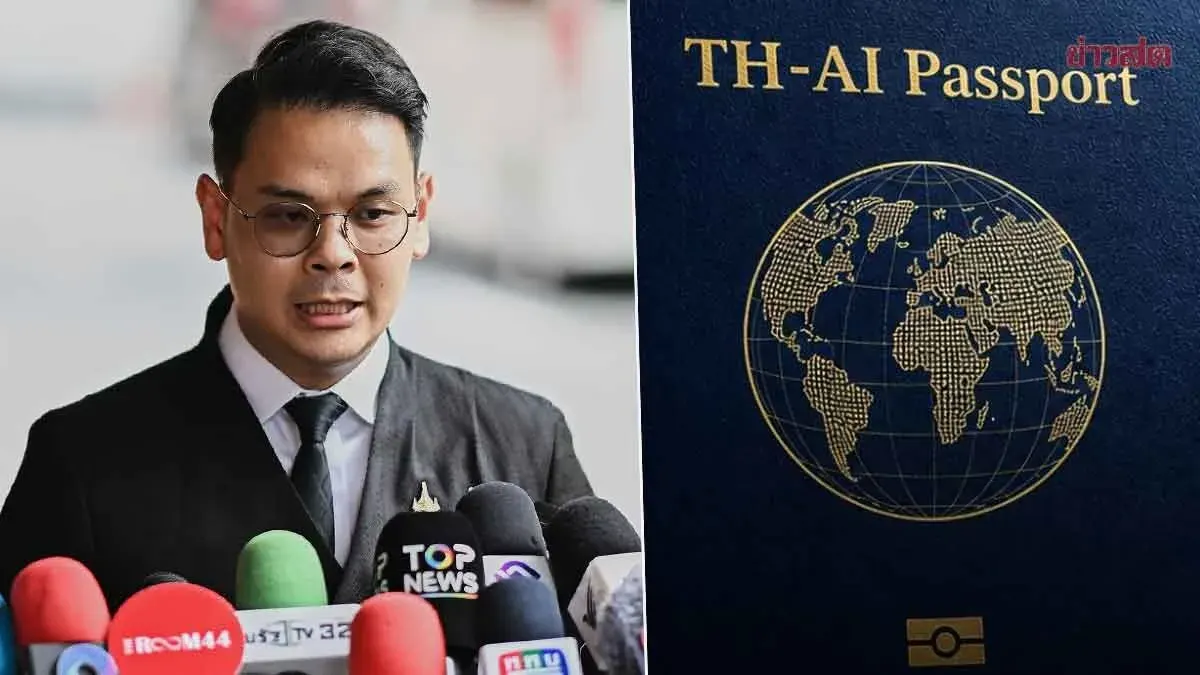
Thailand's TH-AI Passport Registration Opens August 19

Thailand's TH-AI Passport registration system opens for testing August 19, with full launch on August 31, allowing citizens to verify identity via QR code and ThaiD app.

Thailand's TH-AI Passport Registration Opens August 19
4d ago Khaosod

On August 14, a meeting of the Digital Economy Development Fund (DE Fund) management committee was held at the Ministry of Finance, chaired by Deputy Prime Minister and Finance Minister Ek Niti Nitithanprasad. Digital Economy Minister Chaiyachon Chidchob subsequently revealed that the TH-AI Passport project will continue using DE Fund resources for fiscal year 2025, though funding for fiscal 2026 remains undecided pending evaluation of the first phase. The ministry has been ordered to provide detailed project specifications following criticism that earlier documentation lacked sufficient detail and scope. The DE Fund currently holds approximately 2 billion baht.

Regarding the project timeline, Chaiyachon stated that the Digital Economy Ministry has reviewed contract details sent back by the Office of the Attorney General and is ready to proceed. A project briefing is expected within one to two days. The system testing phase opens August 19, with an official launch on August 28 and full operational rollout on August 31, 2025. Citizens can register via a QR code provided by the ministry and verify their identity using the ThaiD application.

The staggered timeline is designed to reduce congestion and prevent system crashes. Public registration for system testing begins August 19, with full registration and operational access opening August 31, 2025. The programme caps eligible recipients at 5 million people with a pay-per-use payment model. When asked why he did not attend a parliamentary budget committee meeting chaired by opposition MP Ratchanok Srinok, Chaiyachon said he had delegated relevant officials to provide testimony and had not avoided the process.

No. 10 of Read at source → Next
Loading more…
Endless reading Scroll to read. When you reach the bottom, keep scrolling. A bar fills, and the next story slides in when it's full. ↑ ↓ or Space Or use the arrows at the bottom of the screen.