Thai Steel Industry Urged to Upgrade Standards, Not Compromise Safety
Thailand's steel industry must upgrade manufacturing standards rather than compromise on safety, industry leaders argue ahead of public hearings on new quality benchmarks opening August 17.
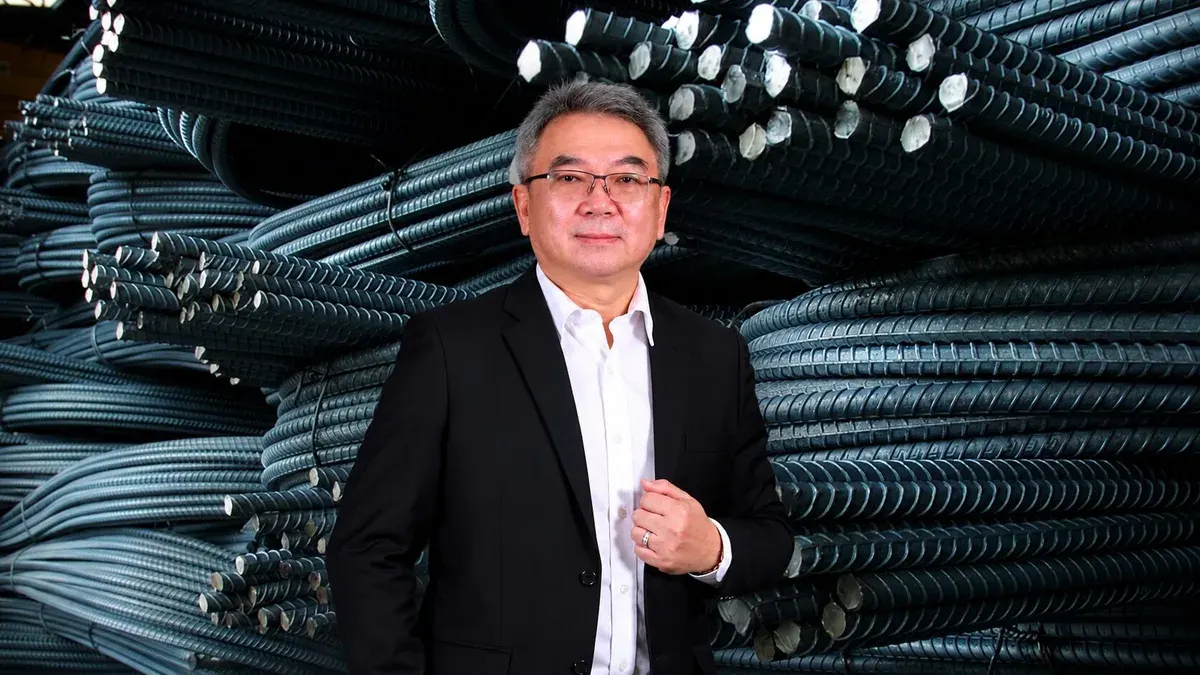
The Standard Long Steel Association has emphasized that Thailand's steel industry must learn from the 1997 Asian financial crisis, which severely impacted the sector through currency weakness, foreign debt, and reduced steel demand. Since steel manufacturing requires high capital investment in factories, machinery, quality control systems, and environmental management, many producers faced financial hardship and took decades to recover. This lesson underscores the need for major transformation across efficiency, quality, safety, and environmental performance. Pravit Horungrem, board member of the Standard Long Steel Association, stressed that upgrading industrial standards should not be viewed as anti-competitive but as setting uniform benchmarks to enhance the nation's long-term competitiveness.
Regarding the expansion of induction furnace technology, Pravit argued that the critical factor should not be the technology's origin but the production results—quality control capability, product consistency, and safety, especially for steel used in building and infrastructure where public safety is at stake. Public hearings on the new steel standards draft will open August 17. Pravit called for constructive dialogue with a shared goal: raising Thai steel standards to ensure effective quality and safety management.
"History teaches us—we must not repeat the IMF crisis. Thailand's steel industry must upgrade its IF standards," Pravit said. He noted that steel sector competition affects not just factory operators but also workers, families, contractors, transporters, scrap dealers, and the entire supply chain, so standard-setting must consider the industry holistically rather than individual operator costs.
TIS criteria should apply equally to all operators regardless of nationality. Any technology meeting stricter standards can compete fairly; those facing limitations should upgrade their production processes and technology to ensure reliable quality control across every output, not just sample testing. Pravit added: "Thailand needs foreign investment, including from China, but it should bring capital, technology, knowledge, and higher standards—not competition through downgrading to support lower-cost technology. Factories can be improved, machinery replaced, technology upgraded, but public safety standards must never be downgraded."
Pravit reiterated that Thai steel industry growth should be strong and sustainable, covering efficiency, quality, social responsibility, and the green industrial transition. Future competitiveness will not be measured by cost alone but by quality, safety, energy efficiency, and environmental impact.