Steel Rod Standards Debate: Experts Push for Production Controls
Thailand's steel industry remains divided over new standards for reinforcing bars, with experts arguing that manufacturing process controls—not just product testing—are essential to ensure structural safety and quality consistency.
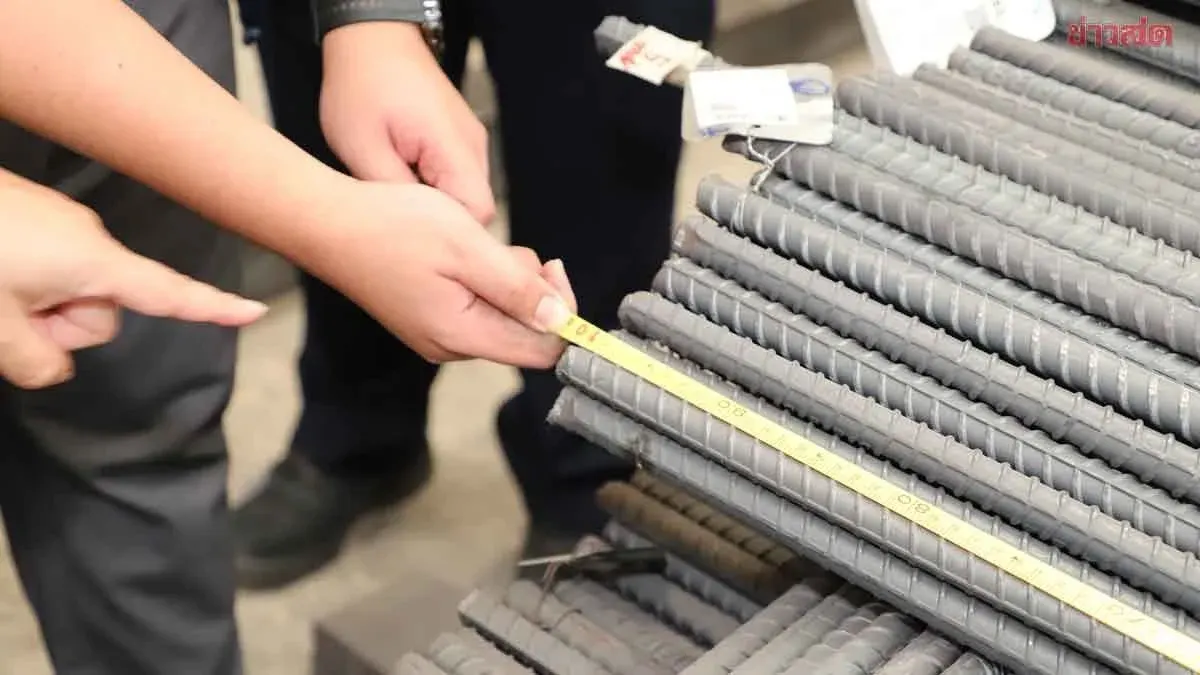
Thailand's effort to revise the Thai Industrial Standard (TIS) for deformed steel bars has stalled after two rounds of public consultation, most recently on August 17, 2025, with no consensus reached. The central dispute among Thailand's steel industry concerns whether new standards should regulate only the finished product's properties or extend control to manufacturing processes, specifically regarding the use of induction furnaces (IF), electric arc furnaces (EF), and basic oxygen process furnaces (BO).
Pongthep Thepbangchak, vice chairman of the steel industry group at the Federation of Thai Industries and a technical committee member, stressed that safety and quality consistency must be the foundation of any steel bar standard. He noted that reinforcing steel is not ordinary merchandise but a structural material critical to building strength and public safety. "The standard should not merely adopt advanced product specifications," he explained. "Even China rigorously defines manufacturing technology requirements, including mandating electric arc and oxygen processes for seismic-grade steel, which must undergo external refining. This shows that steel quality cannot be judged by end-product testing alone—production methods must be considered."
Thepbangchak highlighted that passing product tests on small samples is insufficient because once steel bars are embedded in concrete, they cannot be inspected again. Quality consistency is equally vital; testing samples represent only parts per million of total production volume, so limited batch sampling cannot guarantee the quality of all steel produced. Therefore, controlling production procedures from the source is necessary.
Narong Limasetheir from Prime Metal Technologies, an engineering and steel mill machinery firm, offered technical perspective on a proposed idea to install an argon-oxygen decarburization (AOD) unit alongside IF furnaces for steel bar production. AOD equipment is typically designed for stainless steel and functions as a converter to transform raw molten steel into high-quality steel by reducing carbon content through oxygen injection. However, standard scrap steel used as raw material for deformed bars already contains carbon levels close to the target product specification, raising questions about the technical justification for using AOD to reduce carbon further. Additionally, converters including AOD lack electrical heating systems; they generate heat from chemical reactions, which may introduce technical complications not yet fully addressed in the draft standard.