Private Sector Urges Faster Flood Prep and Water Panel Seat
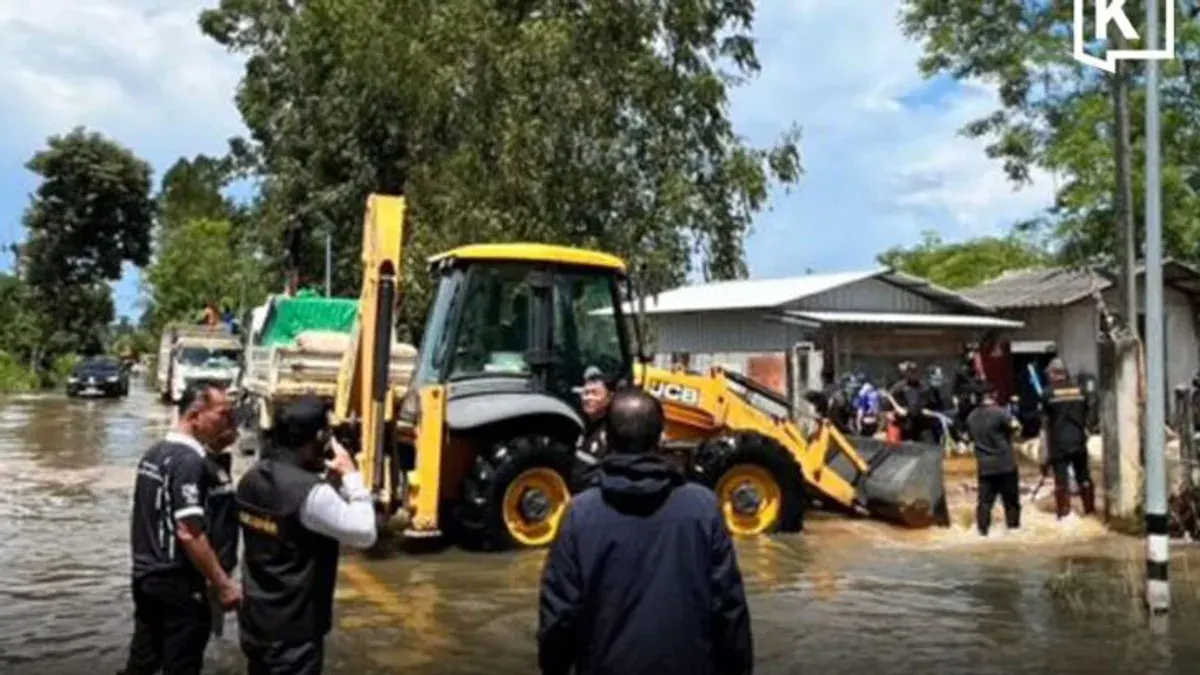
The Joint Standing Committee of Commerce, Industry and Banking warned that ongoing floods are damaging homes, businesses, agriculture, autos and tourism, with losses still unmeasured. It will ask the Prime Minister to accelerate flood preparations and to give the private sector a seat on the National Water Resources Committee. The group also called for better early‑warning systems, resilient infrastructure and disaster insurance to protect the economy.

The Joint Standing Committee of Commerce, Industry and Banking (JSCCIB) said the current flooding is hitting households, businesses—particularly small and medium enterprises—agriculture, automotive production and tourism, with damage values still unclear. It noted the floods are increasing debt burdens and shaking investor confidence.
The committee’s chairman, Pon Joramwatthananon, announced that JSCCIB will send a letter to Prime Minister Srettha Thavisin urging the government to speed up flood‑preparedness planning and to appoint private‑sector representatives to the National Water Resources Committee (NWRC) and its three sub‑committees: the sub‑committee driving the master water‑management plan and key projects, the sub‑committee overseeing water‑resources administration, and the sub‑committee developing innovation criteria for the National Water Resources Office.
He added that a special task force will be formed to assess flood impacts, propose preparedness and recovery measures, and draft an integrated water‑management plan while supporting affected victims and reviving economic activity.
Pon warned that natural disasters are becoming a structural risk to Thailand’s economy, noting the state already spends an average of 50–60 billion baht yearly on disaster relief. He called for a systematic approach that emphasizes advance preparation, proactive risk management, and investment in resilient infrastructure—including early‑warning systems, water storage, conveyance and drainage, flood‑plain allocation, and protection of economic zones and industrial estates.
The committee also stressed the need to align land‑use planning with water flow patterns and flood risks, preserve natural waterways and retention areas, and develop community and industrial zones appropriately. It urged the creation of disaster‑insurance mechanisms to limit economic losses, maintain production continuity, restore investor confidence, and strengthen long‑term water security.
Finally, the JSCCIB pointed out that air‑cargo congestion at Suvarnabhumi Airport—handling about 2.42 trillion baht worth of goods, roughly one‑third of Thailand’s total exports—is worsening flight delays and cancellations during floods, leaving many passengers and items stranded.