Ratchaburi Fisheries Releases Predatory Fish to Combat Invasive Tilapia
Ratchaburi Fisheries released Asian sea bass and microbial treatments into local canals to control invasive black chin tilapia and improve water quality. The subdistrict chief confirmed previous efforts reduced the tilapia population, and similar biological control activities are expected to continue.
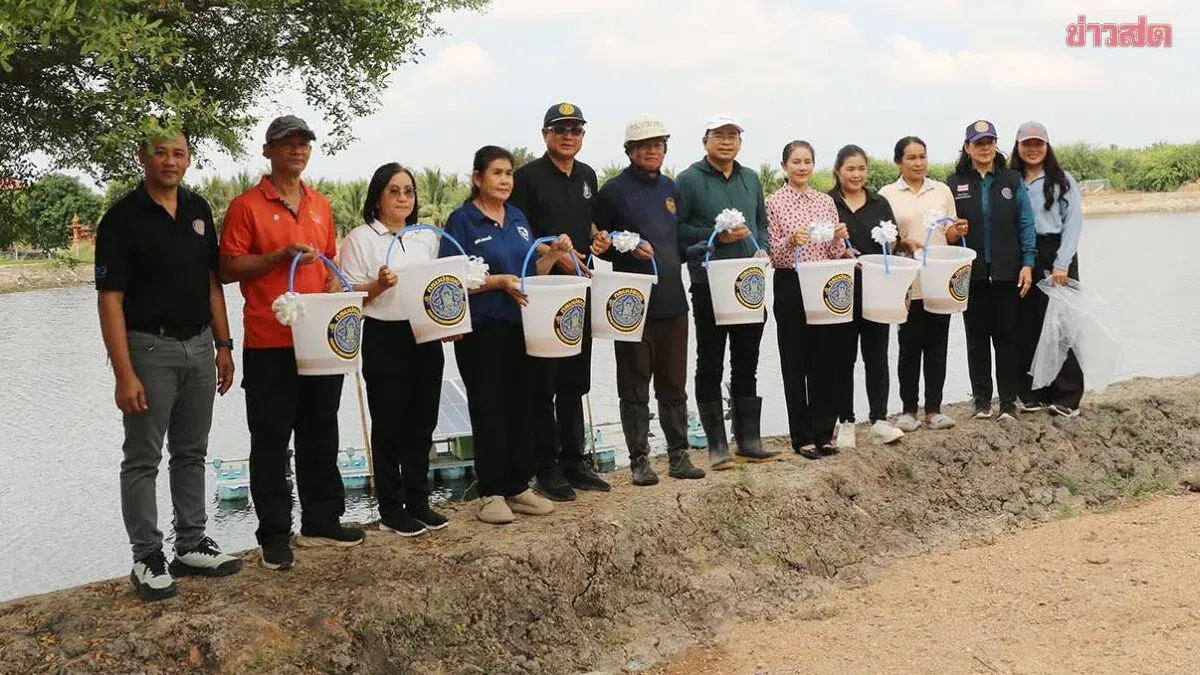
Ratchaburi Fisheries organized an event releasing Asian sea bass (kapong) to hunt black chin tilapia. The subdistrict chief said a previous round had already noticeably reduced the invasive species. On November 17, 2026, Amnaj Chin Khaw-kham of Ratchaburi Fisheries led officials alongside Suwit Kittinichit, village headman of Moo 6, Ched Samian Subdistrict, Photharam District, to introduce microbial starters from the Department of Fisheries into Khlong Nong Bang Ngu to improve water clarity and quality. They also released predatory fish to eradicate the tilapia.
Amnaj stated the activity treated wastewater while distributing Asian sea bass to farmers with land along Khlong Nong Tho Pae, Moo 4, Sam Ruean Subdistrict, Mueang District, for release in farm ditches and ponds. Some fingerlings were released directly into waterways — Khlong Nong Bang Ngu and Nong Tho Pae — to prey on juvenile tilapia. Asian sea bass are carnivorous hunters that feed on shrimp larvae, fish fry, and young aquatic animals; as they grow they consume larger prey, making the abundant black chin tilapia an ideal food source. Once mature, farmers may catch the bass, and the fish will help contain the tilapia within the area, preventing spread to other waterways per the Department of Fisheries Director-General Panasaya Niamraksha's policy.
Panasaya Niamraksha, chief of Sam Ruean Subdistrict Administrative Organization, said the area had a severe tilapia infestation. Provincial fisheries had already conducted one eradication round, which she felt reduced the population. Today fisheries brought EM (effective microorganisms) for wastewater treatment and released Asian sea bass to act as predators, and she expects such activities to continue in the area.