Rayong Detects High Acidity, Heavy Metals in Factory Pond
Authorities in Rayong discovered highly acidic water contaminated with heavy metals such as zinc, cadmium, and nickel inside a concrete pond at a former metal-plating factory in the Mab Ta Phut industrial estate. The polluted water has not been released off-site, but officials are investigating potential seepage into soil and groundwater while both the former and current factory operators negotiate cleanup responsibility.
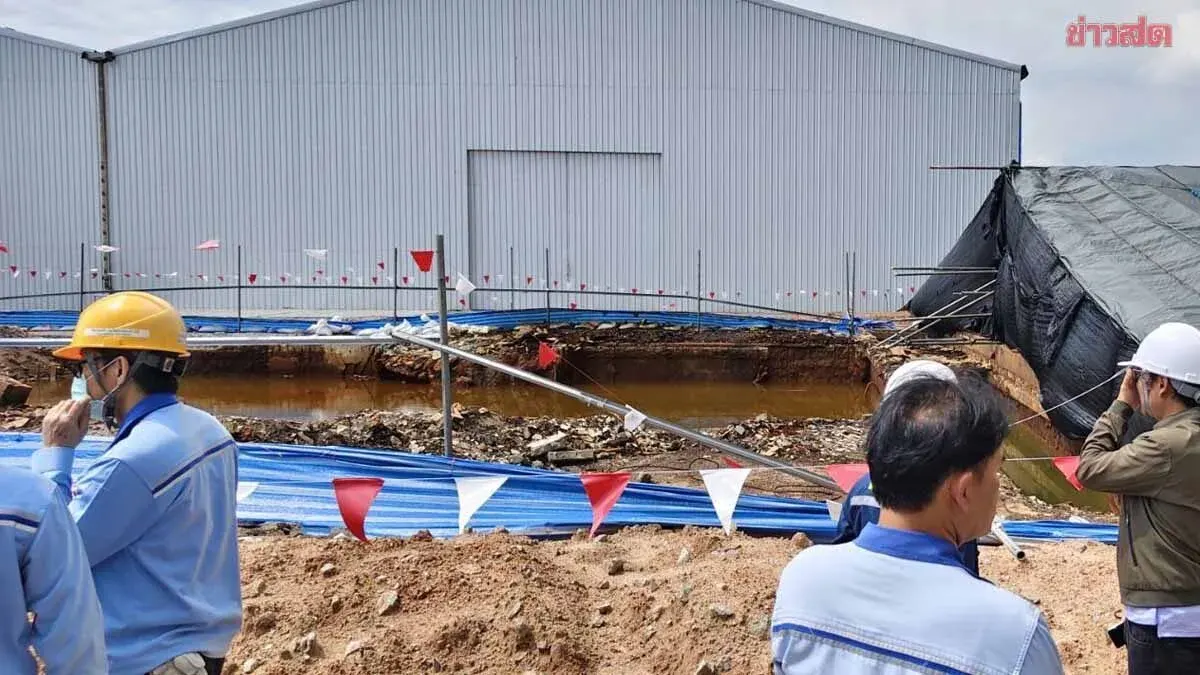
Rayong authorities inspected a pond at a former factory in the Mab Ta Phut industrial estate and found highly acidic water with heavy metals exceeding standards. Officials confirmed the contaminated water has not been discharged outside the site and are preparing detailed checks for possible seepage affecting soil and groundwater.
On November 7, reporters stated that on November 6, the Rayong Damrongtham Center (Rapid Response Unit), under Governor Traipop Wongthairak, joined with the Department of Industrial Works, Rayong Provincial Industrial Office, Rayong Natural Resources and Environment Office, and the Industrial Estate Authority of Thailand (IEAT) to investigate the former Thai-Scandic Steel factory in Mab Ta Phut after social media posts raised concerns about chemical residue.
The inspection revealed the factory previously produced and plated metal before ceasing operations about five years ago and selling the assets to NS-Siam United Steel in June. During demolition, water was found in a concrete pond formerly used for chemical metal cleaning, and both companies are still negotiating responsibility for the contamination.
Water samples collected by the current lessee on September 18 from four points showed pH levels below 1.0 to 4.8 and heavy metals including zinc, cadmium, nickel, and manganese exceeding wastewater standards, while soil samples around the pond also showed elevated zinc.
These results are from water remaining inside the concrete pond, not discharged water, and it cannot yet be concluded whether leakage or impact on soil and groundwater has occurred. Further inspection is needed for clear facts.
A preliminary survey found about 667 cubic meters of standing water in the concrete pond and drainage channels. The Rayong Provincial Industrial Office collected additional samples on November 6 to analyze pollutant properties and types for legal action, with results expected in about one month. Meanwhile, IEAT will coordinate an independent agency to further test water, soil, and groundwater to assess site conditions and potential contamination.
As a preventive measure while awaiting results, IEAT will notify NS-Siam United Steel, the current lessee, to submit a control and management plan for the standing water within three days of receiving the notice, prioritizing uncovered ponds due to rain risk, and to plan pumping the water into suitable containers on-site. Any action must pass safety assessment and cannot move water off-site until legal procedures are followed.
Relevant agencies will also gather data and documents from both companies, including wastewater management history, pond conditions before and after handover, and demolition steps, to establish facts and legal liability. Monitoring of control measures and inspection results will continue.