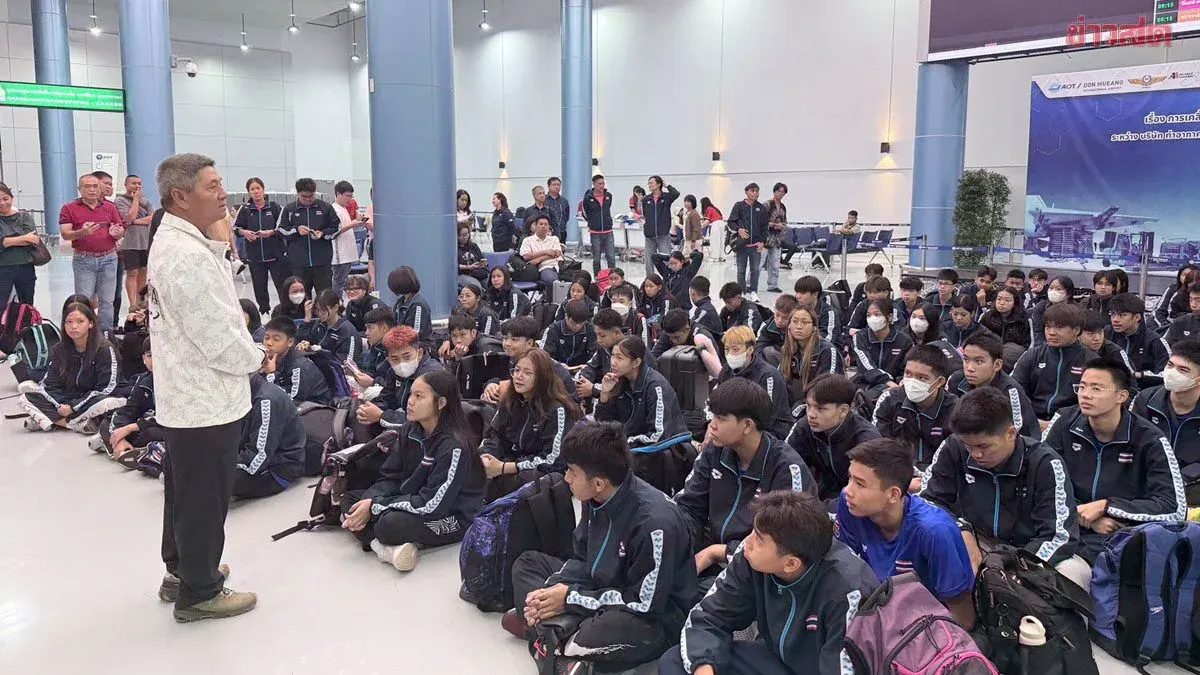
Rayong Farmer Turns Entire Banana Plant into Profit
Rayong farmer Narisa Phuthita demonstrates how integrated farming and marketing savvy can turn every part of the banana plant into income, from suckers and leaves to fiber and pseudostems. Starting with a single sucker and no capital, she built a business offering 5,000 agricultural products by matching local resources to market demand. Her 15-rai model mixes perennials, fruit trees, vegetables, and herbs to maximize continuous yields from limited land.
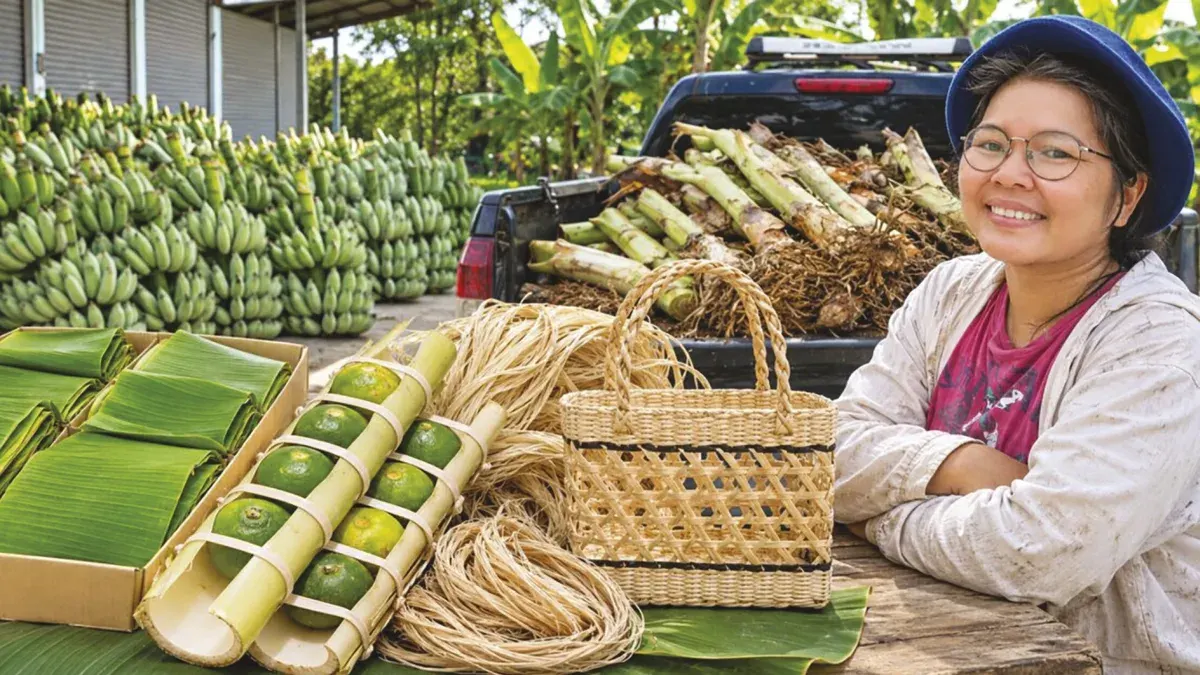
A single banana bunch can generate income far beyond just selling the fruit. Narisa Phuthita, owner of "Dee Seeds, Thai Agriculture" in Rayong province, believes agricultural income doesn't require vast land or maximum yields alone. Success starts with recognizing the value of existing resources and knowing how to find markets, because farming skill must be paired with marketing knowledge.
Drawing on sales experience since age 16 — from seasonal produce to clothing and a short-lived bookstore that pivoted to Facebook sales — she returned to her native Kalasin after her husband's contracting business faltered, seeking a low-investment livelihood. "I had no capital and didn't know where to start. Back at my mother's house I saw three areca palms, so I posted the nuts on Facebook and got orders. I realized other things around us could sell too," she recalls.
From a few areca nuts she expanded to selling pandan leaves, seeds, and various plants found locally. Today she offers roughly 5,000 agricultural products covering seeds, seedlings, vegetables, fruit trees, ornamentals, herbs, and value-added items from different plant parts.
Banana cultivation began with a single sucker brought from her northeastern hometown. She planted it, photographed it, and posted the sucker for sale on Facebook. When orders came, she sourced more suckers from neighbors' gardens. Selling suckers led her to study how every part of the banana plant could be used. She discovered the plant has greater revenue potential than just selling the hands: suckers as planting material, leaves for food and packaging, pseudostems for processing, and fiber for handicrafts and weaving.
Farmers should learn not only how to grow but also how each crop can be utilized. Understanding a product's uses lets you match customer demand. However, just because banana parts have uses doesn't mean every part sells immediately; market demand, product quality, and preparation costs must be weighed. "Some know bananas have many salable parts but don't know where or to whom to sell. Even with a thousand rai of bananas, if you don't know where the market is, you may not sell. The key is finding buyers," she says.
Beyond marketing, Narisa emphasizes maximizing land utility without limiting a plot to a single crop. Her roughly 15 rai operates as integrated farming, mixing perennials, fruit trees, vegetables, herbs, and cover crops for continuous yields. Design starts with large trees spaced about 8 by 8 meters for canopy growth. Medium-sized plants — bananas, papaya, lime, and kaffir lime — fill the gaps, followed by smaller crops like galangal, ginger, or sugarcane, plus commercially useful ground covers.
She sees banana as ideal for integrated farming because it produces suckers for propagation, and after a fruiting trunk is cut, new suckers emerge.