Bang Tha Khram Farmers Revive Livelihoods With Mixed Sustainable Vegetables
Farmers in Bang Tha Khram, Surat Thani, have transformed infertile mangrove land into a thriving mixed-vegetable enterprise, generating over 4 million baht in annual community income through sustainable GAP-standard farming practices and mo
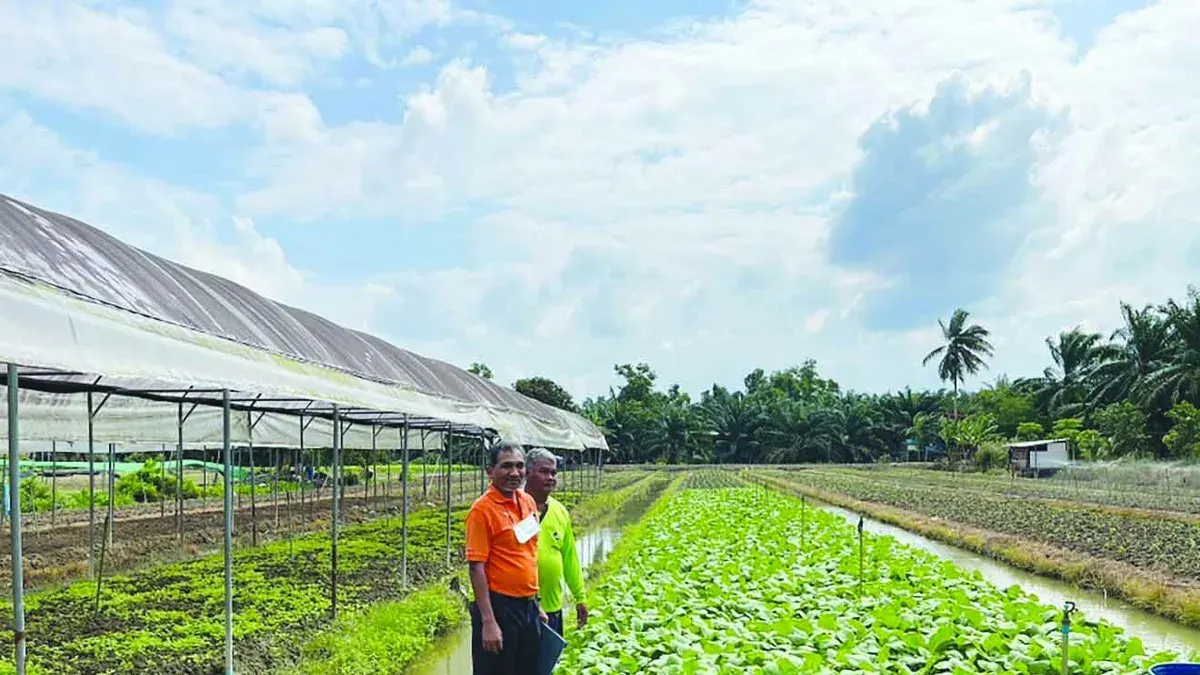
Bang Tha Khram in Phunphin District, Surat Thani Province, sits where the Tapi and Phum Duang rivers meet the sea. Its mangrove setting experiences prolonged flooding, and residents known as "inland people" migrated from southern central Thailand—Phetchaburi, Ratchaburi, and Nakhon Pathom provinces—beginning in 1962. For over 60 years, the infertile land offered poor livelihood potential, burdened by natural disasters, high production costs, and low crop prices. Agricultural staff from the district and provincial offices promoted safe, mixed-vegetable farming for household consumption and sale, improving living standards and creating a strong community model for neighboring farmers. The Bang Tha Khram Sustainable Mixed Garden Farmer Community Enterprise registered in 2015 under chairman Sithiphol Toraprasri. In 2017, it became the "Bang Tha Khram Vegetable Plot" following Agriculture and Cooperatives Ministry policy, with Somphan Thaiboonrot as chairman. The group has 58 members farming 643 rai combined, joined modern agriculture and market-linkage projects, and received agricultural machinery and production technology support in 2021, including tractors for land preparation and greenhouses enabling cultivation of crops unsuited to southern Thailand's climate.
The plot manages the group systematically, with members trained in safe, GAP-standard vegetable production at every step, ensuring clean, safe harvests for stable household income. Farmers use automatic IoT-controlled irrigation to reduce labor and water-management costs while boosting crop quality and yield per rai. They produce biological products using fermentation equipment, cutting chemical use in fields and allowing sale of quality bio-products to members. The enterprise promotes 19 GAP-standard vegetable types across members (averaging 9 per household), including Chinese kale, kale, choy sum, Taiwan choy sum, Chinese bitter melon, lettuce, Thai coriander, gourd, bird's eye chili, pumpkin, lime, long beans, cilantro, cucumber, pickling cucumber, lemongrass, basil, chayote, and kale shoots, generating average household incomes of 15,000–60,000 baht monthly and community income exceeding 4 million baht annually.
The top three revenue crops are long beans, producing two harvests yearly at 43,200 baht per rai per cycle cost, yielding 4,000 kilograms per rai per cycle and 108,000 baht revenue per rai per cycle, netting 64,800 baht profit per rai per cycle; bird's eye chili, with one harvest yearly at 21,000 baht per rai per cycle cost, yielding 1,500 kilograms per rai per cycle and 52,500 baht revenue per rai per cycle, netting 31,500 baht profit per rai per cycle; and choy sum, harvested five times yearly.