Reflections on Dharma Day and Buddhist Practice
Asalha Bucha on July 29 commemorates Buddha's first teaching of the Dharma to five ascetics, establishing the foundations of Buddhism through the Middle Way and Four Noble Truths. Buddhists traditionally observe the day through merit-making
Asalha Bucha, observed on the 15th waning day of the eighth lunar month, falls on July 29 this year, commemorating the day Buddha first taught the Dharma to the five ascetics. This proclamation set the Wheel of Dharma in motion through the Dhammacakkappavattana Sutta, the discourse on turning the wheel of Dharma, by one who had attained enlightenment as an Arahant.
The teaching comprises the Middle Way—not extremism in any direction but a balanced practice—supported by right view, appropriate for reaching the ultimate goal. Equally important is the proclamation of the Four Noble Truths, the four supreme realities: suffering, the origin of suffering, the cessation of suffering, and the path leading to its cessation.
"Asalha Bucha" combines the eighth lunar month with "bucha," meaning veneration in the eighth month to commemorate significant events of that time. Among Buddhists, it is understood and called Dharma Day—the day Buddha gave his first sermon and began teaching the religion. It marked the birth of the Sangha when Annakondanna, a Brahmin who gained insight and saw the Dharma, became an enlightened being.
It also marks the ordination of Kondanna as the first Buddhist monk through the proper monastic procedure, after hearing the sermon and attaining the Dharma as the first disciple. Compared to other significant Buddhist days, Asalha Bucha is known as Dharma Day, one of the Three Jewels revered by Buddhists as a refuge.
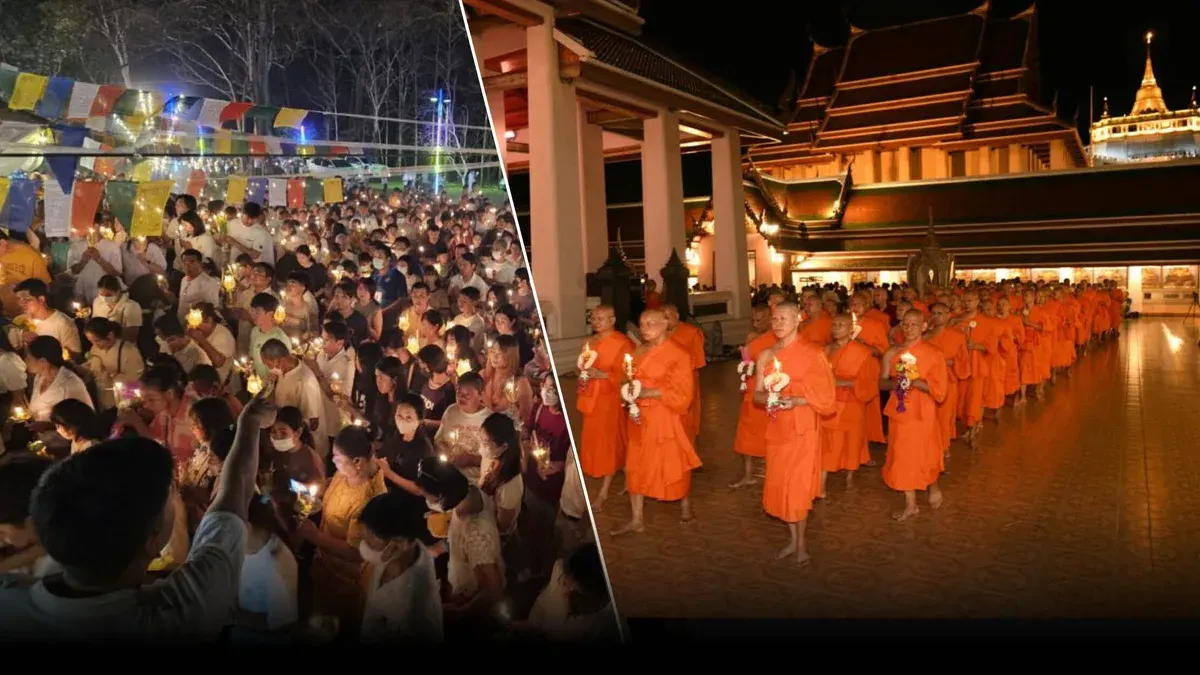
Traditional observances include making merit, giving alms, keeping the precepts, lighting candles, listening to the Dhammacakkappavattana Sutta, and meditating to calm the mind. However, the essential benefit of this day lies in the principles Buddha first taught: the Middle Way and the Four Noble Truths. Buddhists should reflect and examine whether their lives have grown through understanding the world and gaining insight into life, and whether their minds remain trapped in delusion or are free from suffering and clear. With this awareness, one can practice according to the heart of Dharma Day.