Revered Monk's Sacred Image Receives Water Blessing
A water-blessing amulet cast in 1984 honoring Luang Por Nueng Kovito, a revered scholar-monk of Chula Mani Temple in Samut Songkhram, has become highly sought after by devotees for its sacred significance.
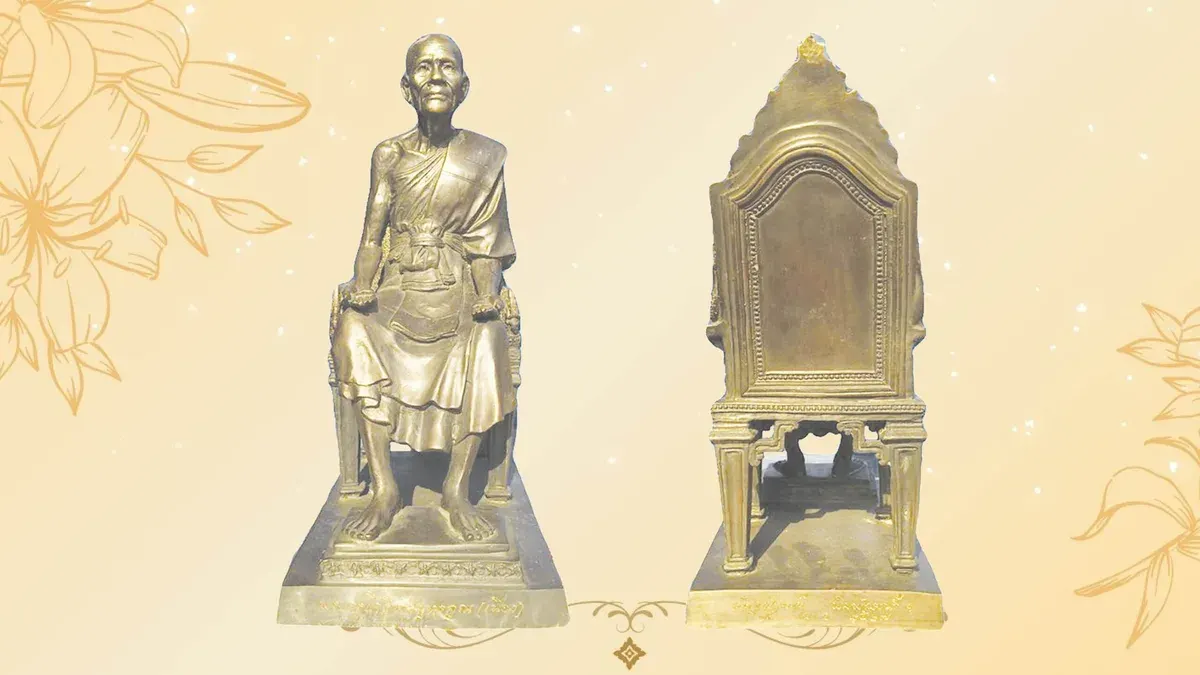
Luang Por Nueng Kovito, an esteemed scholar-monk of the Mae Klong lineage at Chula Mani Temple in Ampawa District, Samut Songkhram Province, was a principal disciple of several celebrated masters including Luang Por Kong of Bang Kaphom Temple, Luang Por Chaem of Chula Mani Temple, and Luang Pu Chai of Sedet Temple. Born as Nueng Thao Suwanno on February 14, 1909, he was ordained at age 23 on July 29, 1932, at Bang Kaphom Temple under Luang Por Kong as preceptor. He earned the highest rank in Buddhist scriptural studies in 1936 and became renowned for his expertise in meditation and esoteric Buddhist disciplines. He studied under the great masters of Samut Songkhram, most notably Luang Por Kong, who was credited with creating the popular amulet series known as the "Five Sets of Coins." He gained ecclesiastical rank as Phra Kru Sanyabat Third Class in 1933 and was promoted to Second Class in 1974. Chula Mani Temple, originally called Wat Mae Jao Thip, was believed to have been built between 1629–1647 during the reign of King Prasat Thong and holds historical significance related to the Chakri Dynasty. The temple fell into disrepair over time until Luang Por Nueng oversaw its restoration, including the construction of a magnificent four-sided marble ordination hall measuring 40 by 80 meters at a cost of tens of millions of baht. The cornerstone was laid on August 15, 1968, by the Supreme Patriarch. Luang Por Nueng passed away peacefully on November 27, 1987, at age 78 and 56 years into his monastic life. His amulets and sacred objects, including a notable casting created in 1984 called the "water-blessing amulet," became highly sought after by devotees. This particular image was cast in 1984 by master craftsman Hong Mani at a foundry in the Tha Phra Thonburi area of Bangkok, standing approximately 6.8 to 7.8 kilograms and assembled from three separate pieces.