Youth Lead Waste Management Overhaul in Remote Phetchaburi Area
Youth at a remote Phetchaburi school are spearheading a waste management overhaul in an isolated mountain community where garbage trucks cannot reach, replacing open burning with a digital sorting system and community education program.
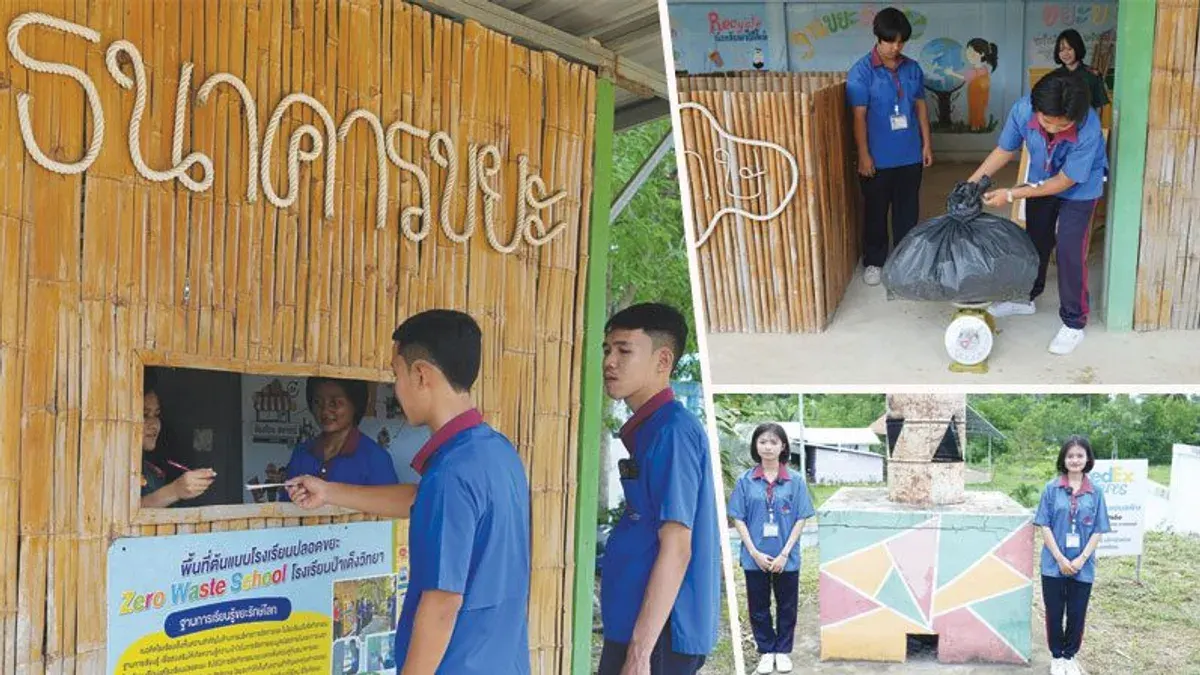
Pa Deng Subdistrict in Kaeng Krachan District, Phetchaburi Province, is a remote rural area facing environmental management challenges because basic infrastructure such as garbage trucks cannot reach it due to mountainous terrain and its location within Kaeng Krachan National Park. Residents must manage household waste independently, with community waste averaging about 2 tons per day. Historically, residents burned waste in open-air systems within the community, causing environmental and health damage.
A major turning point came when Suphanimit Foundation of Thailand systematically supported waste management under a pilot project for waste management systems and carbon footprint tracking in the Kaeng Krachan area. The initiative focused on upgrading waste management to a digital system in three pilot locations: Pa Deng Subdistrict Administration Organization, Naresuan Border Patrol School at Ban Hui Sok, and Ban Hui Kwang Chiang School.
After the foundation provided systematic support, Pa Deng Witthaya School became a model area for promoting behavioral change among youth. Beyond supporting source separation through student activities, the school integrated waste management content into various subjects and developed specialized curricula to build awareness and understanding of proper waste separation and disposal.
Students then share their knowledge with families and communities, creating household-level momentum for waste separation to minimize the amount of waste that must be burned.
Dr. Wimlarat Siisan, Field Mission Management Director for the Northern and Central Regions at Suphanimit Foundation of Thailand, stated that the foundation aims to drive a Zero Waste–Zero Landfill concept in partnership with communities to address air pollution from open burning. The foundation provides knowledge and budget support, starting with students and promoting youth, family, and community participation.
"Our highest goal is for children to develop awareness and for everyone in the community to feel they own this project and are helping improve the environment through waste disposal and reduction," Dr. Wimlarat said. "We plan to expand this model to other areas including Phetchaburi, Ratchaburi, Uthai Thani, and the Eastern region."