Salween River Mercury Contamination Hits Fourfold Limit, Four Villagers Affected
Mercury contamination in the Salween River in Mae Hong Son Province has reached four times the safety standard, originating from dozens of small mines on the Myanmar side. Four local residents have tested positive for mercury exposure and face five years of health monitoring, while authorities race to secure alternative water sources before the dry season leaves communities without safe drinking water.
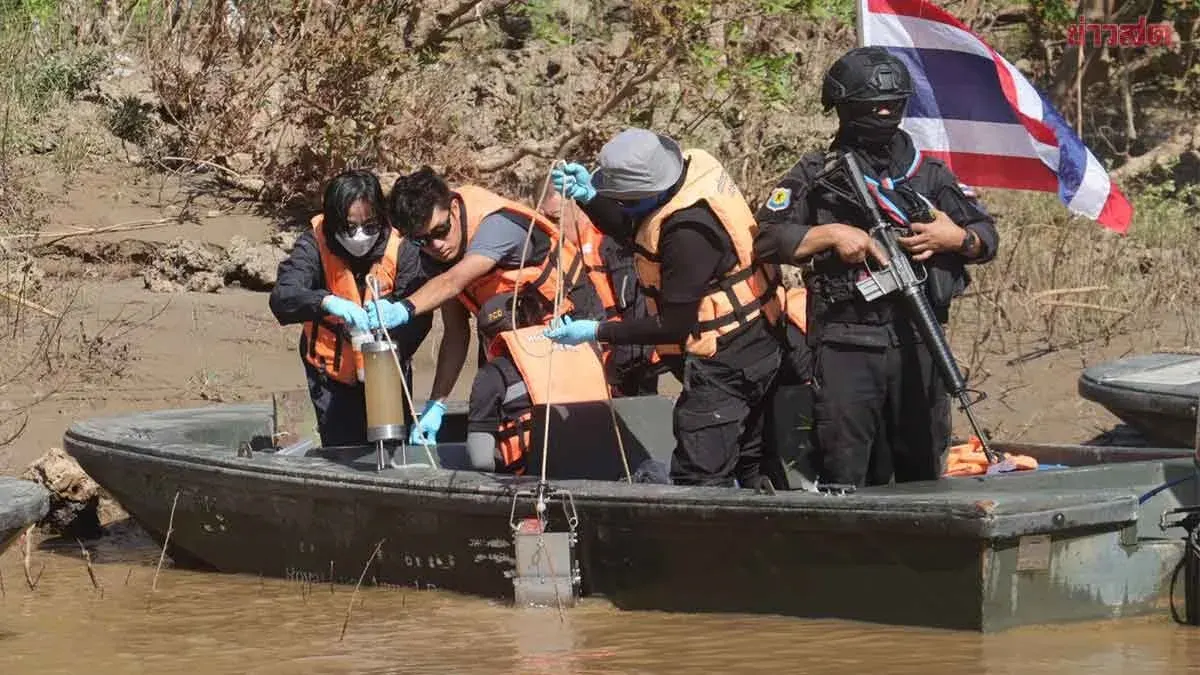
Mae Hong Son – A severe crisis persists in the Salween River where mercury contamination exceeds the standard by four times, entering the bodies of four villagers who must now monitor their health for five years. The toxic source is revealed to be 40-50 small hand-dug mines on the Myanmar side. The Mae Sam Laep subdistrict chief has submitted a letter to the Minister of Natural Resources and Environment urging accelerated construction of reserve water sources, worried that the approaching dry season will leave residents without safe drinking water.
On November 25, 2026, Pongpipat Mibenchamat, Chief of the Mae Sam Laep Subdistrict Administrative Organization, Sop Moei District, Mae Hong Son Province, disclosed that he had sent a letter to Minister of Natural Resources and Environment Suchat Chomklin via Chaiyachan Sringam, Director of the Protected Area Administration Office 16, Mae Sariang Branch, during a field visit to Ban Mae Sam Laep, Sop Moei District, Mae Hong Son Province, together with the Office of Environment and Pollution Control 1 (Pollution Control Department 1), Chiang Mai Province, Pollution Control Department.
Over the past year, pollutants have been detected in the Salween River originating from Myanmar, flowing through Thailand in Mae Sariang and Sop Moei districts, Mae Hong Son Province. When Pollution Control Department 1, Chiang Mai tested for heavy metals, mercury was found exceeding standards, forcing communities relying on Salween water to stop using it. Previously, the Department of Water Resources surveyed alternative water sources in the mountainous water supply area and urged expedited development of reserve sources before the dry season to ensure residents have water for consumption.
Awiwat Phakmat, Director of Pollution Control Department 1, revealed that the Salween River entering Thailand has small mines on the neighboring country's side, dug by hand not machinery, numbering 40-50 mines. Previously, the Minister of Natural Resources and Environment ordered a survey of the entire Salween River passing through Thailand for over 120 km and tributaries, including the Pai River, Moei River, and Mae Sam Laep River, which remain safe with no mercury exceeding standards, serving as alternative water sources for the dry season.
However, the Salween River has mercury contamination exceeding standards by four times along its entire length, with mercury detected at 0.03-0.04 milligrams per liter continuously since testing began in November 2025. Authorities have requested cessation of Salween River water use, with testing conducted eight times, exceeding standards every time. The ninth test at the end of October 2026 was delayed due to landmine explosions in the Myanmar border area; the ninth test was conducted today with preliminary results showing mercury still exceeding standards by four times.
The Pollution Control Department 1 Director stated that mercury levels in the Salween River exceed standards consistently, 3-4 times higher, and today still over four times, considered higher than the Kok River, a tributary where mercury exceeded standards 4-28 times. Concerning sediment test results are at levels dangerous to bottom-dwelling animals and Salween fish, prompting warnings for villagers to avoid eating fish guts, intestines, and internal organs. Most recently, the Ministry of Public Health revealed random testing found mercury in four residents' bodies, requiring five-year health monitoring.
The Salween River is thus another water body affected by concerning mercury contamination, second only to the Sai and Kok Rivers. The Ministry of Natural Resources and Environment, including the Pollution Control Department, Department of Water Resources, and Department of Groundwater Resources, are on-site monitoring and urgently seeking alternative water sources for the public. The Mae Sam Laep Subdistrict Administrative Organization has submitted proposals and awaits budget allocation for assistance.