Starfish and Salps Wash Up on Phuket's Karon Beach
Large numbers of sun stars and salps have been washing up on Karon Beach in Phuket since early November. Marine officials confirmed the species are not highly toxic but warned that salps may cause skin irritation. Water quality tests were normal, but the exact cause of the mass stranding remains unknown.
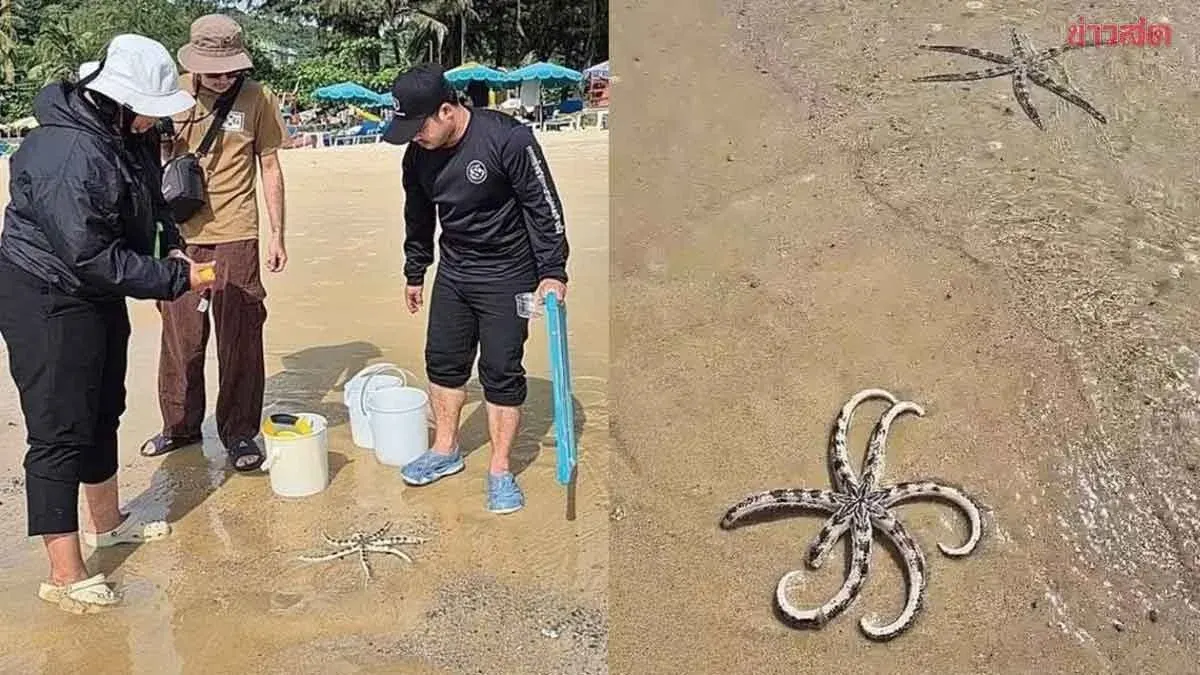
Phuket authorities have yet to determine the cause after starfish and salps repeatedly washed ashore at Karon Beach. Experts identified the starfish as sun stars (Luidia maculata) and confirmed neither species is highly toxic to humans, though direct contact with salps may cause irritation.
On November 11, 2026, following social media posts showing large numbers of dead starfish on Karon Beach in Mueang Phuket district, Deputy Karon Subdistrict Mayor Tharin Thipmongkol coordinated with marine experts to investigate. Waves had pushed some starfish back into the sea, sparking public and tourist concern.
Officials from the Upper Andaman Sea Marine and Coastal Resources Research Center and the Marine and Coastal Resources Conservation Center, under the 10th Marine and Coastal Resources Office, found starfish and salps scattered along the shoreline. Reports indicate the phenomenon began on November 5.
The starfish identified were sun stars (Luidia maculata), averaging 20-30 centimeters, typically inhabiting sandy bottoms near coral reefs and coastlines at a density of about 0.5 per square meter. Salps, free-floating marine animals, were found at a density of about 15 per square meter.
Both species are not considered highly toxic to humans, but officials advise avoiding direct contact with salps as they may cause irritation or allergic reactions in sensitive individuals.
Preliminary water quality tests showed normal levels: salinity 32 ppt, temperature 29.6°C, pH 7.95, and dissolved oxygen 6.6 mg/L. Skies were clear during the inspection, though winds and waves were fairly strong.
After the survey, officials disseminated information about the organisms and issued advisories to the public and beach operators to foster understanding and reduce concern. However, while the species and preliminary water quality have been confirmed, the exact cause of the mass stranding remains undetermined.