Structural Engineers: Suan Luang Overpass Repairable, Not Demolition Needed
Thailand's Structural Engineers Association has determined the damaged Suan Luang overpass on Ratchaphruek Road in Bangkok can be repaired rather than demolished. Engineers found concrete spalling at critical beam-pier joints but confirmed the structure remains salvageable with engineering-based repairs. Temporary steel supports have been installed while a full repair plan, including load testing, is finalized within approximately one week.
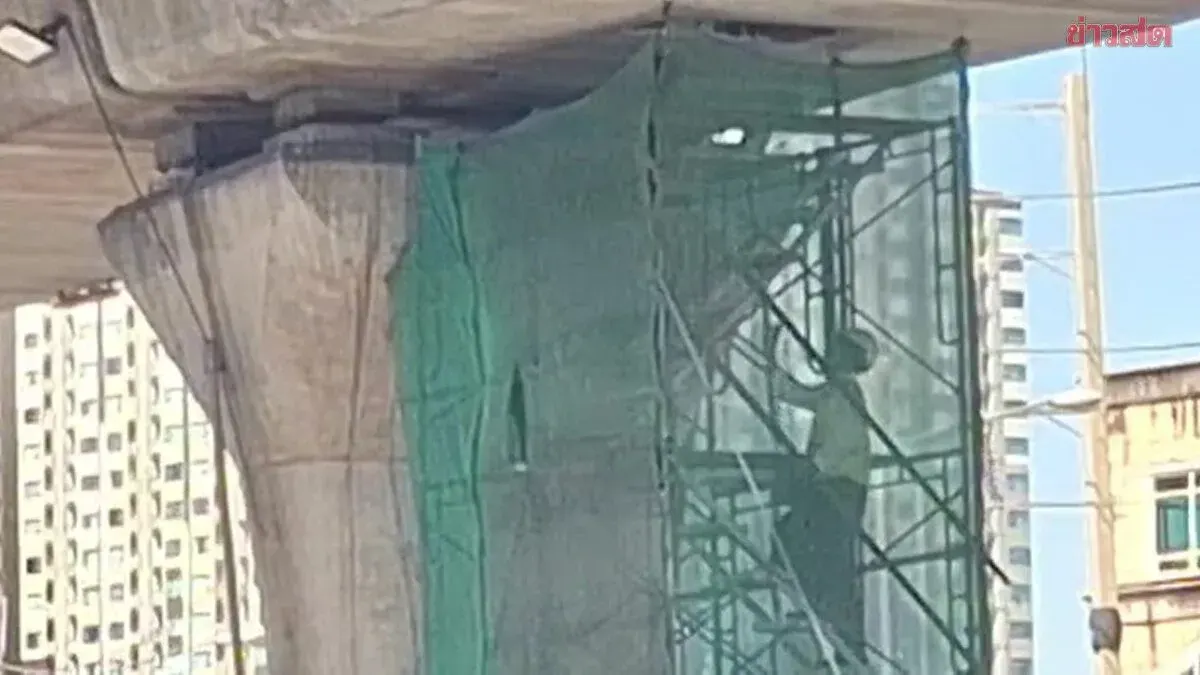
The Structural Engineers Association of Thailand has assessed that the Suan Luang overpass on Ratchaphruek Road, outbound lane in Bangkok's Bang Khun Thian district, does not require demolition. Officials closed traffic after discovering damage at the joint between the bridge deck and pier columns. This morning, Associate Professor Dr. Amorn Pimanmas, President of the Structural Engineers Association of Thailand, along with the Department of Rural Highways, inspected the bridge to evaluate damage and determine repair and strengthening methods before considering reopening to the public.
Dr. Amorn stated that preliminary inspection revealed damage at the joints between precast beam segments and pier columns, with concrete spalling, cracking, and delamination at these critical load-bearing points. Additionally, some joints showed incomplete bonding, requiring detailed structural examination. The damage pattern relates to the structure's lower surface, where compressive forces from load behavior and bridge deflection caused concrete to buckle and delaminate at joints. However, the exact cause cannot yet be determined pending comprehensive data collection, including concrete compressive strength test results, design drawings, and original construction details and procedures.
As an urgent measure, the Department of Rural Highways has installed steel brackets and props beneath the bridge to support and maintain structural load capacity during inspection, while assessing whether additional propping systems are needed elsewhere. For repair and strengthening, the preliminary approach involves drilling and inserting steel bars, formwork, and pouring new concrete to replace lost sections, increasing concrete thickness from the bridge underside, and adding reinforcement to enhance structural strength. Simultaneously, high-strength epoxy injection will be considered to fill poorly bonded joints, enabling structural components to work together more effectively.
Before reopening the bridge, Dr. Amorn proposed a load test using trucks on the bridge while measuring structural deflection values to verify they remain within acceptable limits, plus checking prestressing tendon forces inside the structure to comprehensively assess stability and safety. The preliminary repair design and work procedures are expected to be completed within about one week before entering the contractor procurement process for actual repairs. The repair duration will depend on detailed design and procedures after full structural inspection.
The Structural Engineers Association of Thailand assessed that demolition of the entire Suan Luang overpass structure is not necessary. Regarding the traffic closure, the view is that the bridge should remain closed for public safety and to prevent additional traffic loads from further damaging the affected areas. It is assessed that without traffic loads, the damage will not worsen from its current condition. However, preliminary inspection found no need to demolish the entire bridge structure.