Surgeon Removes 180 Nails, Coins From Patient's Stomach
A Chinese surgeon removed nearly 180 nails, coins, and metal objects weighing 1 kilogram from a 36-year-old man's stomach after he experienced severe vomiting and abdominal pain, with doctors attributing the dangerous behavior to his Pica d
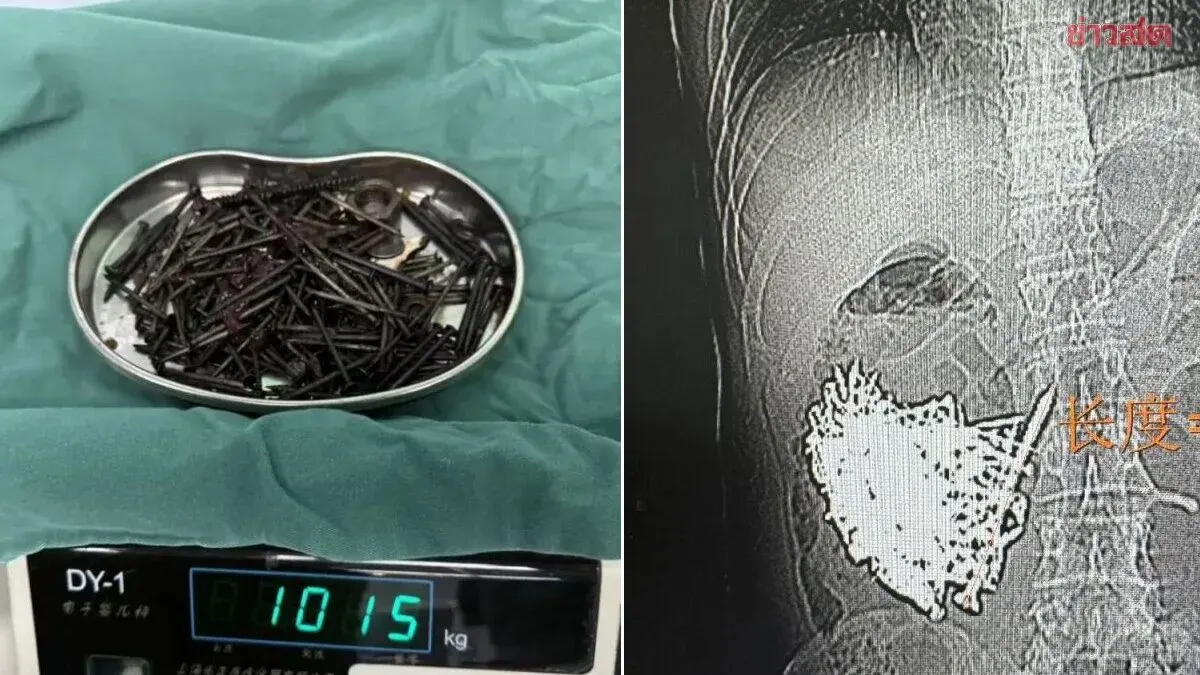
Chinese doctors were shocked to discover nearly 180 metal objects weighing almost 1 kilogram inside a 36-year-old patient's stomach after he experienced severe vomiting and abdominal pain for 9 days.
On August 17, Chinese doctors revealed the remarkable case after the male patient presented with severe vomiting and abdominal pain lasting 9 days. X-rays revealed large quantities of metal objects clustered together inside his body, weighing nearly 1 kilogram.
Dr. Li Wei, a surgeon specializing in liver, gallbladder, and pancreas surgery at a Chinese hospital, explained that the man had a history of chronic mental illness and Pica disorder, which causes patients to consume non-food items. Although his family was aware of his medical history, they did not know when he had swallowed the metal objects or why. On August 7, the surgical team spent nearly 3 hours removing approximately 180 nails, along with coins, screws, bolts, and magnets from his stomach. The total weight of all objects was estimated at nearly 1 kilogram.
Dr. Li noted that the sharp objects caused ulceration and erosion of the stomach lining, but fortunately the nails had not pierced the stomach wall or entered the intestines. The magnets are believed to have helped the metal objects cluster together, potentially reducing the risk of dispersion and additional damage. The patient is currently stable and recovering.
However, doctors warned that swallowed objects should not be assumed to pass through the digestive system on their own, especially sharp or elongated items, as they may become lodged at narrow points and cause ulceration, perforation of the stomach or intestines, infection, and life-threatening complications. This patient requires long-term psychiatric treatment, family care, consistent medication compliance, and prevention of access to dangerous household items to avoid recurrence.