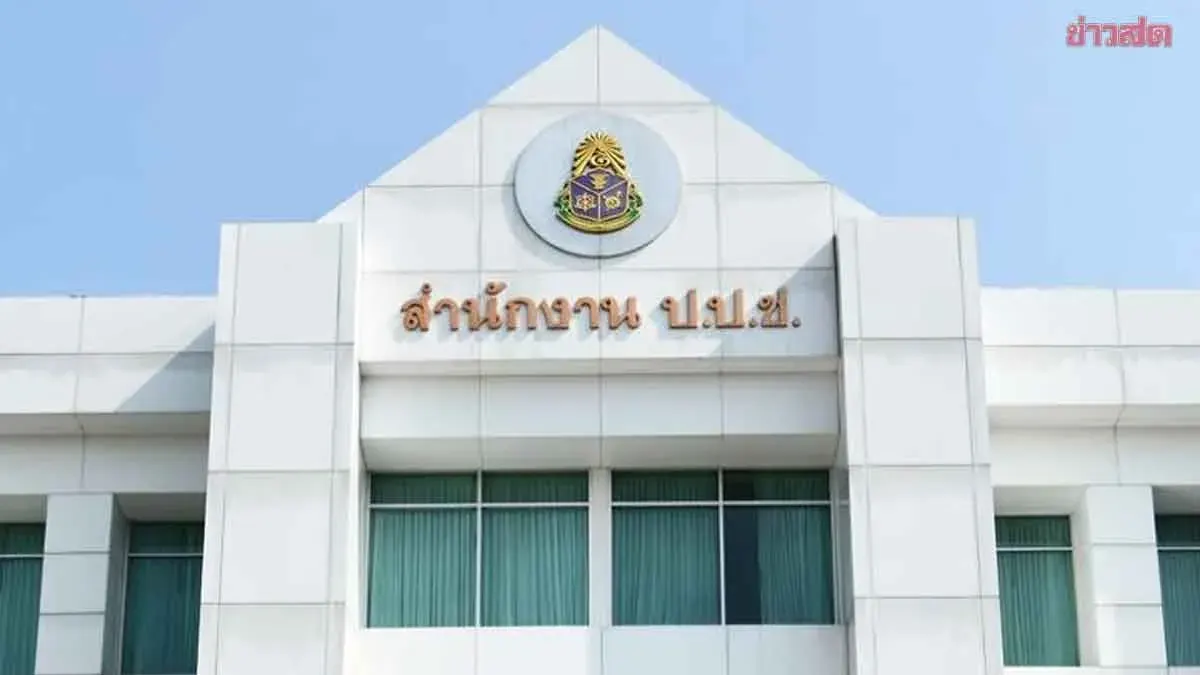
Tax Court Dismisses Thaksin's Injunction Bid in 17 Billion Baht Seizure Case
The Central Tax Court rejected former Prime Minister Thaksin Shinawatra's request for a temporary injunction to halt the Revenue Department's seizure of 17 billion baht in assets over alleged double taxation. The court ruled Thaksin lacks standing to seek pre-judgment protection because the Revenue Department acted under its statutory authority to collect tax debt, making him the defendant in the enforcement action rather than a plaintiff initiating a civil lawsuit.

On November 16, 2026, the Central Tax Court at the Chaeng Watthana Government Complex heard Case No. Black 59/2026, in which former Prime Minister Thaksin Shinawatra, as plaintiff, sued the Revenue Department as defendant over a tax dispute involving a request for temporary protection before judgment. Thaksin sought a court order to temporarily prevent the Revenue Department from continuing or repeating the seizure and attachment of 17 billion baht in assets, which he claimed constituted improper double taxation.
The court identified the core legal issue as whether the plaintiff has the right to petition for temporary protection before a judgment is issued. Analyzing the Civil Procedure Code, which divides provisions into four parts, the court noted that Part 4 covers temporary measures before judgment and enforcement of judgments, separated into two categories: Category 1 for temporary measures before judgment and Category 2 for enforcement after judgment.
Temporary protection before judgment is governed by Article 254, which falls under Part 4, Category 1, distinct from Category 2 enforcement procedures. Category 1 grants a plaintiff who has filed a case the right to request temporary court-ordered protection to prevent harm from the defendant's actions, asset dissipation, or debt evasion, as well as to protect interests during litigation under Article 264.
Since no judgment exists yet, one party cannot compel the other to act or refrain from acts alleged in the lawsuit to avoid payment, nor secure potential legal costs if they lose. Article 254 states that in cases other than negotiable instruments, the plaintiff may petition the court alongside the complaint or at any time before judgment for conditional orders providing temporary protection. This right belongs to the plaintiff who initiates the lawsuit. If the court later rules in the plaintiff's favor, the defendant as judgment debtor can be compelled to comply.
In this case, however, the Revenue Department Director-General exercised authority under Revenue Code Article 12 to seize, attach, and auction the plaintiff's assets, asserting he was a tax debtor who failed to pay by the deadline. Thaksin is therefore not the plaintiff as contemplated by Article 254. Furthermore, Revenue Code Article 12, Paragraph 4 stipulates that seizure and auction procedures follow the Civil Procedure Code by analogy, while attachment follows regulations set by the Director-General with ministerial approval.