Thai Marine Agency Plans Strategy to Combat Ocean Heatwaves
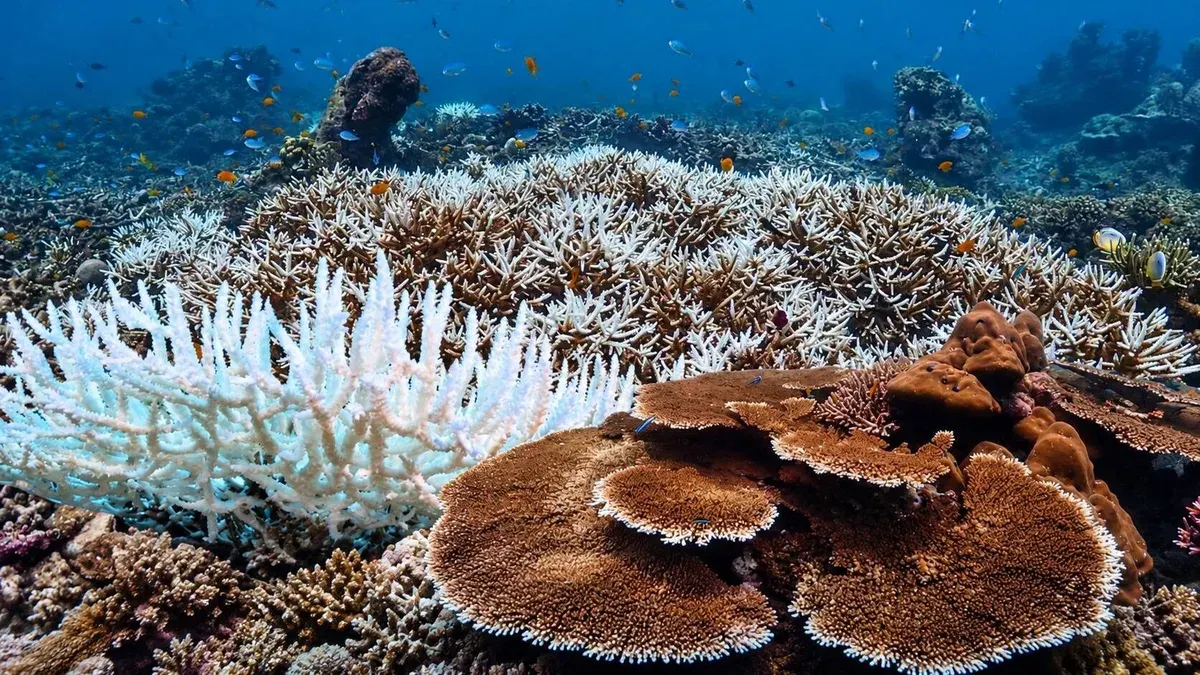
Thailand's Department of Marine and Coastal Resources is preparing a major response to marine heatwaves, often called 'heat tsunamis,' to protect coral reefs and seagrass beds. Officials warn that rising sea temperatures, especially when combined with El Niño and climate variability, could cause severe bleaching by 2030. A meeting of scientists and experts is set for 21 October to develop risk assessments and action plans.
The 'heatwave tsunami' threatening overheating seas has prompted the Department of Marine and Coastal Resources to convene a major meeting to build resilience for Thai waters, emphasizing it as essential for moving marine ecosystems past crisis. On 1 October 2026, Dr. Pinsak Suwassadi, Director‑General of the Department of Marine and Coastal Resources (DMCR) under the Ministry of Natural Resources and Environment, warned that climate change is undergoing a significant shift as global temperatures keep rising. The oceans, which have absorbed most of the planet’s heat, are now confronting marine heatwaves—sometimes called 'heat tsunamis'—that, despite lacking visible giant waves, store heat energy capable of wreaking widespread havoc on underwater ecosystems akin to a major disaster.
He noted that the IPCC’s Fifth Assessment Report forecasts sea‑surface temperatures to climb 1–3 °C by 2100 (2563 BE). The worry intensifies if ocean heating occurs alongside global climate variability, particularly a super El Niño, which could affect sea‑surface temperatures, sea levels, currents, and the survival of marine life in Thai waters. One clear sign is coral bleaching.
Dr. Pinsak explained that as heat accumulates in the ocean, shallow‑water corals—especially those exposed at low tide—will be the first to suffer, with bleaching expected around April–May 2030 (2570 BE). Areas such as parts of Chumphon and Trang are especially vulnerable because corals face combined stress from higher water temperatures and intense UV radiation, potentially leading to severe localized bleaching.
The problem extends beyond corals; during periods when sea levels drop below normal, seagrass beds—a vital coastal resource and food source for rare marine animals like dugongs and sea turtles—are also impacted.
Although the overall coral bleaching situation in 2026 (2569 BE) was not as severe as earlier forecasts, experts and marine‑resource agencies are closely watching the outlook for 2030 (2570 BE), stressing the need for preparedness, mitigation measures, and post‑bleaching recovery plans.
He recalled that in 1997 (2540 BE) a positive Indian Ocean Dipole (pIOD) produced unusually high western‑Indian‑Ocean sea‑surface temperatures, lowering sea levels along the Andaman coastline. If a similar pIOD coincides with a strong El Niño, the combined effect could subject corals to both elevated heat and reduced sea level simultaneously, heightening the risk of widespread bleaching.
'It is quite worrying,' he said, 'because past data show that during strong El Niño years, severe coral bleaching occurs, and when a pIOD is present the impact is even greater. Consequently, on 21 October this year the DMCR will mobilize marine‑science teams from various institutions, along with experts in climate change, oceanography, and coral reefs, to assess the situation, develop risk assessments, and prepare response measures. Delayed action would affect all groups that rely on the sea.'