Thailand's Coastal Ecosystems Vital in Fight Against Global Warming
Thailand's mangrove forests and seagrass beds, known as "Blue Carbon" ecosystems, can absorb and store carbon up to four times more effectively than terrestrial forests, according to the Department of Marine and Coastal Resources and Prince of Songkla University researchers. With 1.7 million rai of mangroves and 160,000 rai of seagrass, these coastal areas are critical for climate change mitigation but face threats from aquaculture, pollution, coastal development, and rising sea temperatures. Experts urge sustainable conservation and restoration to maintain their long-term carbon sequestration capacity.
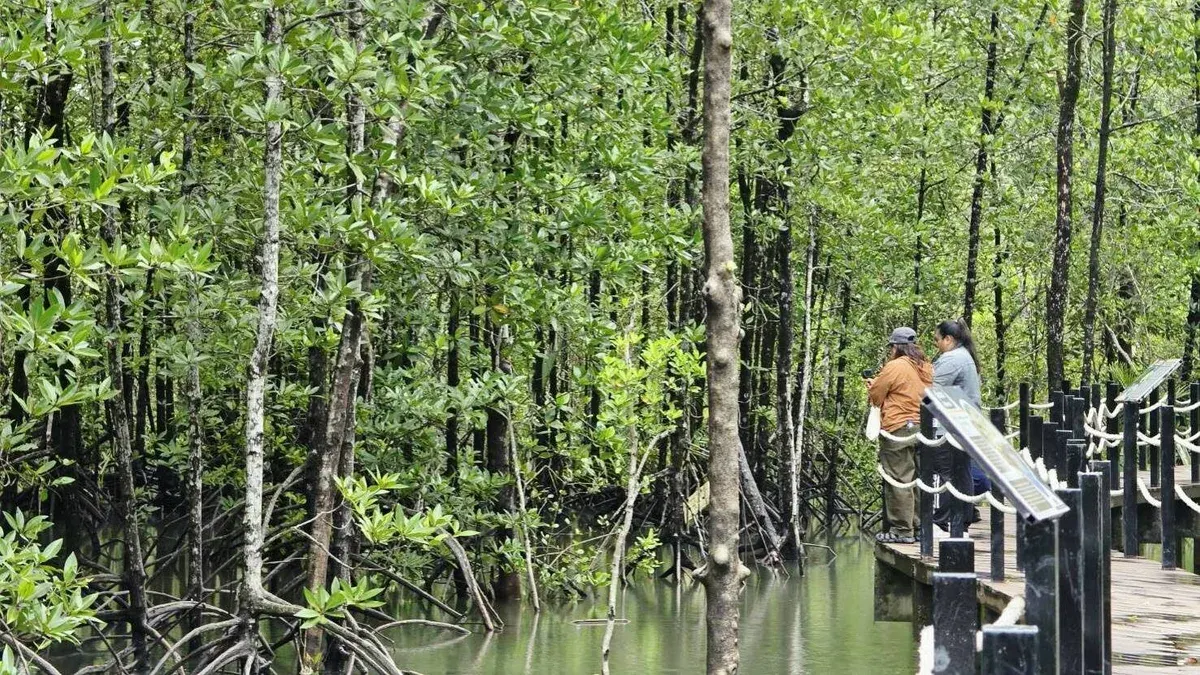
The Department of Marine and Coastal Resources stresses the importance of conserving and restoring coastal ecosystems sustainably amid the worsening climate crisis. Marine and coastal resources are not only habitats for aquatic life, wave barriers, and sources of livelihood; they also play a crucial role in mitigating global warming through carbon sequestration in ecosystems, known as "Blue Carbon."
Assoc. Prof. Dr. Anchana Prathep, Dean of the Faculty of Science at Prince of Songkla University, points out that coastal ecosystems — both mangrove forests and seagrass beds — are Thailand's important carbon sinks. According to the latest survey data from the Department of Marine and Coastal Resources (DMCR), Thailand has approximately 1.7 million rai of mangrove forest and about 160,000 rai of seagrass area, which have the potential to absorb carbon dioxide through photosynthesis before storing carbon in wood and roots. In addition, coastal ecosystems can trap and accumulate organic matter washed in from other areas, making soil sediment another important carbon sink. If these ecosystems are properly maintained, they will help reduce atmospheric carbon dioxide and alleviate the impacts of climate change.
"Thailand's mangroves have high potential, on both the Andaman and Gulf of Thailand coasts. Compared to terrestrial forest ecosystems, marine ecosystems have the potential to absorb and store carbon up to four times higher, or can store 50-99% of carbon underground, which can be stored for hundreds to thousands of years as long as the forest belt is not destroyed."
Meanwhile, Thailand's Andaman coast areas with important and intact coastal ecosystems include Trang, Krabi, and Satun provinces, which have been continuously studied for seagrass ecosystems, such as the area around Koh Libong in Trang, an important seagrass source linked to dugong survival.
Ranong province has mangrove areas of international importance and has been registered as a UNESCO Biosphere Reserve. Phang Nga Bay is another area with coastal resource potential.
For the Gulf of Thailand coast, there are still opportunities to conserve and restore ecosystems to support carbon sequestration, but some areas face limitations from land use and human activities, as well as impacts from freshwater flowing into the sea during the rainy season, which may alter the environment and balance of the ecosystem.
Currently, obstacles from global warming and human activities put coastal ecosystems at risk of losing balance. These problems all stem from coastal area utilization, such as aquaculture, discharge of wastewater and pollution from land, dredging, and coastal development, which may degrade habitats and reduce carbon storage capacity.
"Climate change has become an increasingly important pressure, both rising sea temperatures and rising sea levels, which may affect ecosystem integrity and species distribution. Another factor is heavy rainfall and flooding that cause large amounts of freshwater and nutrients from land to flow into the sea, especially in the Gulf of Thailand, which may alter salinity and nutrient balance in the water and promote plankton blooms in some areas. These impacts are linked in a chain."
The Dean of the Faculty of Science at Prince of Songkla University therefore views that driving...