Thailand and China Boost Marine Cooperation for Sustainable Coasts
Thailand and China launched a regional marine cooperation forum in Bangkok focused on sustainable ocean management and climate change response, bringing together over 200 academics to advance research on ecosystem protection and blue econom
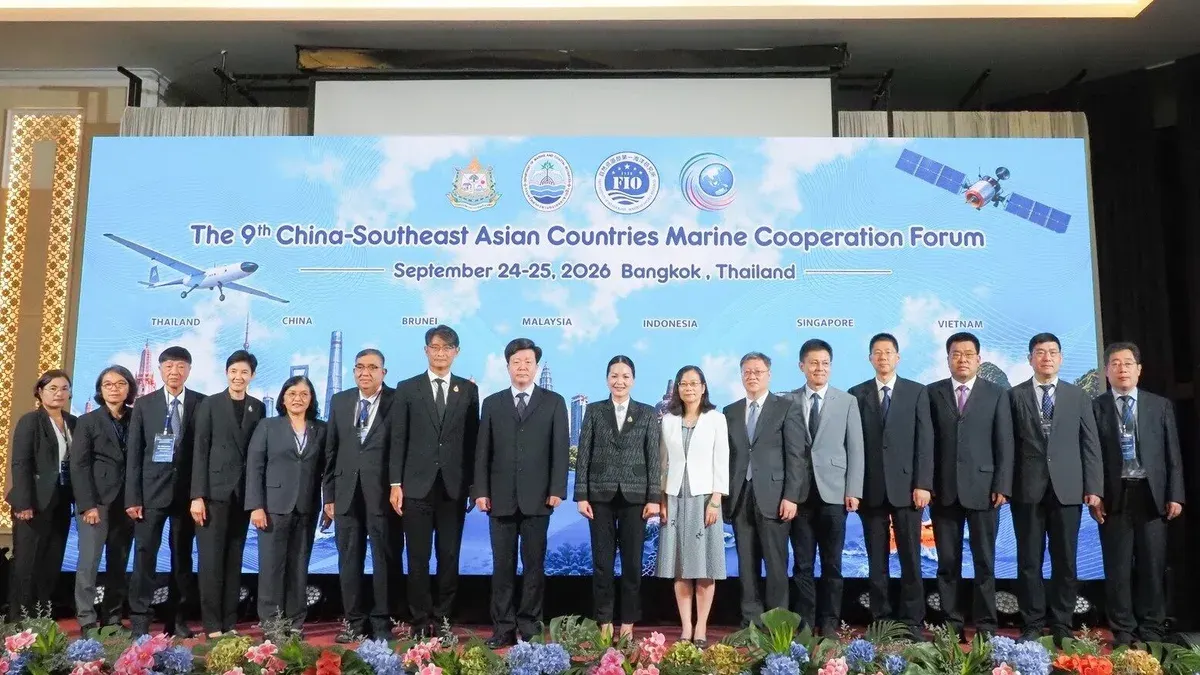
Thailand and China are advancing marine cooperation through science and technology to support sustainable coastal and ocean management while addressing climate change. On September 24 at The Bazaar Hotel in Bangkok, Darika Srangyagethu, Advisor to the Ministry of Natural Resources and Environment, co-chaired the opening of the 9th China–Southeast Asian Countries Marine Cooperation Forum with Dr. Sun Shuxian, China's Minister of Natural Resources. Dr. Pinsak Suraswadi, Director-General of the Department of Marine and Coastal Resources, welcomed over 200 academics and representatives from China and Southeast Asian nations to advance cooperation on marine resource management, climate change response, ecosystem and biodiversity conservation, and sustainable blue economy development.
The forum builds on bilateral Thailand–China cooperation and scales it to the regional level. On September 22–23, the 15th Thailand–China Joint Workshop on Marine Science and Technology took place to exchange knowledge and research on ocean condition monitoring, climate modeling, coastal zone management, and biodiversity conservation. Key topics included the Bailong AI-powered ocean buoy system, tracking plastic and microplastic pollution, coral reef acidification monitoring networks, and interactions between terrestrial and marine ecosystems. On the afternoon of September 23, the 14th meeting of the Thailand–China Joint Committee on Marine Climate and Ecosystems reviewed progress and approved budgets for 2024–2025, focusing on human impacts including eutrophication, oxygen depletion, and ocean acidification in the Eastern Special Development Zone, as well as mangrove ecosystem conservation.
Darika Srangyagethu stated the forum emphasizes knowledge exchange on four priorities: (1) ocean and climate monitoring and forecasting, including typhoon intensity prediction, ocean current circulation models, and regional climate models; (2) ecosystem and biodiversity protection, including deep-sea surveys, coral reef restoration, rare marine species conservation, and red tide and microplastic response; (3) marine geology and disaster mitigation, particularly coastal erosion, sediment movement, and seafloor changes linked to rising sea levels; and (4) blue economy and sustainable marine development, covering nature-based solutions, marine spatial planning, sustainable island management, and initiatives under the UN Ocean Decade.
Dr. Pinsak Suraswadi stated the forum plays a crucial role in strengthening Thailand's marine science and technology capacity through data exchange, surveillance and early warning systems development, and technology application.