Thai PM Hosts Myanmar Leader Despite Civil Society Backlash
Thailand's prime minister welcomed Myanmar's military leader for official talks on August 6 despite sharp criticism from civil society groups who say the visit legitimizes a government accused of widespread human rights abuses and war crime
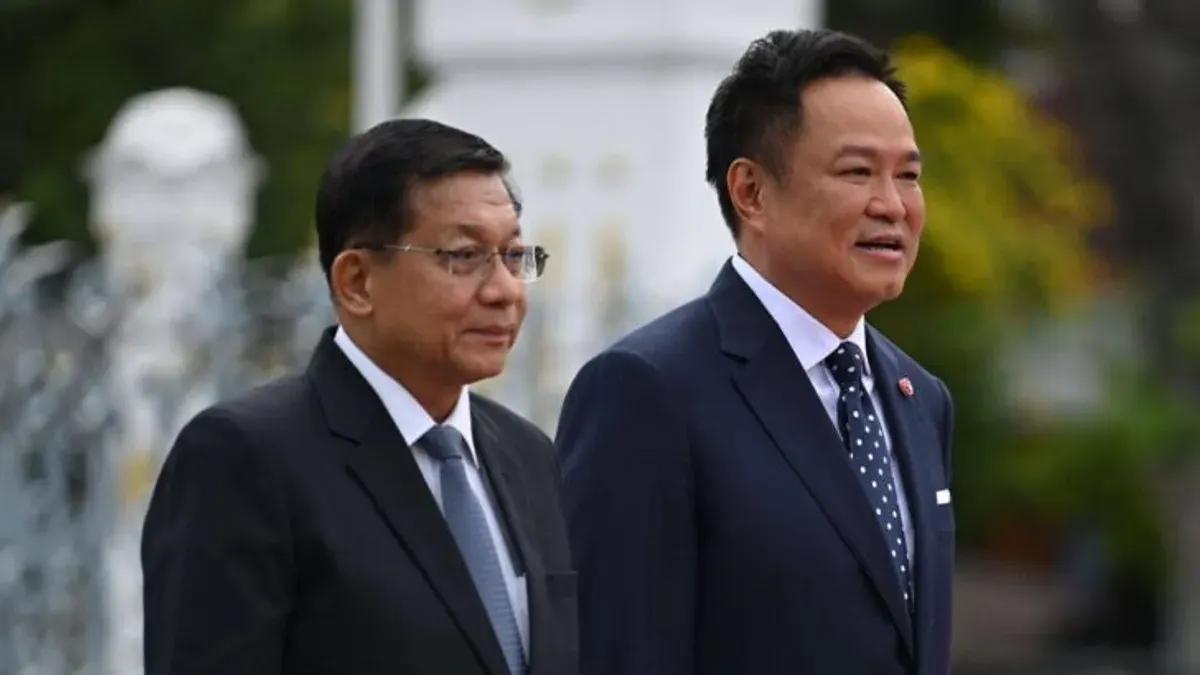
Prime Minister Anutin Charnvirakul officially welcomed Myanmar President Min Aung Hlaing to Government House on August 6 for bilateral talks, as the Myanmar leader's two-day visit to Thailand drew sharp criticism from civil society groups, democracy advocates, and opposition politicians.
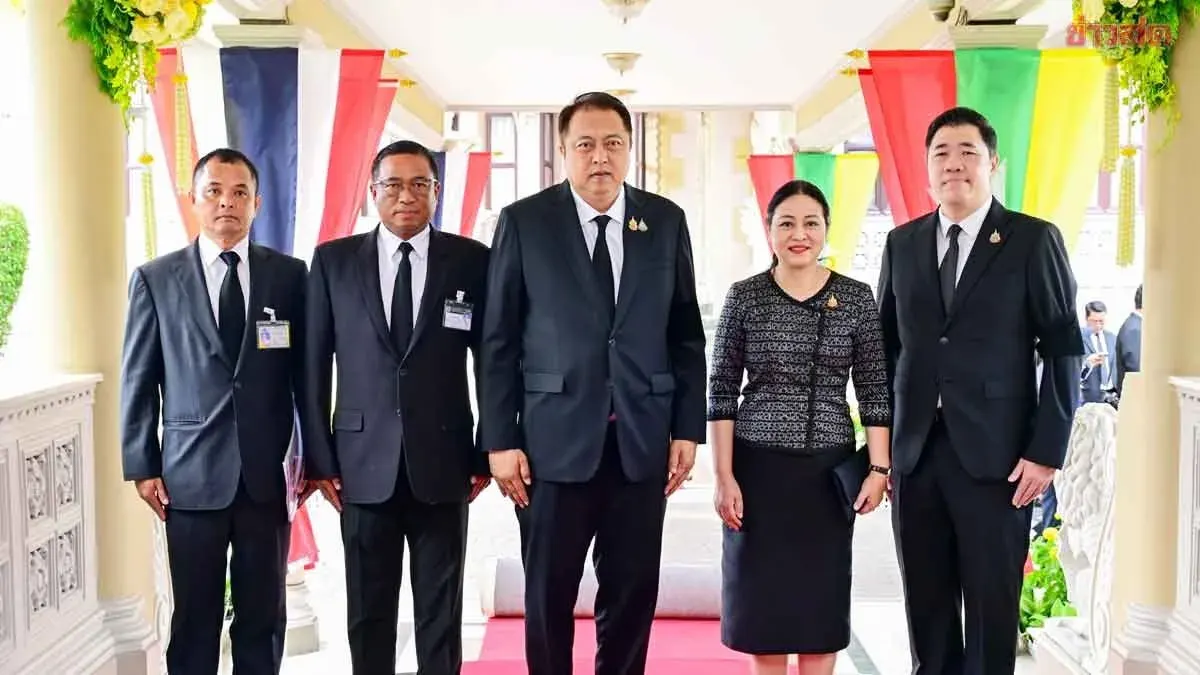
Anutin received Min Aung Hlaing at 10:20 on the lawn in front of the Thai Khu Fah Building at Government House. The Myanmar president was visiting Thailand as an official guest of the Thai government. The leaders attended an official welcoming ceremony before reviewing an honor guard, then held a restricted meeting on the second floor of the Thai Khu Fah Building to exchange views on strengthening bilateral cooperation.
According to the Prime Minister's Office, discussions covered cross-border issues, energy cooperation, trade facilitation, and efforts to promote peace and stability along the Thai-Myanmar border before expanding into a plenary meeting in the Green Room.
Ahead of the visit, Anutin defended Thailand's approach toward Myanmar while speaking at the ASEAN Secretariat in Jakarta on August 4. He said ASEAN's Five-Point Consensus remains the bloc's principal framework for addressing the Myanmar crisis and reaffirmed Thailand's support for a policy of "calibrated re-engagement." The approach seeks to preserve channels of dialogue, create space for engagement, respond to realities on the ground, and encourage tangible progress. "A peaceful and stable Myanmar is not only in Thailand's interest as a neighboring country, but is also vital to ASEAN unity and regional stability," he said.
The visit has been met with widespread criticism. Sixteen Thai civil society organizations issued a joint statement opposing Min Aung Hlaing's official visit, urging the Thai government to stop policies that benefit Myanmar's military administration and to refrain from legitimizing its leadership. The coalition, led by Solidarity Collective TH and the Spirit in Education Movement (SEM), said Min Aung Hlaing's administration has been marked by widespread violence, systematic human rights abuses, and alleged war crimes.
The groups argued that engagement with Myanmar's military rulers would prolong the country's conflict rather than contribute to regional peace. They called on Thailand to review cooperation that benefits Myanmar's military authorities, improve protections for Myanmar migrant workers, support independent humanitarian assistance that reaches civilians directly, reject the legitimacy of the military-led government, and oppose its reintegration into ASEAN until violence ends and democratic rule is restored. The coalition urged Bangkok to stand with the people of Myanmar rather than with those responsible for violence and war crimes.