Thai Transport Minister Outlines Plan to Boost Global Trade Links
Deputy Transport Minister Siripong Angsakulkiat unveiled Thailand’s transport infrastructure plan at the Global Economic Forum 2026 in Bangkok, highlighting new motorways, port expansions, rail upgrades, and airport growth to cut logistics costs and boost trade. He said the initiatives aim to make Thailand a sustainable ASEAN connectivity hub amid climate and supply‑chain challenges. The ministry also pushed electric buses, digital services, and private investment under the Rail Transport Act to modernize the sector.
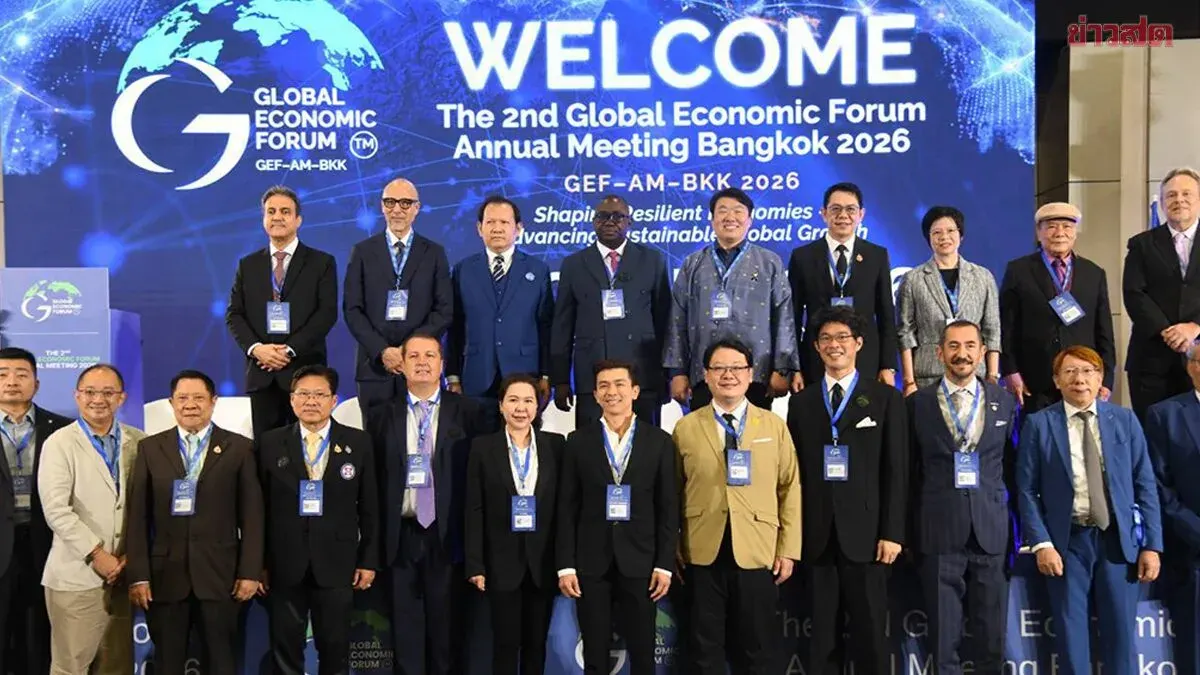
Siripong launched the Global Economic Forum 2026, presenting Thailand’s transport strategy to expand motorways, railways, Laem Chabang port, and airports to lower logistics costs, enhance competitiveness, and facilitate international trade and investment, with the goal of making Thailand a sustainable ASEAN connectivity hub. On October 10, 2069, Deputy Transport Minister Siripong Angsakulkiat opened the 2nd Global Economic Forum Annual Meeting Bangkok 2026 under the theme 'Shaping Resilient Economies, Advancing Sustainable Global Growth' at The Berkeley Hotel Pratunam, Bangkok. He highlighted the need to strengthen economic resilience and sustainable growth amid climate change, natural disasters, technological shifts, and global supply chain disruptions, stressing that transport and infrastructure are vital for linking people, businesses, and economic opportunities. The ministry is advancing a modern, safe, efficient, and eco‑friendly transport network, prioritizing existing infrastructure and maximizing its use to connect people, communities, cities, and economic zones, while strengthening regional and global linkages. Key highway projects include the M81 Bang Yai–Kanchanaburi, M82 Bang Khun Thian–Ban Phaew, and M6 Bang Pa‑in–Nakhon Ratchasima motorways, aimed at cutting travel time, improving freight fluidity, and reducing logistics expenses. For international trade, the ministry is expanding Laem Chabang Port’s Phase 3 to raise container capacity from about 11 million TEU to 18 million TEU per year, integrating road and rail links to turn the port into a regional gateway. Rail development is being fast‑tracked to become the country’s primary transport mode by 2073 through double‑track and high‑speed rail projects, alongside promotion of domestic component manufacturing and technology transfer to upgrade Thai industry skills and capabilities, supported by private investment under the Rail Transport Act of 2025. In environmentally friendly transport, the ministry is promoting electric buses to cut emissions and improve air quality, while deploying digital technologies to make transport services more convenient, safe, and accessible, especially app‑based ride‑hailing, together with safety and service standards oversight. Regarding air transport, Thailand aims to become the region’s aviation hub by expanding airport terminals and adding a fourth runway to handle roughly 80 million passengers annually and two million tonnes of cargo per year, complemented by digital upgrades for service efficiency. Drawing lessons from the late‑September Bangkok floods that disrupted airport operations, the ministry emphasized the importance of inter‑agency coordination, rapid response, and preparedness for unexpected events. Concluding, Thailand stands ready to welcome investment and build partnerships with international allies.