Thailand and ASEAN Position Themselves as Trusted Connector
Thailand and ASEAN are positioning themselves as a "Trusted Connector" to navigate global economic divisions by leveraging regional strengths in trade, AI, energy, and demographics, Deputy PM Ekachai Nethipitaksung said at the Bangkok Busin
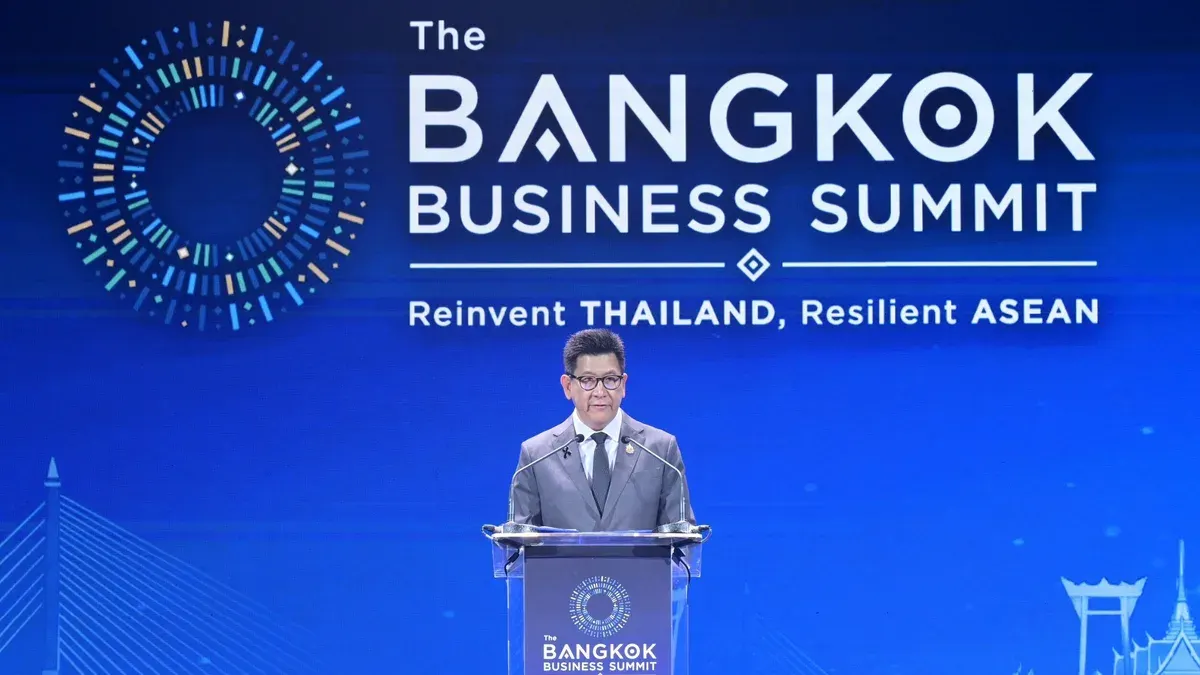
Deputy Prime Minister Ekachai Nethipitaksung spoke at the Bangkok Business Summit 2026 on September 3, 2026, presenting a vision to position Thailand and ASEAN as a "Trusted Connector" capable of handling a divided global economy by leveraging regional strengths to create new growth engines.
Ekachai outlined how openness remains central to Thai and ASEAN economies, which have grown through trade, investment, and global connectivity. ASEAN continues to be an attractive investment destination as companies worldwide seek regions combining economic growth with supply chain stability. Prime Minister Anuthip Songswatwong's "Trusted Connector" concept carries growing economic weight, as global competition now extends beyond efficiency to include security and reliability.
The global economy is undergoing four major shifts: geopolitics and geoeconomics, artificial intelligence, climate change, and aging societies. Each crosses borders and no single ASEAN nation can handle these challenges alone. Rising tariffs, export controls, subsidies, and stricter rules of origin are reshaping trade and investment flows, prompting global firms to seek trustworthy locations with diversified supply chains and resilience to economic shocks.
AI is becoming both a source of productivity and competitive advantage. Access to semiconductors, computing power, data, and skilled talent will increasingly determine economic security. ASEAN's challenge is not merely attracting data centers or AI investment, but extending technology to small and medium enterprises, businesses, and the broader population. Thailand's payment system integration with Singapore exemplifies this approach, with ASEAN positioned to build digital infrastructure, AI talent, AI applications for SMEs, and anti-fraud systems through frameworks like the ASEAN Digital Economy Framework Agreement.
On energy and climate, the ASEAN Power Grid demonstrates how cooperation creates both security and competition. Each country possesses different renewable energy resources, transmission systems, technology, capital, and industrial needs; interconnecting energy systems allows the region to use shared resources more efficiently.
Aging societies should not be viewed as a fiscal burden alone. Thailand and Singapore can develop medical, health, nutritional, pharmaceutical, and wellness industries, while countries with larger working-age populations like the Philippines and Laos can better link regional labor supply. Demographic differences could become an advantage if ASEAN develops appropriate labor mobility and health cooperation policies. An aging society need not constrain growth but can create new markets and strengthen economic ties between member states.
For Thailand, "New Horizon" means more than increased investment, technology, or infrastructure—it requires a comprehensive strategy to unlock regional potential.