Thailand Must Turn Potential Into Action to Attract Investment
Thailand must convert its strong industrial foundations into concrete results by attracting investment, upgrading supply chains, and driving digital transformation through integrated government-business cooperation, the head of the Joint Pu
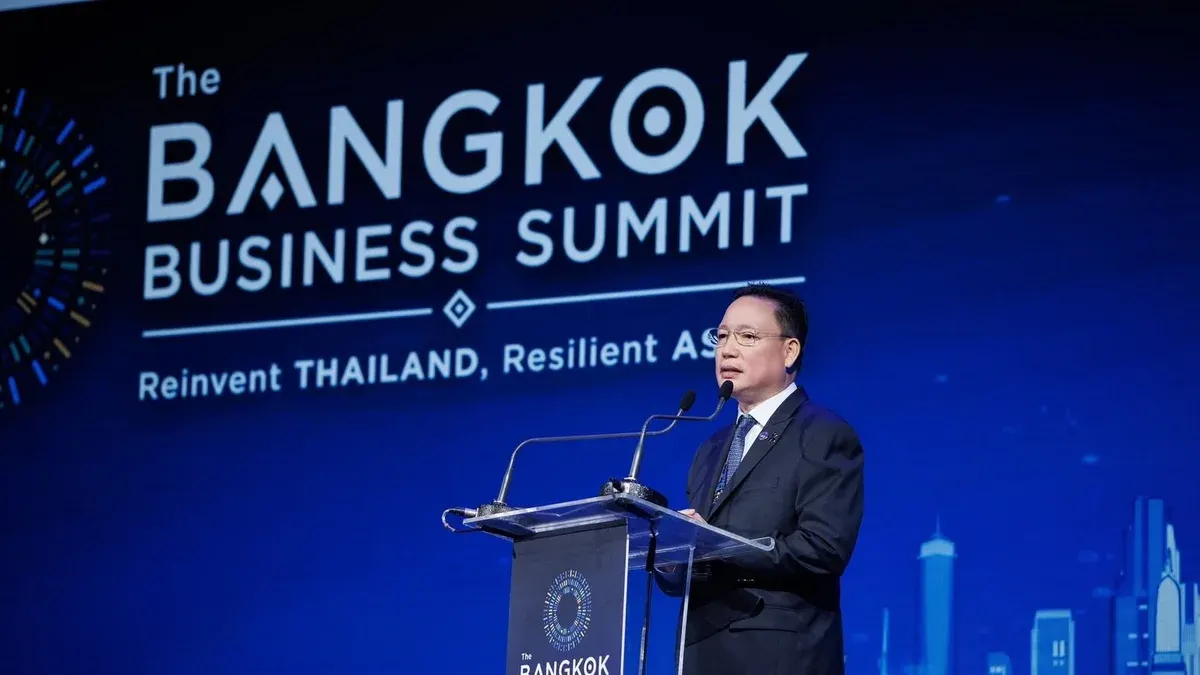
Payong Srivanich, chairman of the Joint Public-Private Sector Committee, told delegates at the Bangkok Business Summit 2026 ("Reinvent Thailand, Resilient ASEAN") that Thailand and ASEAN face sweeping change: geopolitical realignment of trade and investment, artificial intelligence disrupting industry, energy transition raising production costs, and restructuring of global supply chains. This is a critical window to capture new investment waves. Thailand has strong foundations—industrial base, infrastructure, location, transport links, and stable finance—but must convert these strengths into real outcomes: attracting supply chains, high-value activity, and good jobs.
"Thailand's challenge is not a lack of capacity but converting capacity into results and turning opportunity into sustainable growth," Srivanich said. Driving the new economy requires integrated cooperation across government, business, finance, and international partners. Government must unlock regulations and infrastructure; the private sector must lead investment, raise productivity, and build new businesses. Private enterprise must reduce investment barriers, develop new capabilities, and push Thai firms from large corporations to SMEs into higher-value regional and global supply chains, while energy transition and low-carbon infrastructure investment must preserve competitiveness.
Srivanich noted that Thailand's strength is directly tied to ASEAN's strength, as Thailand sits in the region's production, trade, logistics, food, energy, and financial networks. Raising competitive capacity and upgrading digital, financial, and infrastructure links will help businesses expand across borders and strengthen ASEAN supply-chain resilience.
2025 is crucial for Thailand: the World Bank is launching its "Building Thailand's Future Today" report charting a path to high-income status; Bangkok hosts the IMF–World Bank Annual Meetings in October; and Thailand assumes the ASEAN chair in 2027. The Bangkok Business Summit 2026 aims to shift from talk to action, from ideas to plans, from plans to shared responsibility, and from cooperation to measurable results—making 2025 the start of a new chapter in Thai growth and a chance to shape ASEAN's economic future.