From Fishing Village to Beach Paradise: Pattaya's Rise
The USS Abraham Lincoln arrived in Pattaya this week with nearly 5,000 American sailors, continuing a tradition dating back to the Vietnam War era when US military personnel first discovered the Thai fishing village as a rest destination, t
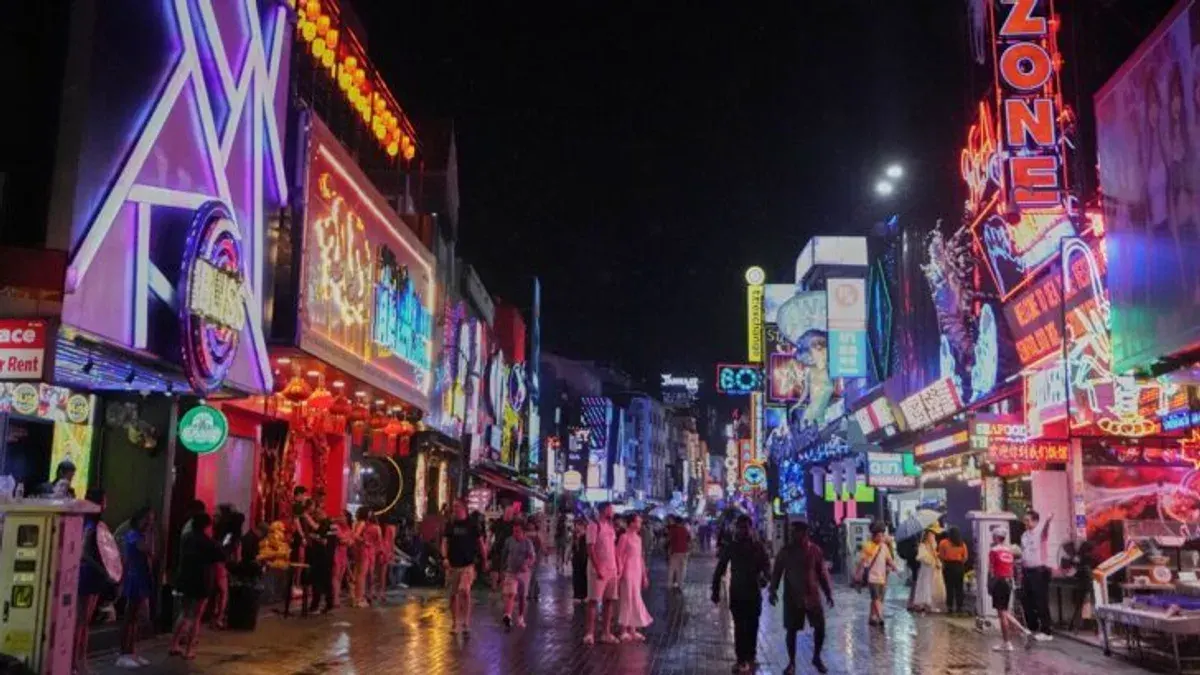
PATTAYA — By day, Pattaya is a city of beaches, traffic and tourists. By night, its neon-lit streets come alive with bars, restaurants and entertainment venues stretching inland from the Gulf of Thailand.
This week, thousands of American sailors are getting a taste of it.
The USS Abraham Lincoln, a US Navy nuclear-powered aircraft carrier, arrived off the coast of Pattaya on 2 September, bringing nearly 5,000 service members to Thailand for a few days of rest and relaxation after more than 250 consecutive days at sea.
For the crew, the city offers a chance to step off the ship, eat a proper meal, walk along the beach and enjoy a few days away from life at sea.
But in Pattaya, American servicemen on rest and relaxation are hardly a new sight.
Long before the arrival of the USS Abraham Lincoln, generations of US military personnel had come to this seaside city to rest, beginning with the Vietnam War era.
In fact, their presence helped transform Pattaya itself.
From a quiet fishing village
It is difficult to imagine today's Pattaya as the place it once was.
The area was originally a small and relatively unknown fishing village in what is now Na Kluea subdistrict, Chonburi. Located just over 150 kilometers from Bangkok, it had a beautiful bay, a long sandy beach and clear waters suitable for swimming.
Its economy and way of life were closely tied to the sea.
That began to change in the 1950s as Thailand became increasingly involved in the Cold War conflict in Southeast Asia.
Thailand joined the Southeast Asia Treaty Organization, or SEATO, in 1954, with the United States playing a leading role in the alliance. The country subsequently became an important base for US military operations connected to the Vietnam War, which lasted from 1954 to 1975.
Pattaya's location and beaches made it an attractive place for American troops looking for somewhere to unwind.
The first US servicemen reportedly arrived in Pattaya for rest and relaxation in April 1959.
Troops completing missions in Vietnam were rotated out while fresh units took their place. Groups of roughly 400 to 500 servicemen could spend about a week in Pattaya before returning to duty.
For the small fishing community, the arrival of hundreds of foreign visitors created a new source of income.
Local residents began providing food, accommodation and other services. Investors from outside Pattaya soon followed, opening restaurants, hotels, bungalows, souvenir shops, entertainment venues and other businesses.
The fishing economy gradually gave way to tourism.
A new city takes shape
The change could be seen in the buildings rising along the coast.
In 1963, Bangkok's Oriental Hotel invested 25 million baht to build a Pattaya branch, the Nipa Lodge. Opening in December 1964 with 112 rooms, it became Pattaya's first large hotel built to international standards.
Other hotels soon followed.
The Hyatt Pattaya Palace, with 145 rooms, opened in October 1970.