Anutin Urges Turning Global Shifts into Real Investment for Thailand
Deputy Prime Minister Anutin Charnvirakul urged Thailand to turn global economic shifts into real investment, aiming to create high‑quality jobs and boost local businesses. Speaking at a Bank of America‑CNN seminar in Bangkok, he highlighted Thailand’s strong foreign reserves and a 37% rise in investment promotion requests in the first half of 2069. Anutin also outlined cooperation with ASEAN on financial links, digital payments, energy security, and sustainable development.
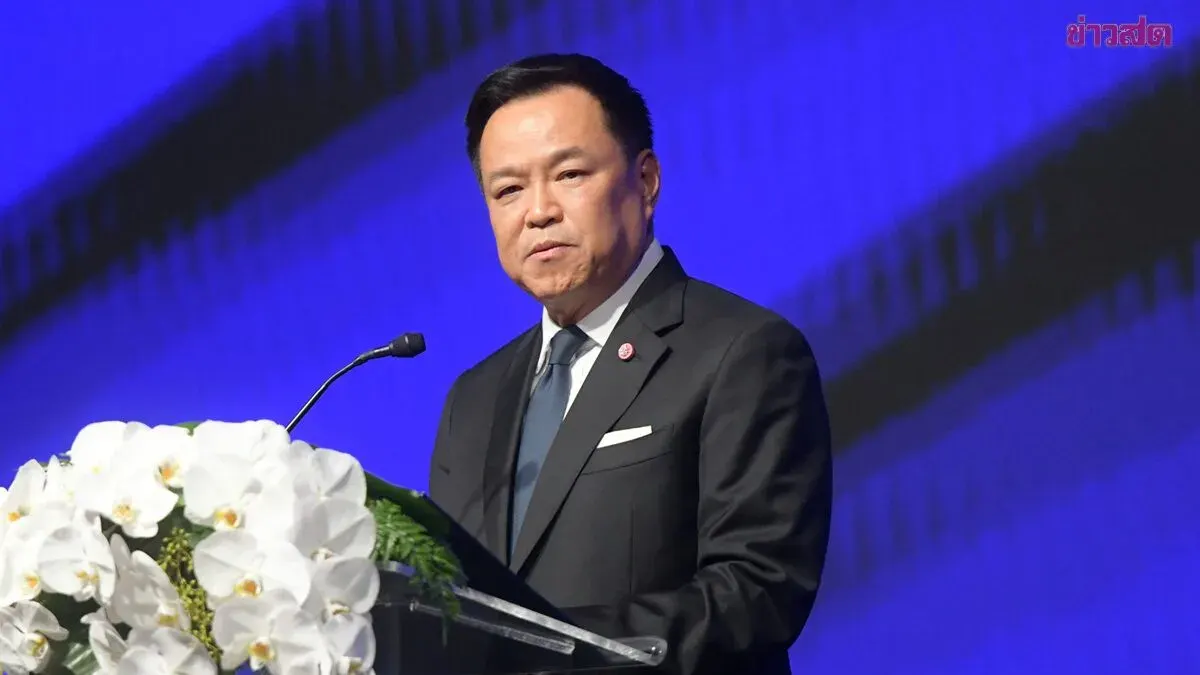
Anutin pointed out that the global economy is changing, and Thailand is rushing to turn opportunities into real investment, creating high-quality jobs and increasing opportunities for Thai businesses. He thanked Bank of America for its continued support of Thailand.
At 7:00 p.m. on October 15, 2069, in the Ballroom on the 4th floor of The Ritz-Carlton Bangkok, Pathum Wan District, Bangkok, Anutin Charnvirakul, Prime Minister and Minister of Interior, attended the event and delivered a speech at the seminar “A World in Transition: An Evening with Richard Quest,” organized by Bank of America in collaboration with CNN.
Upon arrival, Anutin was welcomed by Jin Su, President of Bank of America’s Asia-Pacific region, and Arkganya Pibultham, Managing Director of Bank of America Thailand.
He then gave a special address, praising Bank of America for hosting the seminar that gathered business leaders, investors, policymakers, and key decision‑makers from around the world to exchange views. He also expressed delight at meeting Richard Quest, CNN’s international business correspondent, who reports on global business, economics, and travel and has previously featured Thai tourism and culture in various programs.
Anutin discussed the seminar’s theme, “A World in Transition,” noting that the changes are affecting the flow of capital, business models, and the competitiveness of nations. Thailand views these changes as an opportunity to upgrade industry, create quality jobs, and promote sustainable economic growth through three main approaches: maintaining current stability, accelerating economic restructuring, and investing for the future.
He noted that Thailand’s international reserves as of September 2069 stood at approximately US$276 billion, providing an important buffer against external uncertainties. In the first half of 2069, investment promotion requests totaled US$43.6 billion, a 37% increase compared with the same period last year, with strong interest in digital infrastructure and high‑tech industries.
“The key goal for Thailand going forward is to convert investor interest into actual investment that takes place in the country, leading to technology transfer, the creation of high‑skill jobs, and greater opportunities for Thai businesses to participate and grow alongside foreign investment,” Anutin said.
He added that Thailand is working with fellow ASEAN members to expand financial linkages, promote digital payment systems, strengthen energy security, and develop regional infrastructure to better cope with various risks.
The annual meetings of the IMF and the World Bank also present an important opportunity to foster international dialogue, enhance the world’s capacity to respond to uncertainty, and mobilize funds for environmentally friendly and sustainable economic development. Thailand hopes to contribute to concrete cooperation on these issues.
Anutin emphasized that building economic resilience means not only coping with potential crises but also having the ability to adapt, cooperate, and benefit from opportunities that arise amid change. He hoped that the seminar would provide a useful platform for generating perspectives and proposals that benefit business operations.