Thailand Destroys 68 Tons of Drug Precursor Chemicals
Thailand destroyed 68 tons of drug precursor chemicals at a Mae Sod border checkpoint, including benzyl cyanide and benzene seized from illegal cross-border shipments destined for Myanmar drug production networks.
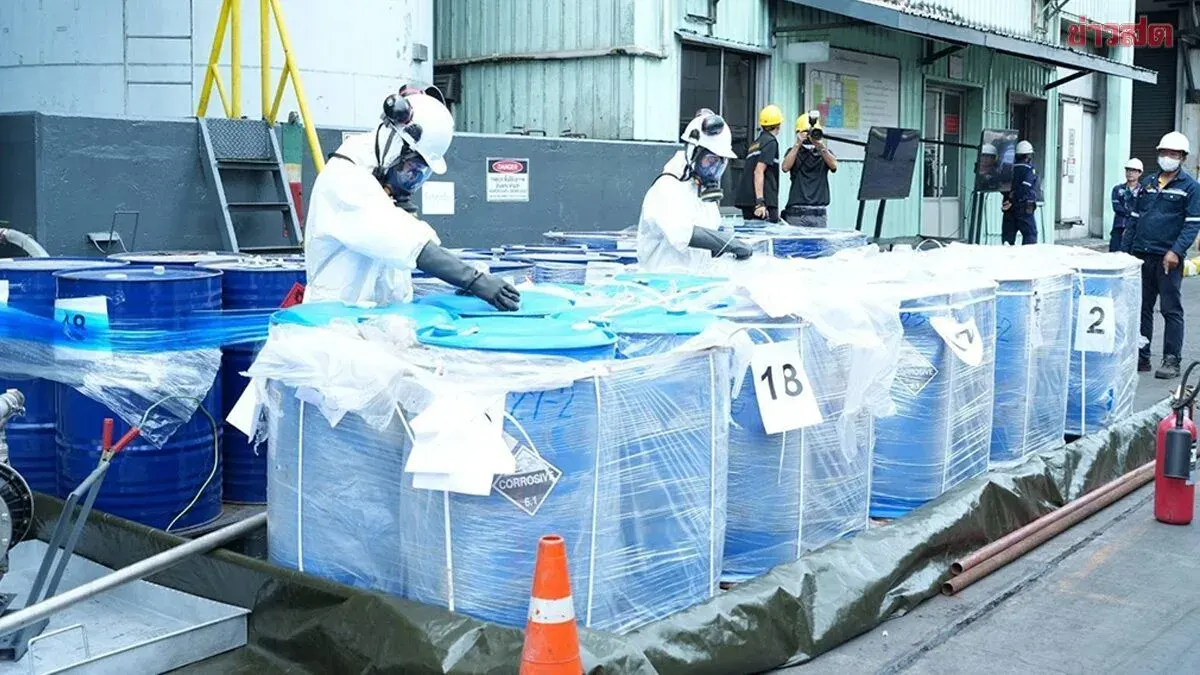
On September 7, the Customs Department, through Mae Sod Customs checkpoint in collaboration with the Office of the Narcotics Control Board, held a ceremony to destroy seized chemical precursors and hazardous substances. The operation also involved handing over satellite receiver-transmitter equipment (Starlink) at Akkraiprakar Public Company Limited in the Bang Pu Industrial Estate, Samut Prakan Province, to ensure seized materials are disposed of properly and safely in compliance with scientific standards, while blocking any chance of the chemicals re-entering drug production networks.
The destroyed materials included 120 drums of benzyl cyanide weighing 24,000 kilograms net, seized by Mae Sod Customs from an illegal cross-border shipment to Myanmar without authorization from the Industrial Ministry, and 236 drums of benzene weighing 44,000 kilograms net, totaling approximately 68 tons of chemicals destroyed.
This operation represents part of the systematic management of seized goods following interception by officials, particularly in the critical Mae Sod border area, which is a key zone for monitoring smuggling and goods trafficking related to drug production. The effort extends beyond seizure to include proper storage, control, and destruction of materials to prevent their return to production sources.
The chemical destruction was supported by funding of 1,564,875 baht from the Narcotics Control Board's drug prevention and suppression fund, demonstrating integrated cooperation between the Customs Department and the Narcotics Control Board in intercepting and disrupting drug supply chains from border control through seizure, prosecution, and final destruction of precursors.
In a related action, Mae Sod Customs also transferred seized Starlink satellite equipment to the Narcotics Control Board and the Army Intelligence Division for use in government operations, maximizing the value of confiscated assets for state benefit. This operation exemplifies the Customs Department's comprehensive approach to border enforcement, material management, and inter-agency collaboration to intercept precursor chemicals before they enter production processes, prevent their return to supply sources, and reduce impacts on Thailand and its citizens.