Thailand Launches Eight New Special Economic Zones in EEC
Thailand’s Cabinet has approved eight new special economic zones within the Eastern Economic Corridor to attract foreign investment in energy, food, medical, and logistics sectors. The zones, covering Chonburi, Rayong, and Chachoengsao, are expected to draw hundreds of billions of baht and push the country toward high‑tech, high‑value industries. Officials warn the concentration of growth could worsen regional inequality and push up land prices.
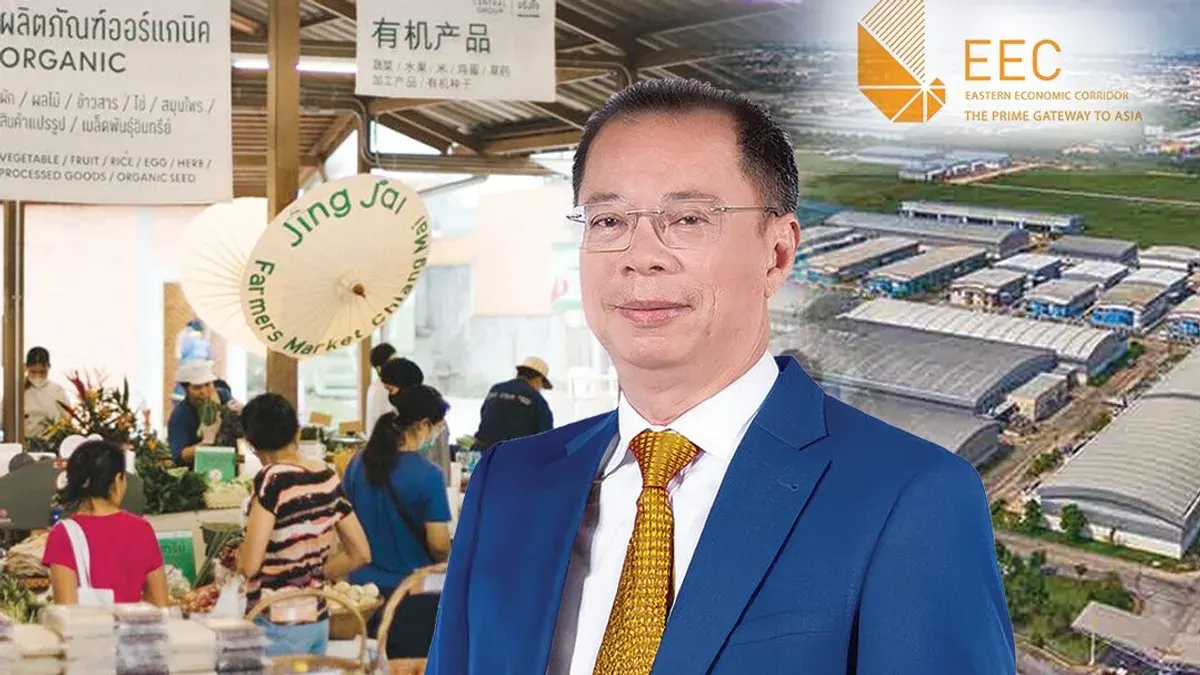
Amid high global economic volatility caused by geopolitical tensions and conflicts between major powers and the Middle East, countries worldwide are competing to attract foreign direct investment (FDI). Thailand has adjusted its industrial development strategy to boost competitiveness, escape the middle-income trap, and prepare for the intelligent technology era.
On October 6, 2026, the Cabinet approved the establishment of eight new special economic zones covering key industries—energy, food, medical, and logistics—within the Eastern Economic Corridor (EEC) spanning Chonburi, Rayong, and Chachoengsao provinces, following a proposal by Chula Sukmanop, Secretary-General of the EEC Policy Committee. The zones aim to serve as a main engine for drawing foreign investment into Thailand.
The eight zones are: 1) Amata City Chonburi 2 Industrial Estate; 2) 304 Industrial Park 2; 3) Food Processing Promotion Zone in Bang Pakong, featuring the Thai Sustainable Coffee Industry Group; 4) Map Ta Phut Industrial Estate; 5) Lucky Chai Muang Yang Industrial Estate in Rayong, focusing on rubber, modern automobiles, and digital industries; 6) Life Sphere Medical and Comprehensive Health Center in Pattaya, supporting the Medical Hub and precision medical industry; 7) Second LNG Station at Map Ta Phut, emphasizing clean energy security and reducing environmental impact; 8) Smart Logistics Promotion Zone in Chachoengsao, aimed at increasing efficiency and lowering costs of the national freight transport system.
The EEC Policy Committee will apply EEC laws and incentives, including full privileges under the Eastern Economic Corridor Development Act of 2018, one-stop services to streamline approvals, and infrastructure upgrades such as roads, water, and electricity to support future industries, clean energy, and smart logistics.
The government targets hundreds of billions of baht in investment, with the Lucky Chai Muang Yang zone alone expected to generate over 100 billion baht, and the Map Ta Phut area projected to stimulate around 77.48 billion baht in machinery and research-linked investment. This influx is expected to create opportunities, help drive the economy amid sluggish conditions, and push Thailand toward New S‑Curve industries—moving away from OEM manufacturing toward high‑tech, high‑value sectors such as precision medicine, clean energy, food and agricultural security, and smart logistics. It will also enhance Thai businesses’ competitiveness and lower costs, giving Thailand an edge in ASEAN.
However, opportunities come with risks, especially the potential for increased inequality and concentration of development in the three EEC provinces, which could draw investment, infrastructure, and skilled labor away from other regions such as the North and Northeast, while land prices continue to rise.