Floods and Veg Festival Drive Leaf Veg Prices Up Fivefold
Flooding in Thailand’s central and western vegetable belts cut supplies while the Vegetarian Festival boosted demand, sending leafy vegetable prices soaring. Holy basil jumped fivefold, with Chinese water spinach up 4.2 times and other greens also rising sharply. Kasikornbank Research Center forecasts prices to ease from late October as new harvests arrive and festival demand wanes.
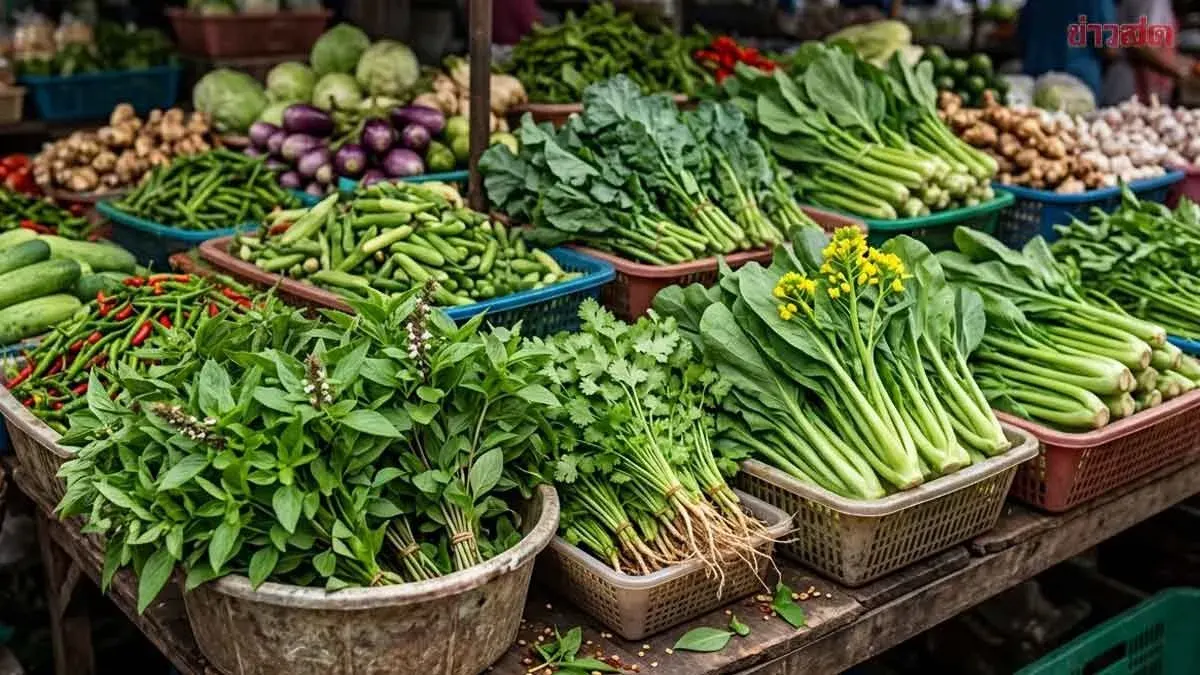
Flooding and the Vegetarian Festival have driven up prices of five leafy vegetables, with holy basil soaring fivefold. Kasikornbank Research Center says flood‑hit farmland in central and western Thailand has pushed average prices of the top five vegetables up 3.5 times compared with normal periods. The floods cut yields in the region, which supplies 55‑70 % of the country’s vegetables, while transport costs rose sharply due to damaged roads and diesel prices over 40 baht per litre. Holy basil prices jumped the most, up five times, followed by Chinese water spinach (4.2×), pak choi (2.8×), kale (2.2×) and coriander (1.6×).
Main factors pushing vegetable prices higher include flood damage across the supply chain and stronger demand during the Vegetarian Festival. Firstly, major vegetable farms in the central and western regions, accounting for 55‑70 % of national output, were hit hard by flooding because they are low‑lying, cutting production. Secondly, transport costs surged as roads were severed and diesel exceeded 40 baht per litre, raising agricultural freight charges by up to 200 % from central farms, 150 % from the north/northeast and 50 % from the south. Thirdly, wastage costs rose as some vegetables spoiled and were discarded, tightening supply and lifting prices. Fourthly, farmers increased spending on chemicals and fungicides to counter rain‑washed away protectants and fungal growth.
Demand for vegetables rose during the Vegetarian Festival (October 10‑18, 2026), adding upward pressure when supply was already limited. Kasikornbank Research Center expects vegetable prices to gradually decline later in the year as supply recedes after the floods and festival end. In the second half of October prices will begin to slip as new harvests arrive, and the top five vegetables could see a clear drop in November‑December, averaging around 60 baht per kilogram, down from the peak of about 135 baht per kilogram during the flood and festival period.
Incoming supply from new planting cycles and supplemental output from northern highland farms will ease prices. Because leafy vegetables mature in 20‑45 days, farmers can replant and bring fresh produce to market quickly. Additional volume will come from upland areas in the north producing kale, coriander, Chinese water spinach, cabbage, sweet pepper, carrot and lettuce.