Thailand Launches Campaign to Protect Dugongs From Ship and Fishing Gear Threats
Thailand's Department of Marine and Coastal Resources has launched a campaign to protect dugongs from ship strikes and fishing gear entanglement, after data revealed 209 strandings over a decade along the Andaman coast.
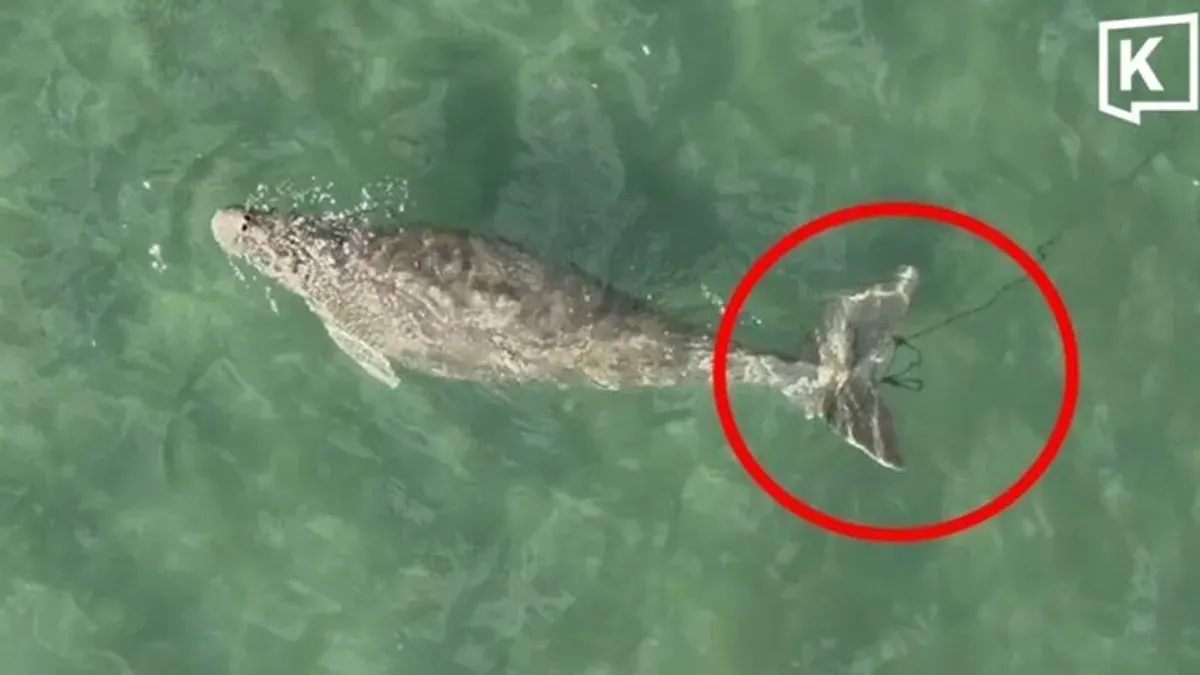
Bangkok — 17 August 2026, Thailand's Department of Marine and Coastal Resources (DMCR) has stepped up efforts to protect dugongs after 10 years of data showed 209 strandings, warning that the species faces an increasing risk of extinction.
DMCR Director-General Pinsak Suraswadi said the department had launched the "Save Our Dugong" campaign in line with Natural Resources and Environment Minister Suchart Chomklin's policy to conserve and restore marine and coastal resources, particularly rare and endangered marine animals.
The campaign focuses on reducing threats from human activities in 12 high-risk areas along Thailand's Andaman coast, with two urgent measures targeting boat accidents and fishing gear.
The first measure is to regulate shipping routes and boat speeds in six areas considered at risk of dugongs being struck by vessels: Ratsada Pier and Bang Rong Pier in Phuket; the Ko Yao Noi–Ko Yao Yai waterway in Phang Nga; Hat Noppharat Thara–Ao Nam Mao in Krabi; Pak Meng Pier–Ko Muk and Ko Libong Pier–Hat Yao in Trang.
Buoys and navigation markers will be installed to clearly define routes, while speed limits will be imposed according to distance from shore.
Boats will be limited to 5 knots within 1 kilometre of the coast, 10 knots within 2 kilometres and 20 knots within 3 kilometres. The speed limit will be 5 knots in seagrass areas and 3 knots in seagrass areas located within national parks.
The second measure involves modifying fishing gear to make it safer for dugongs in six high-risk areas: Ko Chang–Ko Phayam in Ranong; Ko Ra–Ko Phra Thong in Phang Nga; Pa Khlok–Tang Khen in Phuket; Hat Noppharat Thara in Krabi; Ko Siboya in Krabi; and Ko Muk–Ko Libong in Trang.
The measures aim to reduce the risk of dugongs becoming trapped or injured by fishing equipment.
For single crab traps, one trap per buoy will be allowed, but traps will be prohibited in seagrass beds. Buoy ropes will be replaced with 5-millimetre high-strength fibre rope to reduce the risk of entanglement and deep cuts to dugong muscles.
Weak links will also be modified at connection points to give dugongs a better chance of escaping if they become entangled. Excess rope will be shortened, particularly around the water surface and along areas commonly used by dugongs.
For linked crab traps, with 15–20 traps connected to one buoy, stones or lead weights will be used to keep the rope running vertically.
Bottom-set crab nets will be prohibited in seagrass beds. In areas where they are permitted, fishermen will be required to monitor the nets after deployment to reduce the risk of dugongs becoming trapped.
Large-mesh drifting fish nets, such as nets used to catch sea bass, will also be prohibited in seagrass beds and must be placed at least 1 kilometre away from the edge of seagrass areas.
"The department's goal is to reduce dugong deaths caused by human activities to zero," Pinsak said.
He stressed that the measures were not intended to restrict the livelihoods of fishermen or maritime communities.