Thailand Rejects Cambodia Border-Seizure Claim
Thailand rejected Cambodia's allegations of territorial seizure, saying military operations during conflict don't change borders and disputes must be resolved through agreed negotiation mechanisms, not force.
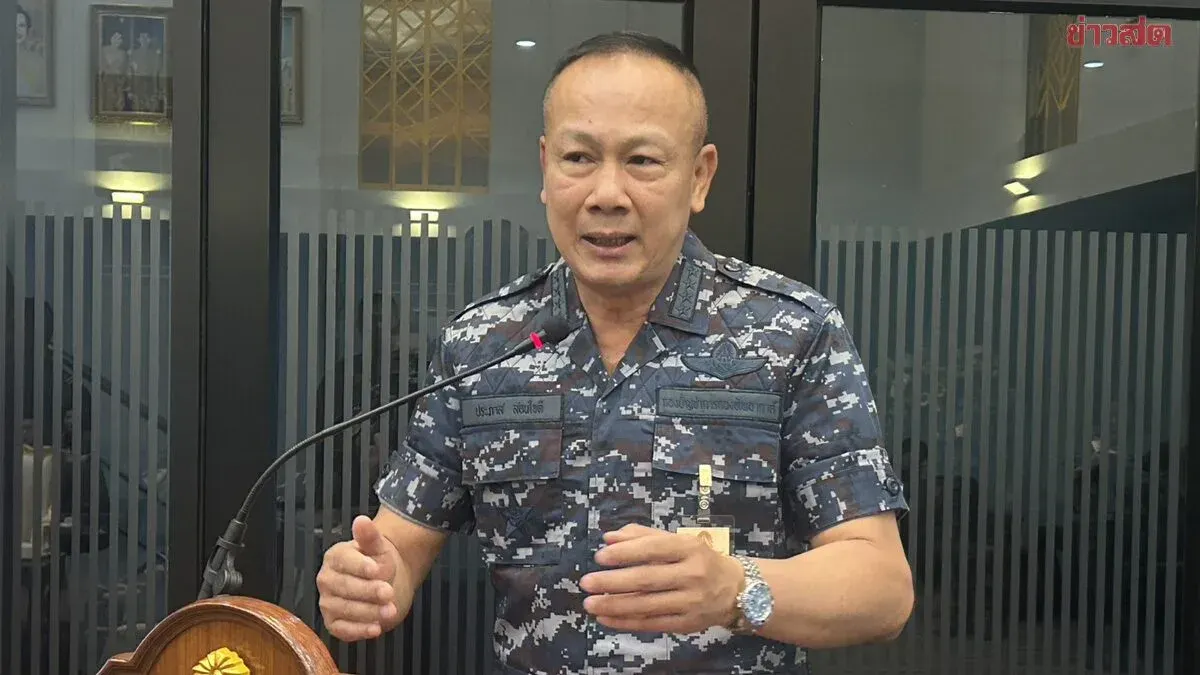
On September 13, General Praphas Saondaengchai, director of the Thailand-Cambodia Joint Information Center (JIC), addressed Cambodia's allegations that Thailand used force to occupy territory by emphasizing the need to separate facts into two distinct periods: the fighting phase and the period after the ceasefire agreement. He stated that combat operations do not change territorial sovereignty, but Thailand has a duty to protect its territory and people.
"During the fighting phase, if Cambodian forces entered areas that Thailand considers under Thai sovereignty to establish positions, use weapons, or attack Thai forces and civilians, the Thai military has a duty to defend the country, protect people, and eliminate the threat under principles of necessity, proportionality, and international humanitarian law," he said.
He stressed that repelling opposing forces from areas Thailand considers its own territory during combat should not be misinterpreted as Thai policy of invasion or seeking neighboring land. After the Joint Statement was signed on December 27, 2024, both sides agreed to cease fire and maintain troop positions at the ceasefire moment without advancing toward each other. The agreement explicitly states that this deployment does not affect border surveys and demarcation, which must be conducted through the JBC mechanism.
"This is the key point that must be made clear. A ceasefire is the end of fighting, not a treaty that determines borders. And troop deployment is not a new border line," he said.
If Cambodia disputes which territory belongs to which side, it must submit evidence, maps, and legal documents to mechanisms both countries accept, not decide through political statements. Similarly, Thailand should not use troop positions as justification for determining borders. The JIC director reaffirmed that Thailand does not want even one square inch of Cambodian territory, but simultaneously has a duty to protect Thai land and people. When threatened in Thai areas, Thailand has the right and duty to defend itself. Once the ceasefire began, Thailand respects the agreement and has brought the border dispute back to the negotiation table.
"Our position is clear: Defend when necessary, de-escalate when possible, and settle the boundary through agreed mechanisms," he said.
Thailand does not ask the international community to choose sides with Thailand or Cambodia, but only to consider the full timeline, facts on the ground, and agreements both parties signed together using the same standards. Thailand seeks a return to peace at the border, normal life for civilians of both nations, and resolution of the border dispute through law, negotiation, and bilateral mechanisms—not force.
"Security first. Facts first. JBC for the boundary. Peace as the destination."
Regarding Cambodia's claim that areas within Preah Vihear temple are civilian shelters and not military positions, the JIC director emphasized that conclusions cannot be drawn by combining images from different time periods, as the context of events differs significantly across periods. Images of civilians presented as evidence must be verified for when, where, and which events they relate to.