Lanta & News
No. 01 · ENDLESS
National

Thailand's Healthcare System Ranks 8th Best in World

Thailand's healthcare system ranked 8th globally in 2026, praised for affordable quality services and universal coverage through its 30-baht national health scheme. The achievement underscores the country's strength as a medical tourism des

Thailand's Healthcare System Ranks 8th Best in World
3 Jul Khaosod

The government celebrated Thailand's healthcare system ranking 8th among the world's best healthcare systems for 2026, demonstrating effective management and universal healthcare access. On July 3, 2026, Deputy Government Spokesperson Ploythale Laksameesangchan disclosed that Numbeo, the world's largest cost-of-living database and a crowdsourced global information platform on quality of life, provides insights on living costs, housing price indicators, perceived crime rates, healthcare quality, transportation quality, and other key statistics. The survey results revealed that Thailand's healthcare system ranks 8th globally among the best healthcare systems in 2026.

The top 10 countries with the best healthcare systems are: 1st Taiwan (87.1 points), 2nd South Korea (82.9 points), 3rd Netherlands (81.1 points), 4th Japan (80.1 points), 5th Austria (78.9 points), 6th Ecuador (77.7 points), 7th Finland (77.6 points), 8th Thailand (77.5 points), 9th Denmark (77.2 points), and 10th Spain (77.2 points).

Thailand's healthcare policy strengths include quality services at affordable prices, effective management and equitable healthcare distribution, particularly through the National Health Security Scheme (the 30-baht universal healthcare card available nationwide) with both public and private hospitals maintaining high standards. The system aims to elevate health services to be comprehensive and equitable, offering free healthcare for all Thai citizens covering all levels from general illness to chronic diseases and high-cost treatments, accessible with just a national ID card. The survey results underscore that Thailand remains a popular medical tourism destination.
No. 01 of Read at source → Next
Police

Indonesia Arrests 12 in Major Cannabis Trafficking Case From Thailand

Indonesian authorities arrested 12 suspects and seized 3.37 tonnes of cannabis from Thailand intended for processing into vape products across major cities including Jakarta and Bali.

Indonesia Arrests 12 in Major Cannabis Trafficking Case From Thailand
3 Jul Khaosod

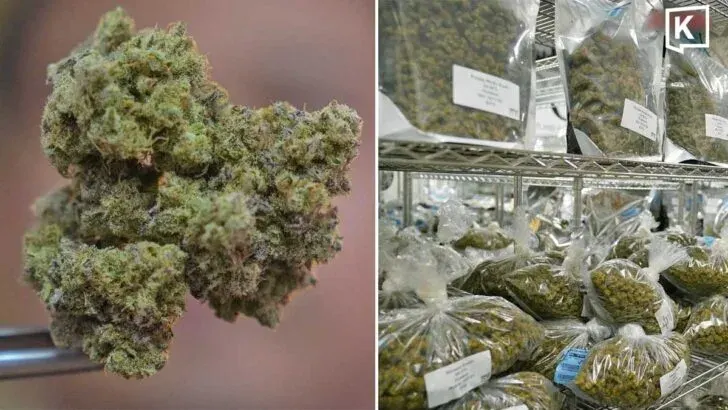
JAKARTA — 3 July 2026 Indonesian authorities have seized 3.37 tonnes of cannabis buds allegedly imported from Thailand and arrested 12 suspects, including foreigners, in a drug trafficking case linked to the production of cannabis-laced vape products.

Reuters reported that Indonesia's National Narcotics Agency announced the seizure this week following operations carried out in several Indonesian cities from 29 June to 1 July.

National Narcotics Agency chief Police General Suyudi Ario Seto said the cannabis buds were hidden inside suitcases and rubber boxes. The shipment originated from Thailand and was seized in East Java province.

Investigators found that the cannabis was allegedly intended for distribution in major Indonesian cities, including Jakarta and Bali, and would be used to produce vape products containing cannabis.

The agency said the network had been recently established and included foreign nationals among its members.

Indonesia has some of the world's strictest drug laws. One of the country's most high-profile drug cases involved the Bali Nine, a group arrested in 2005 while attempting to smuggle heroin out of Bali's international airport. Two Australian ringleaders in the case were executed in 2015, causing a diplomatic rift between Indonesia and Australia.

No. 02 of Read at source → Next
Tourism

Foreign Tourists Apologize for Taking Sacred Offering at Pattaya Beach

Two foreign tourists apologized after unknowingly taking a sacred coconut offering from beneath a tree at South Pattaya Beach for photos, sparking online discussion about cultural awareness at Thailand's spiritually significant sites.

Foreign Tourists Apologize for Taking Sacred Offering at Pattaya Beach
3 Jul Khaosod

CHONBURI — Two foreign women have apologized after unknowingly taking a coconut left as an offering to local spirits at Pattaya Beach for a photo, sparking widespread discussion on social media.

The incident came to light after a Facebook user posted a 45-second video showing the tourists picking up a coconut from beneath a tree at South Pattaya Beach, Chon Buri, and using it as a photo prop by the sea.

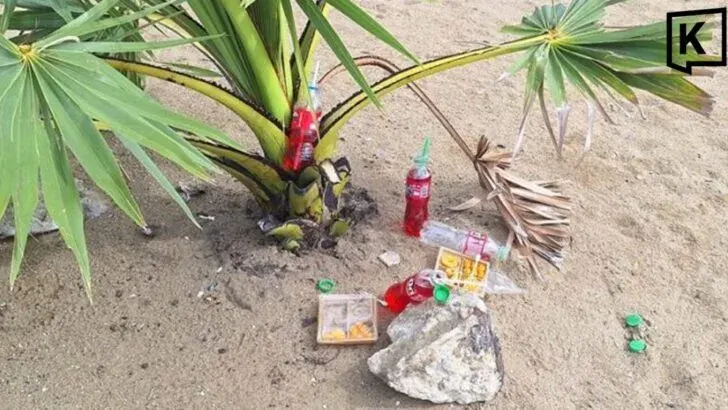
Reporters visiting the site found that local residents regularly leave coconuts, desserts and bottles of red soft drink beneath the tree as offerings to guardian spirits, believing the practice brings good fortune.

The spot is also popular with both Thai and foreign visitors taking photos of the beach. Locals believe the women were unaware the coconut was part of a religious offering and had no intention of showing disrespect.

Wannachai, 35, who recorded the video, said he had earlier seen a group of four or five foreign tourists resting under the tree. After asking whether they planned to visit Koh Larn, one tourist picked up the offering coconut and walked to the beach to take photographs.

He later used a translation app to explain that the coconut had been placed there as an offering.

"Once they understood, they looked shocked and immediately apologised," he said. "They said they did not know about the Thai custom, offered an apology in Russian, and returned the coconut to its original place."

The incident has prompted online discussion about the importance of cultural awareness when visiting religious or spiritually significant sites in Thailand.

No. 03 of Read at source → Next
Weather

Geological Survey Alerts 15 Provinces To Landslides, Flooding

Thailand's Geological Survey warns 15 provinces of landslide and flooding risks through July 4 as a monsoon trough brings heavy rainfall exceeding 100mm in 24 hours across northern and southern regions.

Geological Survey Alerts 15 Provinces To Landslides, Flooding
3 Jul Khaosod

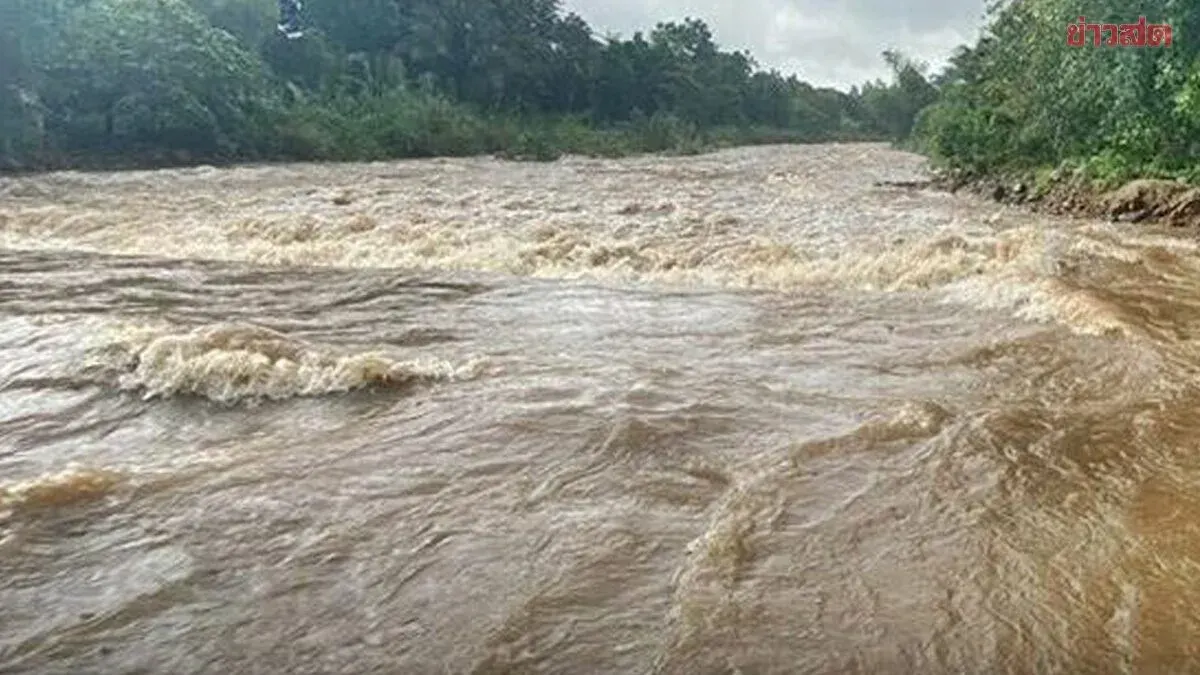
On July 3, 2025, the Disaster Geology Operation Center under the Department of Mineral Resources warned of heightened risks of landslides and flash flooding across 15 provinces including Mae Hong Son, Chiang Mai, Chiang Rai, Tak, Nan, Phayao, Phichit, Chanthaburi, Trat, Ranong, Phang Nga, Phuket, Krabi, Trang, and Surat Thani through July 4. The alert was issued due to a monsoon trough moving across the northern and upper northeastern regions, combined with strong southwestern winds over the Andaman Sea and Gulf of Thailand, resulting in continuous heavy rainfall exceeding 100 millimeters in 24 hours and initial flash flooding in some areas. The department urged volunteer monitoring networks to remain alert, continuously measure rainfall, and promptly alert residents and relevant agencies of any landslide or flash flood incidents, following established emergency response procedures.

No. 04 of Read at source → Next
National

Thailand Digital Nomad Visa: Who Qualifies in 2026

Thailand's Digital Nomad Visa (DTV), launched in 2024, is now the primary legal option for remote workers staying long-term as the government phases out visa-exempt entries and enforces stricter border rules in 2026. The five-year, multiple

3 Jul The Thaiger Travel

Thailand digital nomad visa (DTV) 2026: who qualifies and how to applyLegacyFor anyone working remotely and looking to spend serious time in Thailand, the old approach of cycling through visa exemptions is no longer viable. The Thai Cabinet approved scrapping the 60-day visa-free stay in May 2026, two-per-year land border caps are being enforced, and immigration is actively flagging repeat entries without a clear purpose. The legal route for remote workers now runs through the Thailand digital nomad visa, officially called the Destination Thailand Visa or DTV, and it is by some margin the most practical long-stay option the country has ever offered for people earning foreign income. This guide covers everything you need to know about the Thailand digital nomad visa in 2026: who qualifies, what documents to prepare, how the application works, what the tax implications are, and how it compares to other long-stay options. On this page:

Section (Click to jump) Summary

What the DTV actually is How Thailand’s Destination Thailand Visa works, who it targets, and the benefits it offers.

Who qualifies The three eligibility routes include remote workers, Soft Power participants, and eligible dependants.

What documents you need The financial evidence, supporting paperwork, and application documents are required before applying.

How to apply A step-by-step overview of the application process, fees, and expected processing times.

Once you are in Thailand What happens after arrival, including extensions, 90-day reporting, and ongoing immigration requirements.

The question about taxes How staying longer in Thailand may affect your tax residency and overseas income.

How the DTV compares to other long-stay options How the DTV stacks up against retirement visas, the LTR Visa, and Thailand Privilege.

What has changed and what to watch The latest policy changes, stricter requirements, and key updates future applicants should monitor.

What the DTV actually is The Destination Thailand Visa was launched on July 15, 2024, created through a Royal Thai Government Gazette announcement under the Immigration Act B.E. 2522, administered by the Ministry of Foreign Affairs in coordination with the Tourism Authority of Thailand and the Board of Investment. Photo by Imágenes de MASYM YEMELYANOV The core specs: five-year validity, multiple entry, 180 days per entry, extendable once per entry for an additional 180 days at a local immigration office for 1,900 baht. The application fee is 10,000 baht. You must be at least 20 years old and physically outside Thailand when applying. Dependents, defined as a legal spouse and unmarried children under 20, can be added as co-applicants. It is not a work permit. The DTV does not allow you to work for Thai companies, invoice Thai clients, or obtain a Thai work permit. It is designed for people earning income from foreign sources while living in Thailand. Over 35,000 applicants had filed for the visa by July 2025, according to IMI Daily, making it one of the most popular long-stay routes Thailand has introduced. Who qualifies Photo from Fan Club Thailand The DTV is divided into three official categories. The first is the Workcation track, which is the one most digital nomads and remote workers will use. This covers remote employees of foreign companies, freelancers with international clients, business owners earning foreign income, and content creators. The key requirement is that your income comes from outside Thailand. Salaried remote workers and freelancers with verifiable client relationships both qualify, though the documentation required differs. The second category covers Thai Soft Power activities: Muay Thai training, Thai cooking courses, sports training, medical treatment, seminars, workshops, and music or cultural festivals. Programs generally need to run for at least six months to be taken seriously by embassies. Medical and wellness visitors apply under this same category rather than a separate one. Tourist/expat training padwork in Muay Thai | Photo from The Colours of Thailand One notable change since 2025: Thai language schools were removed from the Ministry of Foreign Affairs’ qualifying soft power list. Applicants wanting to study Thai are now directed to the Non-Immigrant ED visa. The third category is for dependents of an existing DTV holder. Spouses and children under 20 each file a separate application and pay a separate fee. Dependents can also work remotely for foreign employers under the same framework. What documents you need Every application requires a core set of documents: a passport valid for at least six months, a recent passport photo with a white background, proof of your current location outside Thailand, and bank statements covering the last three months showing at least 500,000 baht or the equivalent in foreign currency. Photo by annastills from Canva The 500,000 baht does not need to be held in a Thai account or in baht. Foreign bank accounts in USD, EUR, or GBP are accepted. What matters is the seasoning: the funds must have been sitting in the account for at least three months. Sudden deposits are the most common trigger for rejection across all embassies. On top of the core set, Workcation applicants need an employment contract or certificate from a foreign employer, an employer letter confirming remote work and salary, and roughly six months of payslips or bank statements. Freelancers need signed client contracts, invoices, and a portfolio. A LinkedIn profile alone is not sufficient. Soft power applicants need an acceptance or enrollment letter from a registered Thai institution stating the programme name, duration, schedule, and fee. All documents not in Thai or English need certified translations. Notarisation and apostille requirements vary by embassy, so verify with your specific mission before submitting. How to apply Since January 1, 2025, all DTV applications go through the official Thailand e-Visa portal at thaievisa.go.th. In-person submission is no longer required at most embassies. The process is: create an account, select Destination Thailand Visa and your category, upload your documents as PDFs or JPEGs, pay the fee, and wait.

You cannot apply from inside Thailand. Applications must be filed from abroad, and applicants report that the e-Visa system flags where a submission comes from, so filing while physically in Thailand risks rejection. Those already in the country must exit first and apply from outside. Processing times vary significantly by embassy. Faster posts include Vientiane, Phnom Penh, Ho Chi Minh City, and Kuala Lumpur, where approvals typically arrive within three to seven days. London, Washington DC, Tokyo, and Berlin run slower, often four to six weeks. Plan accordingly. The base fee is 10,000 baht, but the actual amount charged varies by country of application. Embassy processing has also been inconsistent since the DTV launched, with some applicants waiting weeks longer than the published timelines and documents being requested after the clock had already started. Washington DC charges approximately US$400, London GBP 300, Singapore SGD 500, and Tokyo JPY 52,000. The fee is non-refundable regardless of outcome. Before every arrival in Thailand, you must complete the Thailand Digital Arrival Card (TDAC) at tdac.immigration.go.th. It must be submitted within 72 hours before you land, and this replaced the old TM6 paper card in May 2025 and is mandatory for all foreign nationals. Once you are in Thailand The 180-day clock starts on entry. If you need to stay longer than 90 consecutive days, you must file a 90-day notification with immigration, which can be done online. The fine for missing this is around 2,000 baht. Photo from Not Your Typical Tourist Your landlord or host must file a TM30 address registration within 24 hours of your arrival at any accommodation. This is their responsibility, but it is worth confirming that it was done, as it is required for immigration extensions. If you want the full 360-day stay before exiting, apply for the in-country extension at an immigration office before your initial 180 days expire. You will need to show updated bank statements confirming you still meet the 500,000 baht threshold. After 360 days, you must leave and re-enter for a fresh 180-day stamp, which you can do immediately without a cooling-off period. The question about taxes Staying 180 days or more in a calendar year makes you a Thai tax resident. That is not a reason to avoid the DTV, but it is something to plan around deliberately. Under Revenue Department Instruction Por. 161/2566, which took effect on January 1, 2024, any foreign income you remit to Thailand while you are a Thai tax resident is assessable in the year you bring it in, regardless of when it was earned. This closed the old loophole of parking income offshore for a year to sidestep tax. A companion ruling, Por. 162/2566, grandfathers income earned before January 1, 2024, so those pre-2024 funds stay exempt even if you remit them later. The practical implication is simple: if you transfer money from a foreign account into a Thai bank account while you are a tax resident, that amount may be assessable. Foreign income that stays offshore is generally not taxed, because Thailand only taxes foreign income once it is remitted The simplest strategy for many digital nomads is to stay under 180 days per calendar year, which the DTV’s structure makes easy to manage with a mid-year exit. Thailand has double tax agreements with more than 60 countries, which may reduce or eliminate liability depending on your home country. US citizens still have to file US returns regardless and remain subject to self-employment tax, as there is no US-Thailand totalization agreement. Given how quickly enforcement is evolving, anyone spending significant time in Thailand under the DTV should get advice from a qualified Thai tax adviser rather than relying on community assumptions. How the DTV compares to other long-stay options

Visa Fee Duration Stay per entry Financial threshold Work rights

DTV 10,000 baht 5 years 180 days (extend to 360) 500,000 baht Foreign employers only

LTR ~50,000 baht 10 years 1 year No per-entry limit (annual report) ~US$80k income or US$1M assets Work permit available

Thailand Privilege 650,000 to 5M baht 5 to 20 years 1 year None No work rights

METV ~5,000 baht 6 months 60 days (extend to 90) ~US$5,600 None

Non-Imm O (retirement) Low 1 year renewable 1 year 800,000 baht in a Thai bank None

For most remote workers who do not meet the income or asset thresholds for the LTR, the Thailand digital nomad visa is the strongest option in terms of value, length, and flexibility. The Thailand Privilege Card costs far more and offers no work rights. The METV is a fallback if the DTV requirements are out of reach, but it is a six-month product, not a multi-year one. What has changed and what to watch The 2026 picture for the Thailand digital nomad visa is tighter than it was at launch. Rejection rates have climbed, particularly for freelancers with vague documentation and soft power applicants using unrecognised or short programmes. The e-Visa system now flags IP and GPS locations to prevent in-Thailand applications. Language schools no longer qualify, and fund seasoning is strictly enforced. Photo by Preto_perola from Getty Images The May 2026 Cabinet decision to roll back the 60-day visa exemption to 30 days for most nationalities does not directly affect the DTV, but it changes the landscape around it. Anyone who was managing long stays through back-to-back tourist entries now has a much narrower window. The rules around how Thailand enforces long stays have shifted considerably since 2023, and the Thailand digital nomad visa is the most practical legal alternative for that audience. Discussions of possible tiered DTV pricing have been reported but not confirmed. Monitor the Ministry of Foreign Affairs at mfa.go.th and the Tourism Authority of Thailand at tourismthailand.org for updates. Visa requirements vary by embassy and change frequently. Always verify the current document requirements with your nearest Royal Thai Embassy or Consulate before applying. Official sources: thaievisa.go.th, mfa.go.th, and the Immigration Bureau. Nothing in this article constitutes legal or tax advice. The story Thailand digital nomad visa (DTV) 2026: who qualifies and how to apply as seen on Thaiger News.

No. 05 of Read at source → Next
National

Opposition Leader Calls for PM Accountability in Parliament

Opposition leader Nattapong Rueangpanyawut demanded the Prime Minister personally present the budget and answer live parliamentary questions, citing the PM's repeated avoidance of direct accountability to lawmakers.

Opposition Leader Calls for PM Accountability in Parliament
3 Jul Khaosod

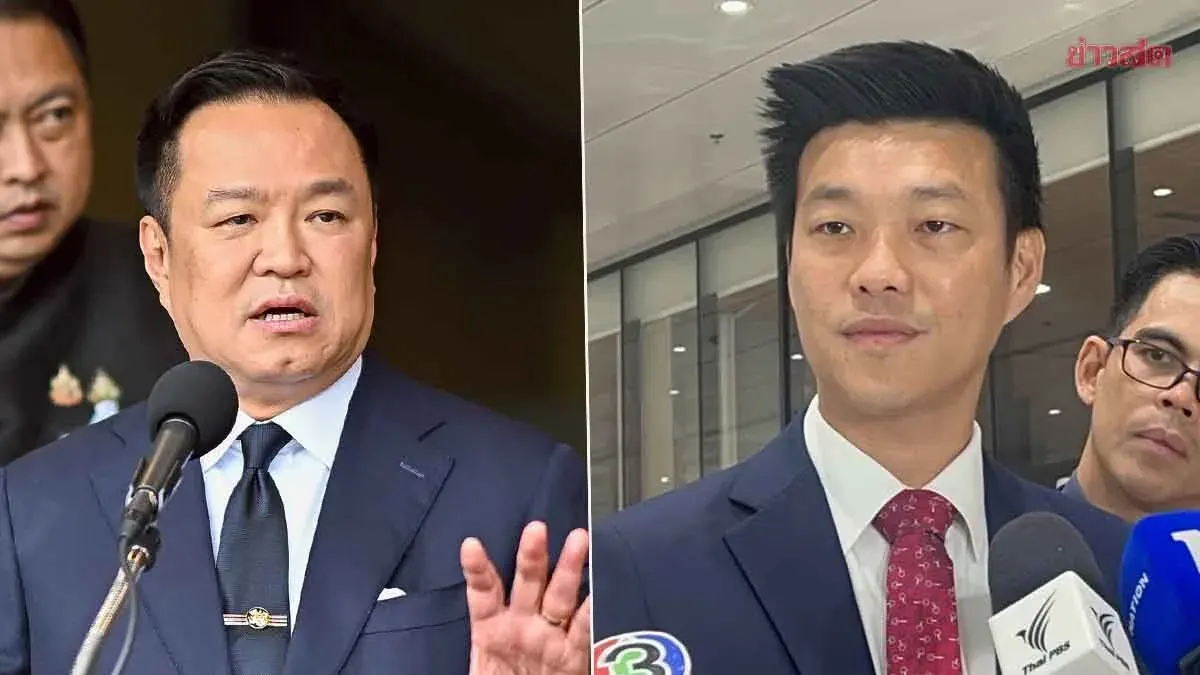
On July 3, 2025, Nattapong Rueangpanyawut, a list-based MP and leader of the People's Party opposition faction, criticized ministers for avoiding live parliamentary questioning. He noted that while the Prime Minister should answer parliamentary questions, there are only two major annual agenda items requiring his presence: the budget bill review and no-confidence debate votes. Rueangpanyawut argued the PM could manage these two occasions and should attend the 2570 fiscal year budget presentation personally. He called on the ruling coalition to coordinate with opposition to reschedule sessions if the PM and Interior Minister have international travel obligations, allowing the Premier to present the budget and answer live questions directly. "To this day, the PM has never answered live parliamentary questions posed by members multiple times," Rueangpanyawut said, urging greater accountability to parliament.

No. 06 of Read at source → Next
Community

Rare Buddha Amulets From Revered Eastern Thai Masters

Rare amulets created by revered Eastern Thai Buddhist masters in the early 20th century, including distinctive designs from Chachoengsao and Samut Songkhram, have become highly sought-after collectibles commanding premium prices among serio

Rare Buddha Amulets From Revered Eastern Thai Masters
3 Jul Khaosod

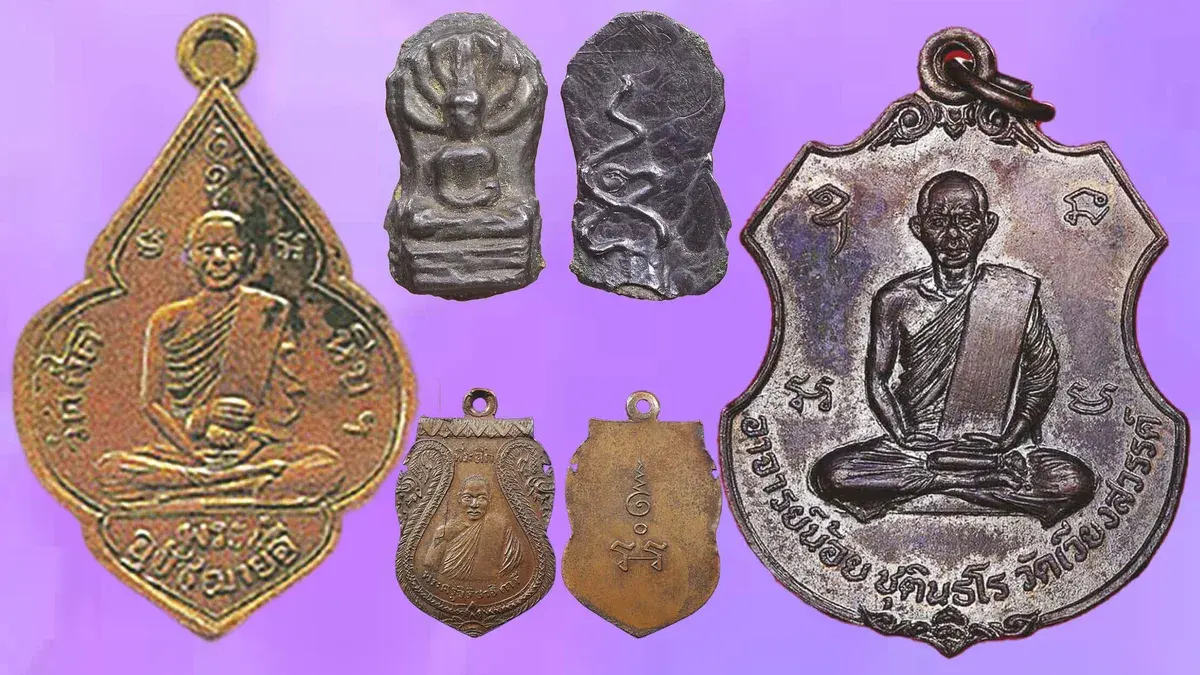
A spiritual teaching from Luang Pho Cha Subhadto of Wat Nong Pa Phong in Ubon Ratchathani states: "Following the Buddha's path brings no suffering, for His way is complete letting go of all things." Phra Kru Wor Wetmuni, known as Luang Pho Ee Buddhsaro, was a celebrated master teacher from Chachoengsao in Thailand's East who created numerous sacred amulets including talismans, yantra shirts, medals, and closed-eye Buddha images. Among his most popular pieces is the distinctive "Khao Bin" grain-shaped amulet. In 1930, Wat Satcheep commissioned portrait medals as commemorative gifts for those who contributed funds toward building the main ordination hall. Both oval and grain-shaped versions were produced, featuring a seated meditation figure with "Wat Sat" on the left and the master's name below. A yantra appears in the center, with the inscription "Memorial of the Buddha Image casting" and "B.E. 2473" on the back. This edition became highly sought-after, commanding high rental prices, and remains rare among serious collectors. Luang Pu Jai Inthasuvanno, a venerated master from Wat Sedet in Samut Songkhram, created the popular "Tamarind-Leaf Nagas" amulet in 1930 as part of a commemorative series for donors. This small brass casting features multiple designs: two-needle, single-needle, and dot varieties. The front depicts Buddha in meditation on a three-tiered base, while the back displays seven-headed nagas with protective shields. Khmer script runs along the center back. Due to limited production, this early amulet became exceptionally popular. Luang Pu Nak Punyanako of Wat Hua Hin in Prachuap Khiri Khan, a prominent historical master, created various sought-after amulets, with collectors particularly valuing his first-edition portrait medals. These Semai-shaped medals feature two handles and were created by Phra Kru Prasitthi Samnakaan (Tan Mena Jindha) of Chakravartti Rachawas Temple in Bangkok to commemorate the master's 72nd birthday. The front displays a bird-pattern border with a half-portrait facing forward, inscribed "Memorial" above and "Phra Kru Wiryaathikari" below, while the back features the Unaalom yantra and Khmer script, making it one of the most coveted medals in amulet collecting circles. Luang Pho Noi Chutinadhorn of Wat Noen Wiang in Nakhon Sawan was another renowned master whose first-edition "Tamarind-Leaf" medals, created in 1975, became highly celebrated. These copper amulets, produced in a limited run of 10,000 pieces, feature a looped bail with a seated meditation figure and yantra script, stamped with the master's name.

No. 07 of Read at source → Next
Police

Police Officer Dies By Gunshot During Video Call

A 31-year-old police officer died from a gunshot wound in Bangkok on July 2 while on a video call with a colleague, with authorities suspecting personal distress as a possible cause.

Police Officer Dies By Gunshot During Video Call
3 Jul Khaosod

A 31-year-old police officer video-called a colleague before a gunshot rang out, killing him in front of his friend. His father broke into the room and was shocked to find his son dead. The incident is suspected to be related to personal distress.

On July 3, 2569 (2026), Lt. Col. Srayut Suntad, deputy investigation officer at Bang Khunthian Police Station, reported that at 8 p.m. on July 2, officers received notification of a shooting death inside a car repair shop in Bang Bon District, Bangkok. They immediately responded with forensic teams, a medical examiner from Siriraj Hospital, and volunteers from the Thai Red Cross Society.

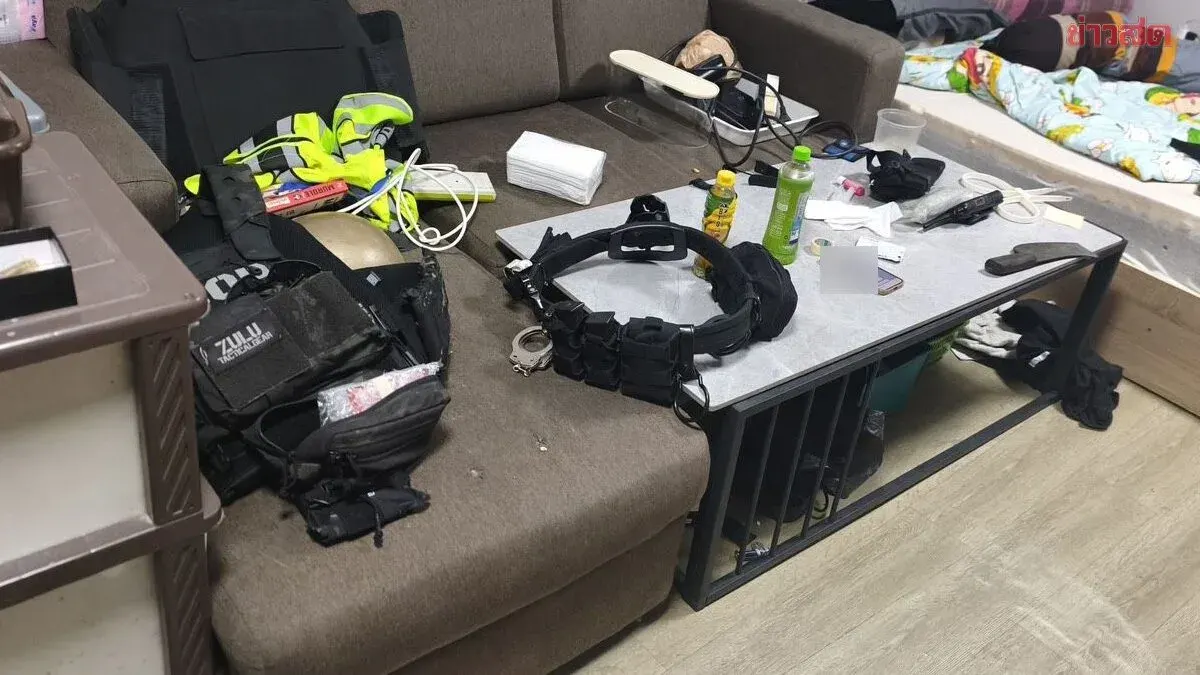
At the single-story building divided into rooms, inside what appeared to be a bedroom, officers found the body of an officer identified as S.T.O. A (alias), aged 31, a protection and suppression unit commander at a police station. The body lay face-down, wearing a blue t-shirt and black shorts, with a head wound. A 38-caliber Smith & Wesson revolver was found near his left hand.

According to the victim's father, in the early evening of July 2, the victim used his sister's phone to call his ex-girlfriend with whom he had broken up. After that, he locked himself in his room and refused to come out.

Around 8 p.m., a gunshot-like sound was heard. Shortly after, the father received a phone call from a colleague who said another officer had been video-calling the victim just before the incident occurred. The father then forced open the bedroom door and found his son dead.

Police at Bang Khunthian Station will conduct further investigation into the cause of death. The Thai Red Cross Society has been assigned to transport the body to the medical examiner at Siriraj Hospital before the family can claim it for religious funeral rites.

No. 08 of Read at source → Next
Community

The Legend of Thao Hiranya Phanasur at Mongkut Hospital

A protective forest spirit revered by King Mongkut in the early 1900s, Thao Hiranya Phanasur is now honored at Bangkok's Ramathibodi Hospital, where staff and visitors report miraculous interventions in health and personal matters.

The Legend of Thao Hiranya Phanasur at Mongkut Hospital
3 Jul Khaosod

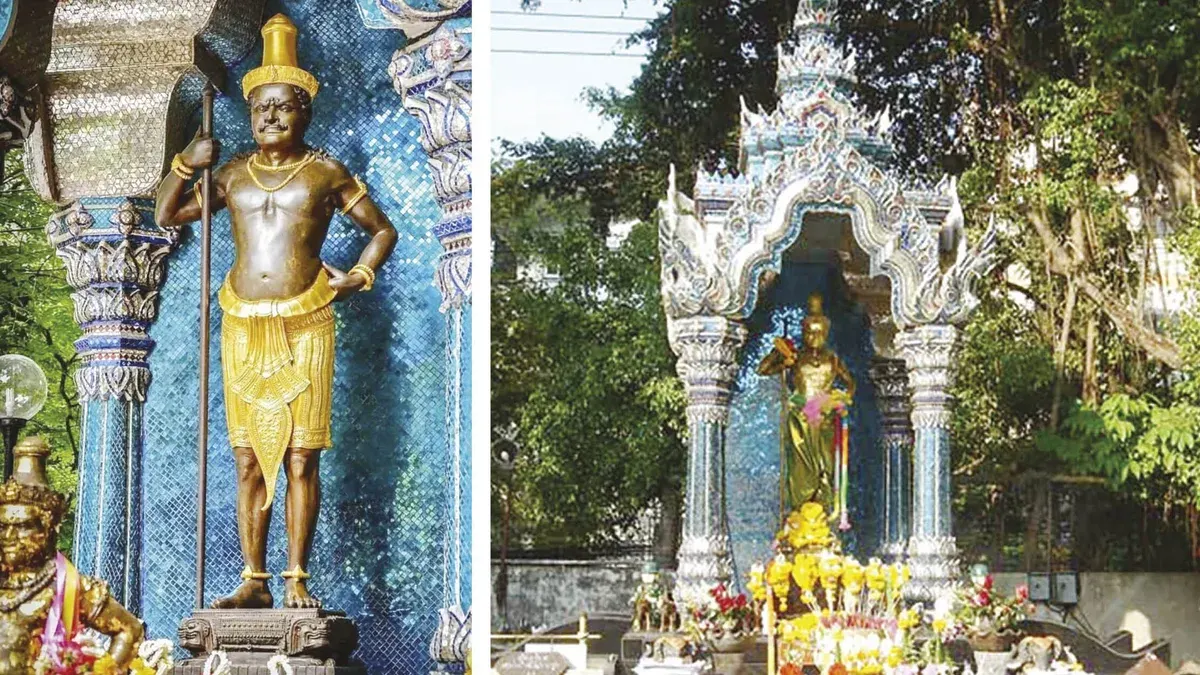
Visitors to Ramathibodi Hospital in Bangkok's Ratchathewi District encounter the shrine of Thao Hiranya Phanasur within the hospital premises. Local residents know its history well and report personal miraculous experiences. Doctors, nurses, and hospital staff show profound reverence, regularly seeking blessings before undertaking any task. Beyond medical matters, those facing various hardships—when not beyond karmic reach—report miraculous relief from disaster or success in their requests. The deity's fame has spread, drawing devotees from all directions daily.

Thao Hiranya Phanasur emerged during the reign of King Mongkut (Rama VI). "Hiranya" means silver or gold, while "Phanasur" combines "phana" (forest) and "asur" (demon), referring to a great forest spirit, also called "Thao Hiranya Hu"—"Hu" possibly from English "Who."

In 1906, while still Crown Prince, the future King Mongkut traveled through northern forests filled with dangers and diseases. When his entourage worried about threats, he reassured them, explaining that such journeys naturally attract protective deities and spirits who prevent harm to royalty and their companions.

During the journey, a senior official dreamed of a tall man named "Hiranya," a forest spirit of righteous conduct, offering protection. The Prince ordered offerings made in the forest, and meals were regularly divided as tribute. The journey proved entirely safe, with no illness or mishap.

On subsequent travels, the retinue performed ceremonies invoking this protective spirit, and many witnessed a tall, ancient-looking man accompanying the royal procession. News spread among regional governors, and veneration of Thao Hiranya Hu became widespread.

After ascending the throne as King Mongkut (Rama VI), he remembered this spirit fondly. In April 1911, he commissioned a small bronze statue (20 cm tall) dressed in ancient regalia with a ceremonial staff, naming it "Thao Hiranya Phanasur." Four such images were cast as the first edition. The King placed one on his white automobile "Napier."

No. 09 of Read at source → Next
Community

New Book Explores Buddhist Teachings As Spiritual Healing

A new book titled 'Chanting to Heal When Sick' presents Buddhist teachings as spiritual medicine for physical and mental wellbeing, organized into three components: identifying the teachings, explaining their practical application, and desc

New Book Explores Buddhist Teachings As Spiritual Healing
3 Jul Khaosod

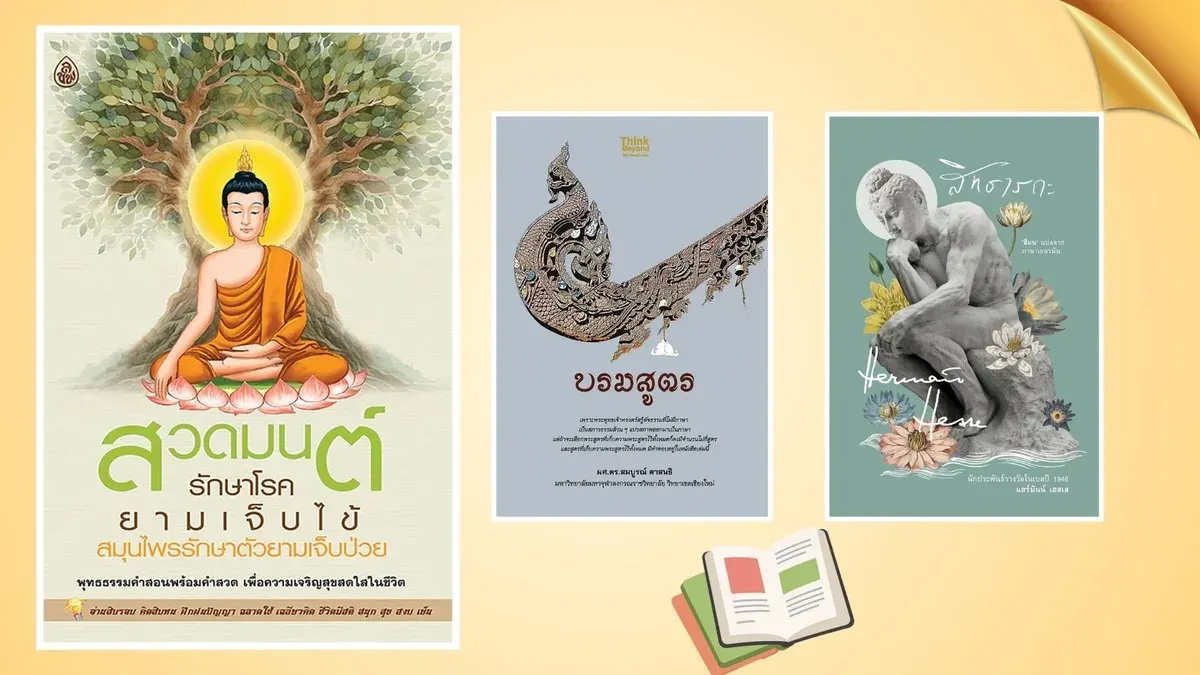
The book 'Chanting to Heal When Sick' is authored by the editorial team of Liang Chiang Publishing House and published at 18 baht. When discussing illness, there are two main types: physical and mental disease. Buddhist teachings function like medicine. Buddha was known as Bhaisajyaguru, the healing physician who used sacred medicine—the Dharma Osatha he discovered. The Buddhist community inherits this medicine prescription and shares it with others. Teaching Buddhist principles is like prescribing spiritual medicine, which must be done correctly to avoid harm. For complete and immediate results, the Buddhist medicine must be prescribed in three complete components: (1) identifying the medicine—the theoretical teachings Buddha presented for study; (2) explaining how to use it—the practical application of knowledge gained from study; and (3) describing its benefits—the results obtained from practicing these teachings. This book presents the method of 'chanting to heal the mind when sick' as Buddhist medicine, organized according to these three components: identifying the medicine by explaining its origins and meanings with translations and chanting instructions; explaining application through complete practical guidance; and describing benefits from following the teachings. The book aims to help readers achieve both physical and mental well-being through dedicating time to meditation, chanting, understanding the meanings, and following the recommended practices. The column also introduces two other books: 'Don't Forget—Know Yourself?' by Chaiyaphat Thongkambhang (160 baht) from Athing Book, which explores the importance of self-awareness and questioning one's life purpose; and 'Bromasuttha' by Sombuun Thasanthi, which discusses the comprehensive Buddhist scriptures, noting that the Tripitaka contains 84,000 Dharma teachings—82,000 from Buddha and 2,000 from monks—divided into 45 volumes with 25 being sutras.

No. 10 of Read at source → Next
Community

Rare Amulet of Revered Monk Luang Pho Ding Released

A rare amulet of Luang Pho Ding, a revered monk who led Wat Usupharam in Chachoengsao from 1897 to 1952, has been released for collectors. The first-edition copper pendant from his 1938 birthday ceremony is now highly sought after for its s

Rare Amulet of Revered Monk Luang Pho Ding Released
3 Jul Khaosod

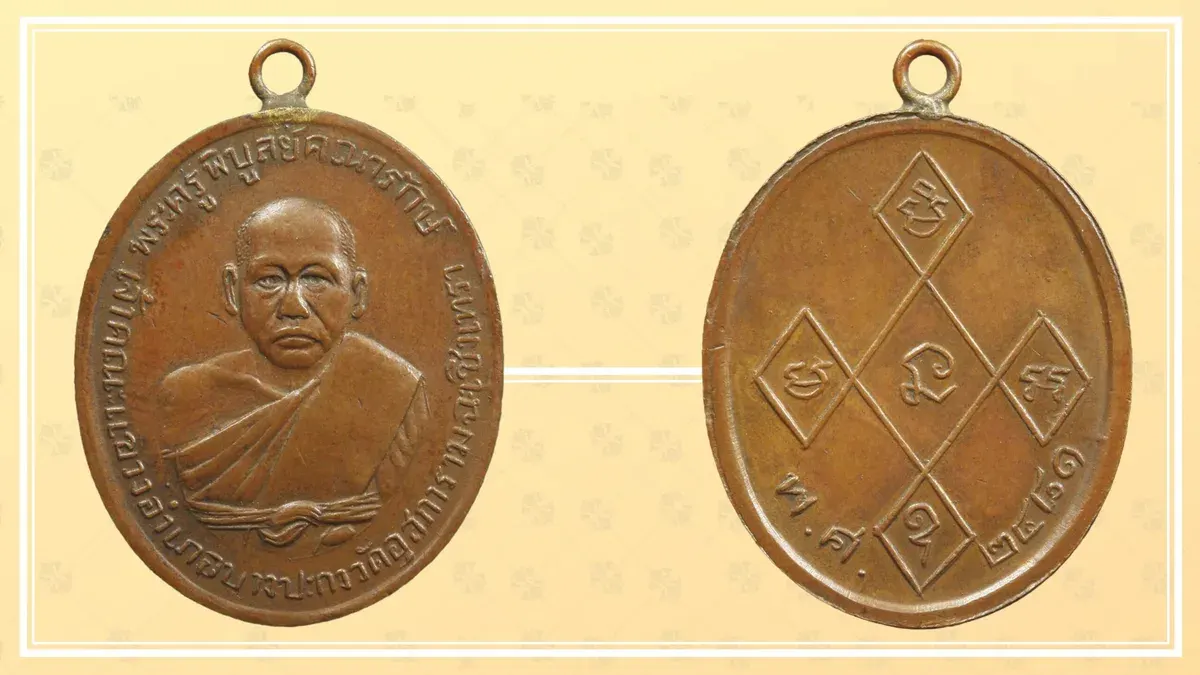
Venerable Phra Kru Pibul Khana Rak, also known as Luang Pho Ding Khangkhsuvanno, was the former abbot of Wat Usupharam (Bang Wa) in Bang Pakong District, Chachoengsao Province. He was born on March 14, 1877, at Bang Wa and was ordained at age 20 on April 10, 1897, at Wat Bang Wa's ordination hall under Phra Ajarn Dit Phromsaro of Wat Bang Samak. His monastic name Khangkhsuvanno means "one whose mind is cool like a river and strong like gold."

He was a senior monk known for strict discipline, profound compassion, and mastery of all Buddhist doctrines and teachings. His amulets became widely cherished among devotees and collectors across generations. He passed away peacefully on August 6, 1952, at age 75 with 55 years of monastic service.

His amulets gained tremendous popularity among collectors, particularly the first-edition copper image pendant created in 1881 during his 61st birthday merit-making ceremony, when he received the ecclesiastical title Phra Kru at the provincial level.

The amulet is an oval-shaped medallion with raised edges. The front features a portrait facing forward, surrounded by Thai script reading: "Phra Kru Pibul Khana Rak, Provincial Ecclesiastical Chief of Bang Pakong District, Wat Usupharam, Chachoengsao." Notable features include curved defects on the upper ear lobes, a cross mark on the neck, three fish-egg marks on the right cheek, and the lower left edge splits into two branches. The reverse side displays a yantra with Khmer characters "Mi Ma Na A U," with the year "B.E. 2481" at the bottom, where the "S" in the era mark has a crack extending upward. The left yantra border has a touched edge mark.

Legend speaks of his exceptional experiences, including stories of great compassion, miraculous protection, and steadfast virtue. Today, his amulets are increasingly rare and highly valuable.

No. 11 of Read at source → Next
Loading more…
Endless reading Scroll to read. When you reach the bottom, keep scrolling. A bar fills, and the next story slides in when it's full. ↑ ↓ or Space Or use the arrows at the bottom of the screen.