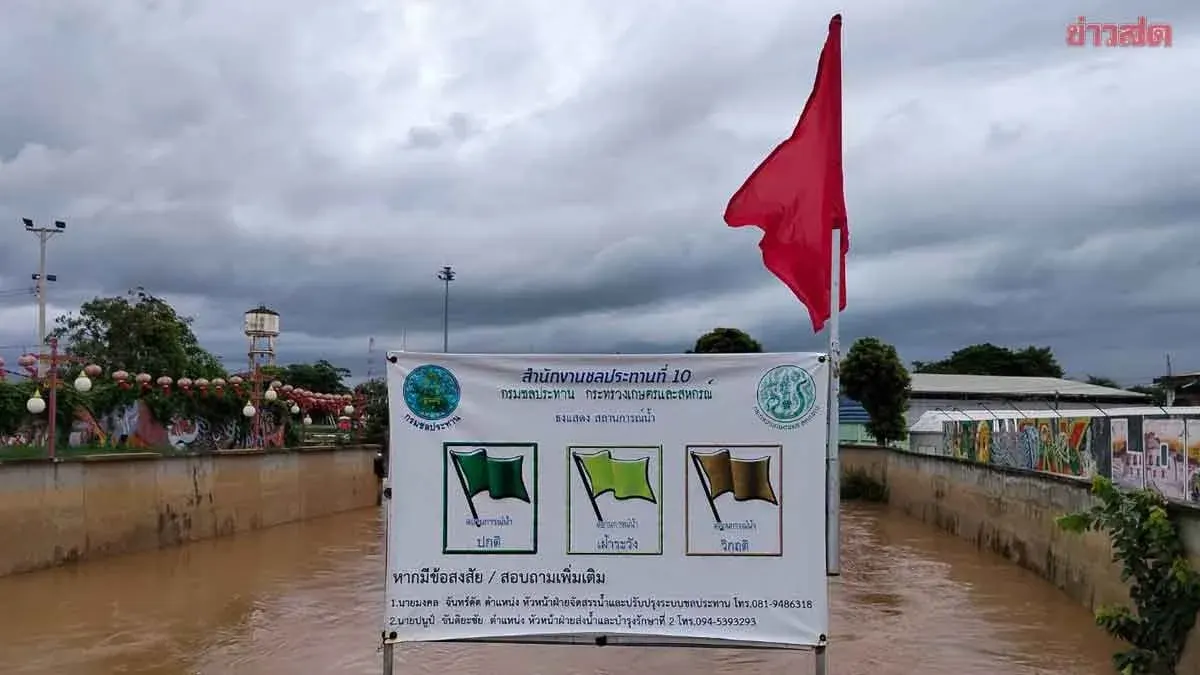
Thailand Sets Up Pollution Control Center for Nan River Floods
Thailand's Pollution Control Department established an emergency operations center to manage environmental contamination from Nan River flooding, conducting inspections of fuel stations, hotels, and waste sites while preparing a 10-day debr

On August 21, Natural Resources and Environment Minister Suchart Chomklin ordered the Pollution Control Department to establish an operations center to manage and resolve pollution issues from flooding in the Nan River basin. The center will monitor, prevent, and mitigate pollution and environmental impacts from the flooding in Nan Province and downstream water-receiving areas, while preparing systematic recovery measures to protect public health and reduce harm to residents.
Pollution Control Department Director-General Surin Worngijthamnrung revealed that the department has accelerated surveys and monitoring of at-risk areas, particularly waste disposal sites, wastewater treatment systems, pollution sources, and businesses in flooded zones. In Nan Province, inspections found 8 fuel service stations, 11 hotels, and 2 shopping centers, prompting coordination with relevant agencies to inspect oil storage systems and prevent leaks. Residents and farmers have been warned to move agricultural chemicals, hazardous materials, and chemical containers to higher ground to reduce contamination risks to communities and water sources.
The Pollution Control Department has prepared a post-flood waste management plan with provincial natural resources offices and local government organizations, including temporary waste storage areas, waste volume surveys, and waste transport systems for household debris, furniture, electrical appliances, and damaged materials. The target is to clear residual waste within 10 days of floodwaters receding, coordinated with Big Cleaning Day activities to restore affected areas and help residents return to normal life quickly.
Flood conditions in Pua District, Nan Province have returned to normal, with an estimated 3,800 tons of flood debris expected. The province is preparing 25 rai of land to receive waste. Nan Municipality expects roughly 600 tons of flood debris, as residents were prepared and moved items to higher ground. The municipality's 20-rai landfill can accommodate this volume, and the wastewater treatment system was unaffected.
The Pollution Control Department is also coordinating information about the discharge capacity of Sirikit Dam to assess whether releases could impact downstream provinces, and has prepared risk assessments of previously flooded areas to prevent damage to wastewater treatment and waste disposal systems and equipment.
Beyond the Nan River, the Yom River overflowed in Si Satchanalai District, Sukhothai Province, though water levels are receding and residents are returning home. The Pasak River in Lom Kao District, Phetchabun Province, remains high but has not overflowed; waste disposal and wastewater systems in these areas are unaffected. The Pollution Control Department continues monitoring water quality and the environment in at-risk areas.
"We must remain vigilant not only during flooding but also for wastewater, accumulated waste, chemicals, oil, and contaminants after water recedes," said Dr. Surin. "The Pollution Control Department has prepared recovery measures in advance to respond quickly and reduce environmental and public health impacts."