Thailand Teams With Thai Kom on AI Forest Conservation Technology
Thailand's Natural Resources and Environment Ministry and Thai Kom signed an agreement to deploy satellite technology and artificial intelligence for forest protection, wildlife conservation, and disaster monitoring nationwide.
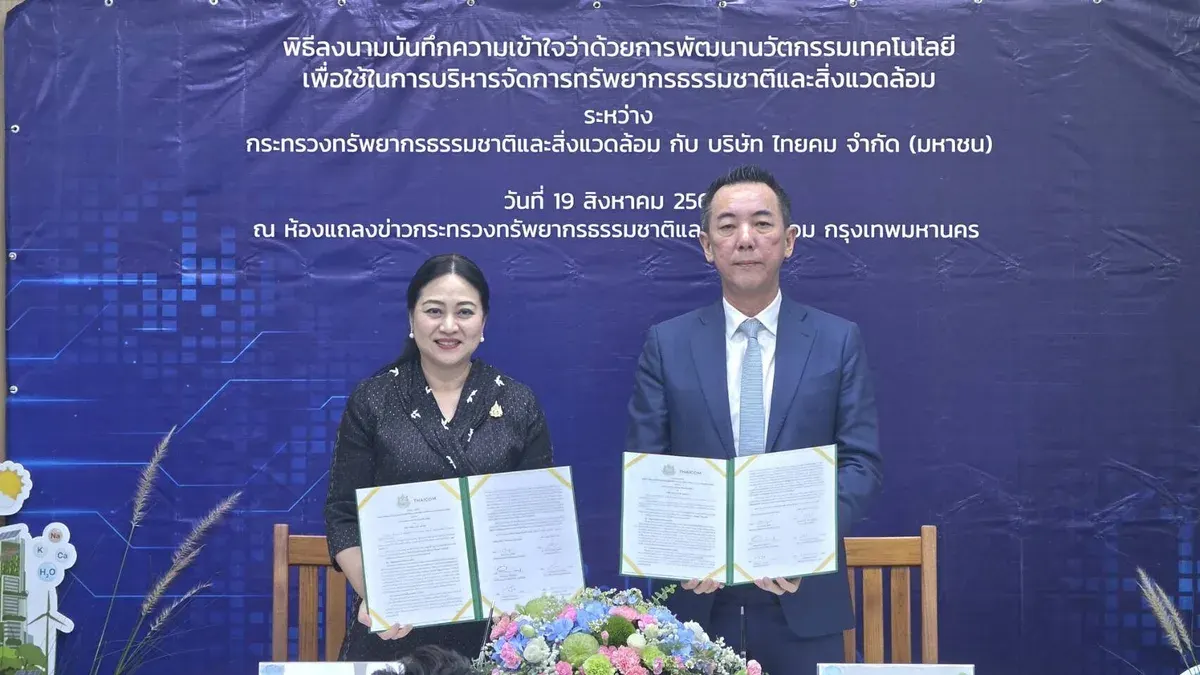
The Natural Resources and Environment Ministry and Thai Kom signed a memorandum of understanding on August 19 to develop technology innovation for managing natural resources and the environment. The initiative, led by the Department of National Parks, Wildlife and Plants, aims to deploy satellite technology, communications systems, geographic information systems, and artificial intelligence to strengthen forest protection, disaster monitoring, and wildlife conservation across Thailand and improve field operations to meet international standards.
Higher officials from the ministry, including Deputy Director-General Veera Khunchaiyarak and Conservation Head Sukhee Boonsrang, attended the signing ceremony. Permanent Secretary Raviwan Boridech emphasized that the partnership represents a crucial shift toward data-driven operations. The technology will not only protect forests and wildlife more effectively but also safeguard ranger safety in remote areas and address air pollution for public health. The department will use IoT systems and advanced geospatial analysis to monitor wildlife behavior in detail, including tracking wild elephants to reduce human-wildlife conflict, monitoring endangered marine species like dugongs, detecting forest fire hotspots, predicting wildfires and cross-border haze, and rapidly detecting illegal encroachment.
Thailand Kom Chief Executive Officer Piyawat Chariyaseritphong confirmed the company will apply its space technology expertise to convert past obstacles into practical solutions, including satellite communications systems, Globalstar technology, and IoT in areas with poor ground signal coverage. The organizations will establish working teams at the regional level, launch training programs to boost staff capabilities in deploying satellite data and AI systems for field command, and maintain the partnership for five years.