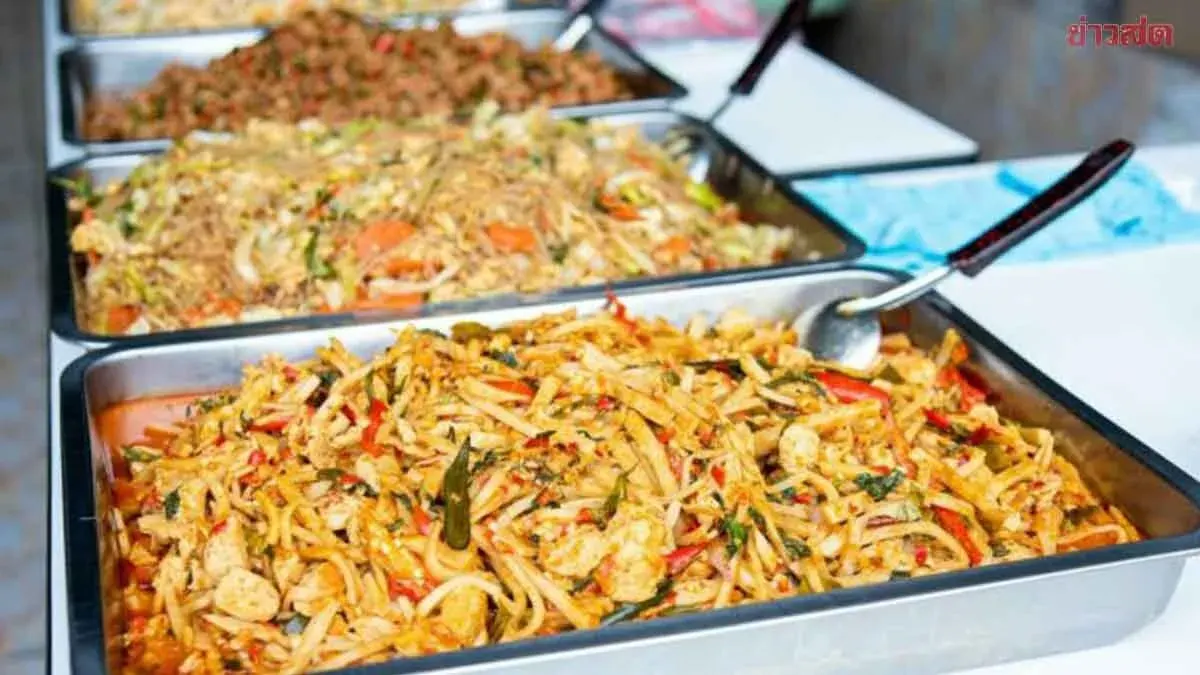
Thailand's Commerce Ministry is developing an affordable curry and rice meal program with restaurant groups to ease living costs for low-income earners, with prices potentially around 35-40 baht but still under discussion with industry part
The Department of Internal Trade is preparing to invite restaurant associations to discuss a model for affordable curry and rice meals. Withayakorn Maneenat, director-general of the Department of Internal Trade, revealed that the Commerce Minister has tasked relevant agencies with finding ways to reduce living costs for people, especially low-income earners and urban residents. Since oil price cuts have not led to immediate price reductions across all goods, additional measures are being considered.
One concept under study is the creation of affordable meal menus. The Commerce Ministry is currently gathering input from the public, food business operators, associations, and relevant agencies before finalizing a workable model.
"Specific figures of 35 or 40 baht have not been set. These are merely discussion points for gathering feedback from all parties," Withayakorn said. "What matters is considering feasibility, the benefit to the public, and ensuring we do not distort market mechanisms."
The Department of Internal Trade is preparing to invite the Thai Restaurant Association to discuss implementation frameworks. Simultaneously, it has engaged with a network of fresh market operators comprising more than 50 markets to study how to link agricultural products from farmers through fresh markets to food stalls and curry shops in the area.
Withayakorn stated that this approach will emphasize linking raw materials from production sources near markets to reduce transportation costs. For example, rice from Roi Et province, which has sufficient supply and can be sold affordably, would be connected to nearby markets to keep transport costs from affecting final food prices.
Regarding government-subsidized canteens, the Commerce Ministry is considering adjusting their model to serve as another channel for offering affordable meals and products to the public. However, since these canteens in Bangkok, surrounding areas, and other provinces have different cost structures, a single pricing model cannot be applied uniformly.
For restaurants in department stores, Withayakorn noted that the ministry must consider each operator's specific costs, including rent, air conditioning, and facilities. Therefore, there is no plan to impose a food price ceiling, but rather to support activities that reduce costs or stimulate consumption, such as linking white shrimp from the South to department stores for promotional menu offerings.
"Our role is not to distort market mechanisms," Withayakorn said. "State measures will be used only temporarily to help stimulate or ease public burden. Once the system returns to normal market operations, these measures must end."
The Commerce Ministry currently has no urgent measures requiring Cabinet consideration, as some situations are already improving. The ministry continues to gather data from the public, businesses, state agencies, and monitor international cost trends carefully.
Many Essential Raw Materials Show No Price Increase
Withayakorn added that several essential raw materials have not increased in price, including white sugar, instant noodles, canned fish, and ready-to-drink milk. However, some products show a downward trend, such as sauce, Japanese soy sauce, white shrimp, and various vegetables including long beans, Chinese broccoli, and napa cabbage.
The Commerce Ministry will closely monitor prices of controlled goods, seasonal products, general merchandise, and raw materials. This will be coupled with implementation of product-linking measures and cost-of-living reduction activities over the next three months.
"Thai Helping Thai" Initiative Held Over 926 Times
Regarding the cost-of-living reduction measures, the Commerce Ministry has conducted "Thai Helping Thai" activities at national, regional, and district levels over 926 times.