Thousands of Colorful Fiddler Crabs Emerge in Trang Mangroves
A thriving population of vividly colored fiddler crabs has become a year-round tourist attraction in the mangroves of Palian district, Trang. Thousands emerge at low tide, especially during spring tides, displaying striking reds, oranges, yellows, and purples. Locals protect the crabs as indicators of a healthy, unpolluted ecosystem.
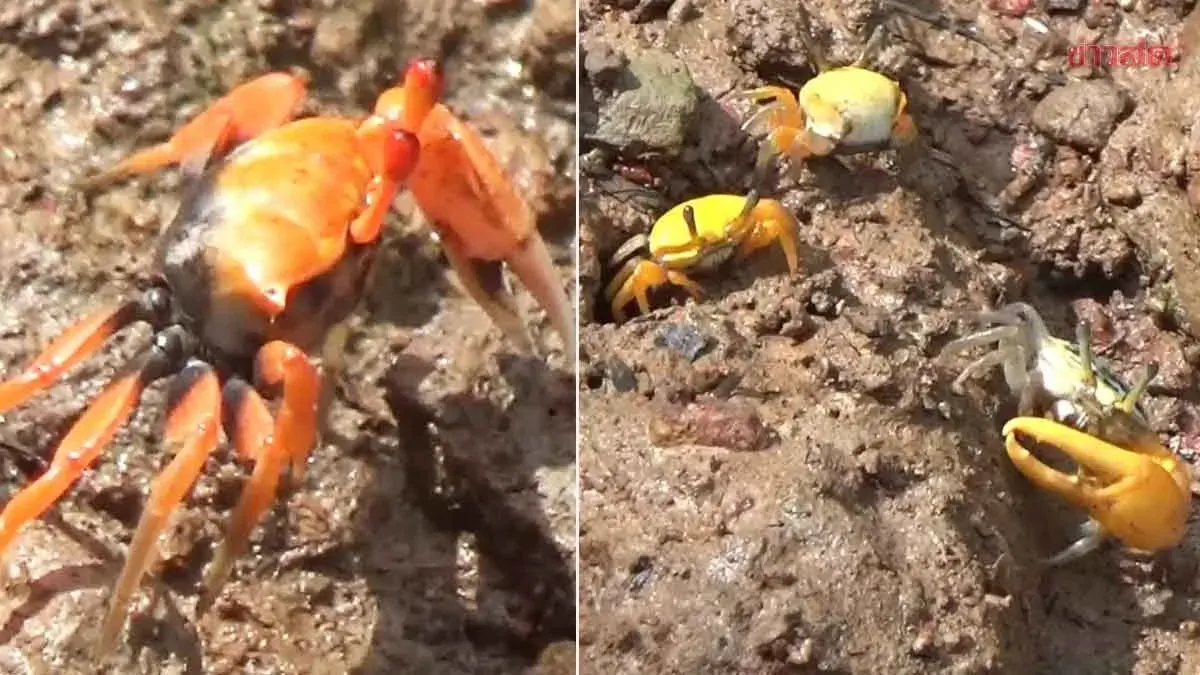
Thousands of brilliantly colored fiddler crabs emerge from their burrows when the sea retreats, drawing crowds of tourists to the mangrove forest of the Ban Rai Yong Star community tourism enterprise in Moo 2, Tha Kham subdistrict, Palian district, Trang province. Visitors are captivated by the chance to photograph the multicolored crabs during the lowest tides, particularly in the early morning and evening during spring tides — from the 10th waxing day to the 3rd waning day — when the crabs venture out to feed on plant detritus and plankton.
Because the area has few human settlements, food is abundant and the crabs face little disturbance or hunting, allowing their population to grow each year. Locals report an even greater number of colorful crabs this year compared to last, and the community works together to conserve them as living proof of the forest's health — free of pollution and wastewater, since fiddler crabs and other wildlife cannot survive in contaminated water. The crabs display striking hues of orange-red, yellow, purple, and white, with some individuals showing two or three colors at once, making them a magnet for nature photographers who must sit quietly and still, as the crabs are extremely skittish.
Fiddler crabs are small marine crabs; males possess one oversized claw used to attract females during breeding season and to intimidate rivals. They serve as a bio-indicator of ecosystem richness and are known as the "biological clock" of the mangrove forest for their uncanny ability to sense tidal cycles, emerging from their burrows about two hours before the tide turns — a behavior fishermen have relied on since ancient times to decide when to launch their boats. The crabs are not commonly eaten due to their minimal meat, which allows them to reproduce rapidly, adding color to the mangrove landscape and delighting all who witness them.
Village headman Patiwet Thuy-on of Moo 2, Ban Yong Star, Tha Kham, Palian, Trang, said fiddler crabs have coexisted with the mangroves since time immemorial and serve as a gauge of the area's abundance. During low tide, the crabs emerge in vibrant reds and oranges, and their numbers have risen this year thanks to the forest's improving health. The community actively conserves the crabs and instructs visiting tourists to observe without harming them.