Traffic Police Ordered To Uncover Faces, Warn Before Fining
Thai traffic police must now uncover their faces on duty and issue warnings before fines, except for dangerous violations, to boost transparency and public trust.
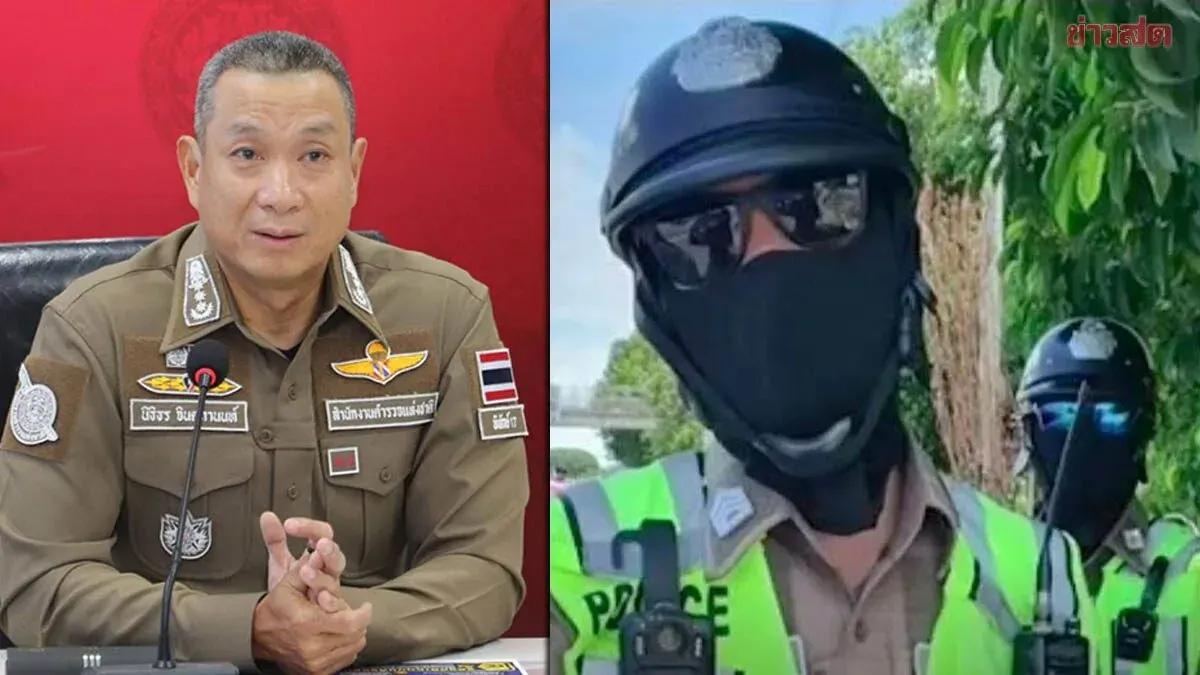
On October 25, 2026, Pol. Lt. Gen. Nithithorn Chintakanan, Assistant Commissioner-General, issued an order to the Metropolitan Police Bureau, Provincial Police Regions 1-9, and related agencies, acting on the directive of Pol. Gen. Samran Nualma, Commissioner-General. The order instructs traffic police to refrain from wearing helmets, masks, or any equipment that obscures the face while on duty, so they can be clearly identified by the public. Traffic law enforcement must adhere to the principles of "warn before fine" and "graduated fines," except for dangerous behaviors such as wrong-way driving, red-light violations, drunk driving, or street racing. The Traffic Management Center, Royal Thai Police, directed all unit commanders to enforce proper uniforms, banning face-covering helmets, masks, neck gaiters (balaclavas), or similar items. If protection from dust or sun is needed, surgical masks and sunglasses may be used appropriately, but must be removed when stopping violators or issuing tickets so the public can see the officer's face and verify their identity. This builds transparency, trust, and a positive image for the Royal Thai Police. Exceptions apply to royal project traffic police and escort officers who must ride motorcycles at high speeds on expressways, where wind impact could affect safety. Pol. Lt. Gen. Nithithorn also reinforced the "warn before fine" policy, especially for minor or first-time offenses, requiring officers to use discretion to educate violators. Before issuing a ticket, officers must check the violator's warning history via the PTM system. For repeat offenses or cases requiring a ticket, graduated fines should apply based on the nature and circumstances of the violation. Traffic police are prohibited from pressuring, coercing, or setting conditions for on-the-spot fine payment. They must clearly inform the public of their rights, procedures, deadlines, and legal payment channels, and are strictly forbidden from accepting money or any other illicit benefit.