Venerable Luang Pu Supha's Amulets Gain Widespread Devotion
Venerable Luang Pu Supha, the respected former abbot of Sila Supharam Temple in Phuket, created highly venerated amulets throughout his lifetime that remain widely sought after by devotees today. The monk, who lived to 119 and spent half hi
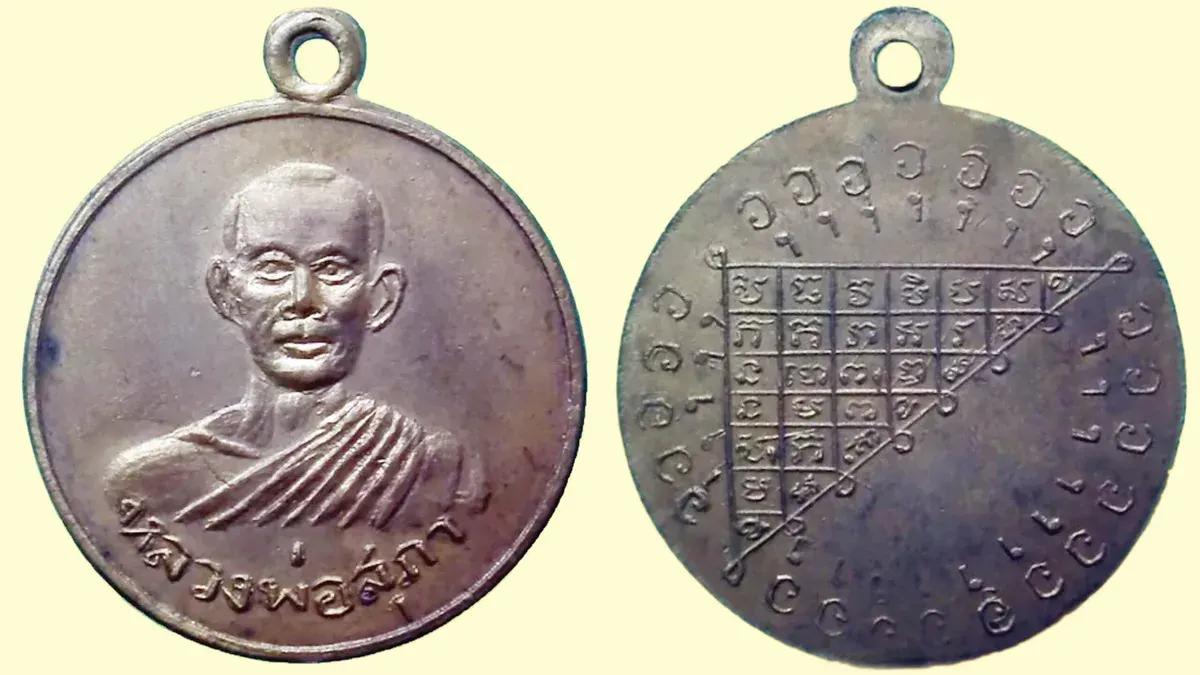
Venerable Luang Pu Supha Kantisiloh, the former abbot of Sila Supharam Temple in Phuket's Chlong Subdistrict, is a renowned and respected Buddhist monk widely known in Thailand. Originally named Supha Vongpakham, he was born on Thursday, 17 May 1895, at Kham Bo village in Warinchambu District, Sakon Nakhon Province. At age nine, he entered monastic life under Phra Ajahn Suan's guidance, remaining for a year until his teacher advised him to pursue further studies in Ubon. In 1906, he was placed under Phra Mahahaad at Prai Yai Temple in Ubon Ratchathani, where he studied fundamental Buddhist texts and meditation techniques before traveling to Tha Udom Temple in Nakhon Phanom, drawn by the reputation of Phra Ajahn Sithatt, a meditation master. At age 20, he was fully ordained as a bhikkhu, taking the monastic name Kantisiloh under Phra Ajahn Sithatt's guidance. In 1920, he decided to pursue forest wandering and sought guidance from his teacher, who directed him to Phra Kru Wimonkun, known as Luang Pu Suk at Pak Khlong Makhamtao Temple in Chai Nat Province, an expert in Buddhist practice and meditation. Luang Pu Suk transmitted his teachings to him, and Luang Pu Supha served as his attendant. After Luang Pu Suk's death in 1923, during a period of intensive practice, Luang Pu Supha undertook forest wandering journeys across Southeast Asia, including Myanmar, India, and China. He encountered Luang Pu Man Bhuridatta, a renowned forest monk and meditation master who taught him intensively for three years. A devoted scholar, Luang Pu Supha traveled widely to study under accomplished masters such as Luang Pho Derm at Nong Pho Temple, Luang Pho Jad at Bang Krabi Temple, and others. Regarding sacred objects, he studied amulet crafting from Luang Pu Suk and created multiple generations of highly venerated charms believed to embody compassion and protective power, attracting many devoted followers. His forest wandering journeys spanned all regions of Thailand—northeast, north, south, central, east, and west—as well as Malaysia and Singapore, covering virtually every area. It can be said that half his life was devoted to wandering practice, during which he consistently established temples, assembly halls, and monastic centers in remote locations. Although many urged him to accept positions as abbot and he is said to have developed dozens of temples, he refused such roles until arriving at a temple in Phuket. This temple received a royal name from Queen Sirikit, the late Queen Consort, titled Sila Supharam Temple, prompting him to accept his only abbacy. In 2012, after residing in Phuket for many years, he moved to Khon Savasorn Temple in Warinchambu District, Sakon Nakhon Province, his birthplace, where he remained until his passing. On the early morning of 2 September 2013, at age 119, he passed away peacefully. The sacred objects he created throughout his life remain highly sought after and valued by devotees to the present day.