Venus Shines Brightest in Pre-Dawn Sky Nationwide
Thailand's National Astronomical Research Institute announced that Venus will reach its maximum brightness on the morning of November 27, visible nationwide from 3:50 AM in the eastern sky. The planet will appear as a crescent through telescopes, and the bright star Spica will also be observable nearby. This "Greatest Brilliancy" event marks the final peak viewing opportunity for Venus this year.
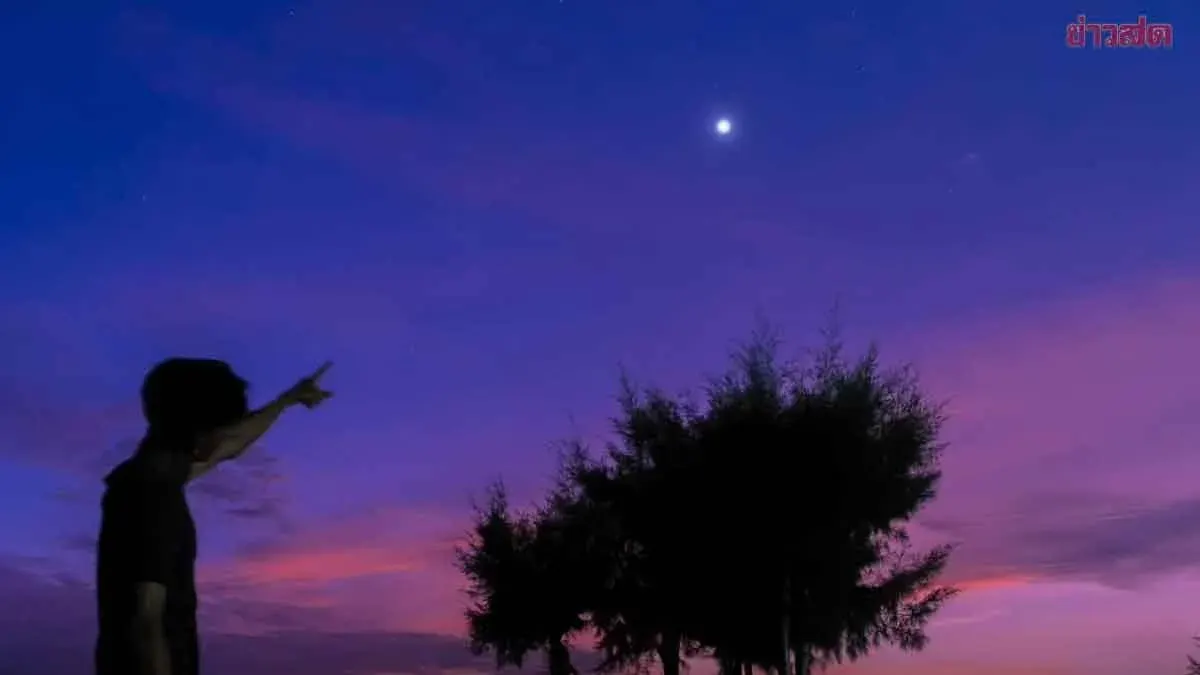
Chiang Mai – The National Astronomical Research Institute of Thailand (NARIT), under the Ministry of Higher Education, Science, Research and Innovation, revealed that Venus will once again appear at its brightest during the pre-dawn hours of November 27, 2026. It will shine prominently in the eastern sky before sunrise and can be observed with the naked eye nationwide. When viewed through a telescope, Venus will display a crescent phase resembling the Moon.
Suparerk Karuehan, Assistant Director of NARIT, stated that on November 27, 2026, Venus will reach its greatest brilliancy for the final time this year. It will be clearly visible to the naked eye in the east from approximately 3:50 AM until the sun rises. A telescope will reveal its crescent shape. Additionally, during this period, the star Spica — known in Thai as the "Rice Star" and the brightest star in the constellation Virgo — will appear to the upper right. Under good viewing conditions, both Venus and other celestial objects can be seen clearly.
The phenomenon known as "Greatest Brilliancy" occurs when Venus appears brightest from Earth because the planet is at an optimal distance and displays a relatively large crescent phase. At other times, even if Venus shows a thicker crescent, its greater distance from Earth reduces its apparent brightness.
Suparerk added that Venus reaches peak brightness twice during each apparition cycle: once in the evening sky in the west, and once in the morning sky in the east. As the second planet from the Sun, orbiting closer than Earth, Venus always shows phases through a telescope, changing continuously with its orbital position much like the Moon's phases.