Village Tech Seminar Teaches Herb-Drying Techniques for Profit
A Village Technology seminar taught farmers profitable herb-drying techniques and market channels, revealing high demand for common plants like tamarind leaves and butterfly pea flowers.
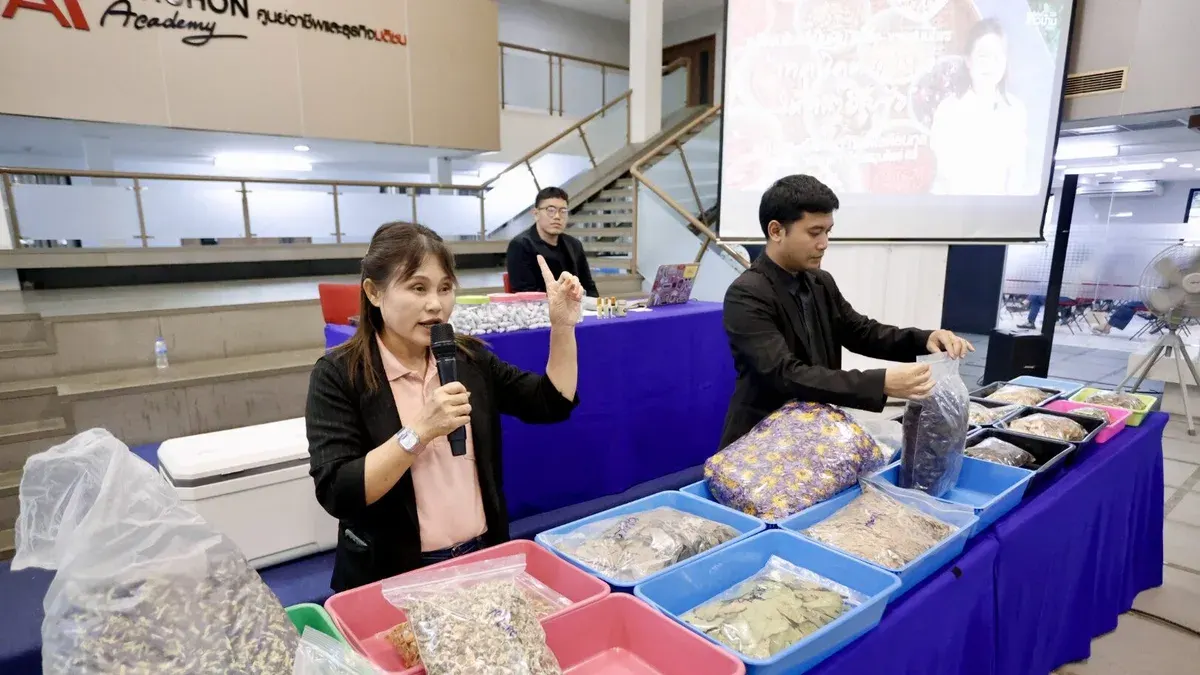
Before reading, take a walk around your house and see what herbs or plants are growing nearby. You might be surprised that these familiar plants can be turned into cash income. Many wonder which herbs the market actually buys, and the answer is more than you'd expect. The main headache for farmers is drying technique: poorly dried leaves turn dull, mold easily, and get rejected or lowballed by buyers. To solve this, Village Technology partnered with the Ministry of Higher Education, Science, Research and Innovation to host the "Village Technology NEXT MOVE: Agriculture Reimagined" seminar, featuring panels, agricultural product booths, and upskilling workshops. The standout workshop, "Turn Leaves into Cash: Herb Buying-Selling and Drying Techniques the Market Accepts," was so popular it ran two full sessions. Nichada Kittichotthanakul, owner of Nichada Ban Samunphrai 63, shared hands-on experience on drying herbs to meet market quality standards and opened buying-selling channels for participants to start earning real income.
Nichada Kittichotthanakul, owner of Nichada Ban Samunphrai 63 Nichada recounted how her business started not from herbal knowledge but from a health issue. After drinking boiled herbal water and regaining strength, she was inspired to seriously study herb-drying techniques from experts, eventually turning it into a livelihood. She emphasized to workshop participants: "Making herbs must start from the heart. Whatever we do, it needs love and care. If you only think about money, you'll give up."
Beyond business mindset, Nichada shared practical drying and preparation tips without holding back. From the selection step — cutting off unsightly or diseased parts immediately, like discarding roselle with blemishes without regretting the weight loss, because drying them only wastes effort — to slicing galangal into proper pieces while fresh for easy, attractive cuts.
It sounds difficult, but once prices were discussed, many eyes widened. She revealed that household plants have steady market demand. Nichada brought various dried herbs for participants to touch, smell, and taste, while clearly explaining market needs.
For example, tamarind leaves are still in high demand, bought by the ton at 20 baht per kilogram or more, with prices rising for clean, beautiful, fresh products. Blue butterfly pea flowers fetch up to 500 baht per kilogram for cosmetic ingredients and sleep-aid herbal teas. Even common jasmine flowers, after being offered at shrines, can be washed, dried correctly, and resold for hundreds of baht per kilogram. Other herbs like bael, kaffir lime peel, deeplee, lemongrass, galangal, and plai all have their own prices and markets.
What keeps Nichada established in this field isn't just drying technique for quality, but the matter of 'head...'